The lost world of Dhaka's courtesans and baijis
Baiji culture began to flourish in Dhaka during the Mughal era. The tradition of courtly dance was introduced by Dhaka’s Subahdar, Islam Khan. Evidence of this is found in Syed Muhammad Taifur’s seminal work on Dhaka, Glimpses of Old Dhaka. He writes:
“Islam Khan had a luxurious court in Dhaka. For the entertainment of the court, he maintained a number of ‘lulis’, ‘kanchanis’, ‘horkanis’ and ‘domnis’ (all dancing girls) at a cost of eighty thousand rupees per month.”
More fascinating details about Islam Khan’s courtly dancers appear in Ajit Krishna Basu’s essay Dhakar Smriti (Memories of Dhaka). He notes that Islam Khan employed numerous beautiful and highly skilled singers and dancers. Yet, the Subahdar himself never attended their performances. When a friend asked why he spent so much money on entertainers whose performances he did not enjoy, Islam Khan reportedly replied that the city’s rogues and troublemakers spent their evenings and nights at these gatherings, which in turn reduced theft and robbery in the city.
Building upon dance and music traditions, the baijis, successors to Islam Khan’s kanchanis, later entertained nawabs, zamindars, and wealthy elites. They performed in private majlis, rangmahals, garden houses, and aboard budgerows. During the times of Nawab Nusrat Jang, Nawab Shamsuddaula, Nawab Kamaruddaula, Nawab Abdul Ghani, and Nawab Ahsanullah, baiji performances flourished. As a result, many baijis from Kolkata and northern India settled in Dhaka. Benefiting from patronage, local baijis also emerged, leading to the establishment of baiji houses and entire baiji quarters in the city.
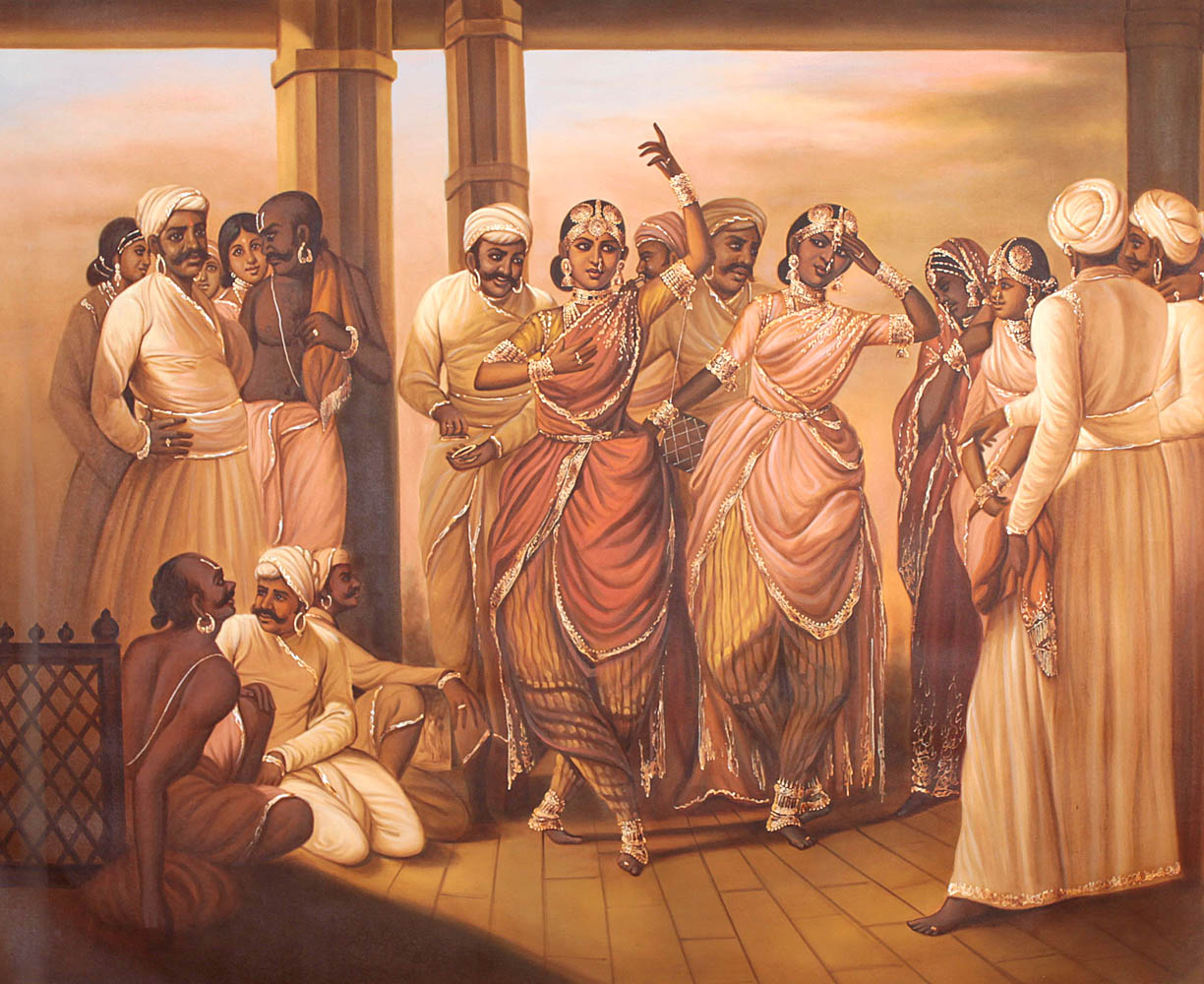
Their primary role was to entertain audiences through music and dance. They performed classical forms such as khayal, thumri, tappa, and ghazal. During the Hindu Jhulan festival, wealthy merchants regularly hosted mehfils (musical soirées) featuring baijis. These scenes have been vividly depicted in the oil paintings of artist Anup Gome.
Classification of baijis, agents, and instrumentalists
Writer Anindya Bandyopadhyay offers a detailed classification of baijis. According to him, there were four categories. Women whose names carried only the suffix Bai were singers. Those whose names ended in Jan both sang and danced. A Kaniz attended to guests and served liquor, and a Khanagi engaged in prostitution. The honorific Hindustani suffix “Ji” was added as a mark of respect. In many memoirs, the word tawaif is also used synonymously with baiji.
According to Satyen Sen, baijis expressed the emotions of songs through intricate dance gestures, employing subtle movements of the hands, face, eyes, nose, and lips. Their performances were accompanied by two Banarasi sarangis, Banarasi tablas, and Banarasi cymbals. They commonly wore peshwaz, churidar pyjamas, veils, and delicate anklets (ghungroos).
Baijis also depended on attendants who managed their affairs, played musical instruments, and recruited clients. These men were known as Safardars. Their attire typically consisted of a Punjabi with velvet waistcoat, and a velvet kishti topi (boat-shaped cap).
Khemta versus baiji dance
There was a clear cultural distinction between khemta dance and baiji dance. Baiji performances were rooted in classical music and dance traditions and were marked by restraint and refinement. Khemta, by contrast, was lively, sensual, and primarily geared towards popular entertainment.
According to Hakim Habibur Rahman, khemta was usually performed in pairs and resembled another form known as kabutarani dance. Khemta performers sang Bengali songs and occasionally thumris. Those who achieved sufficient skill could eventually gain recognition as tawaifs or baijis.
During the nineteenth century and the early decades of the twentieth, khemta culture gained immense popularity under the patronage of Dhaka’s babu society. Satyen Sen noted that there were around twenty to twenty-two pairs of khemta dancers in Dhaka, whose fame spread across East Bengal, North Bengal, Assam, and even in the tea garden regions. Unlike baiji performances, khemta dances did not require elaborate venues and could be staged in markets, festivals, and public spaces. Though patronage from affluent classes fueled its rise, social and political changes in the mid-twentieth century gradually led to its disappearance.
The baijis of the nawab household
From 1875, when Abdul Ghani received the title of Nawab, until the end of that century, dancers and singers entertained audiences every January in Shahbagh (covering present-day Shahbagh, Madhur Canteen, Doel Chattar, and parts of the Sarak Bhaban or Roads and Highways Department area).
The nawab estate maintained a long roster of baijis who received monthly salaries. In his memoir Dhaka Pachash Bars Pahele (“Dhaka Fifty Years Ago”), Hakim Habibur Rahman recalls, “In the mornings, the city’s aristocrats gathered at Nawab Sir Abdul Ghani’s place for tea. The city’s famous tawaifs also assembled there. Among them I remember a few names. Annu, Gannu, and Nawabin were three sisters. Nawabin became particularly famous and was the youngest among them…It was through such tawaifs that the practice of music and musical culture gradually gained prominence in Dhaka.”
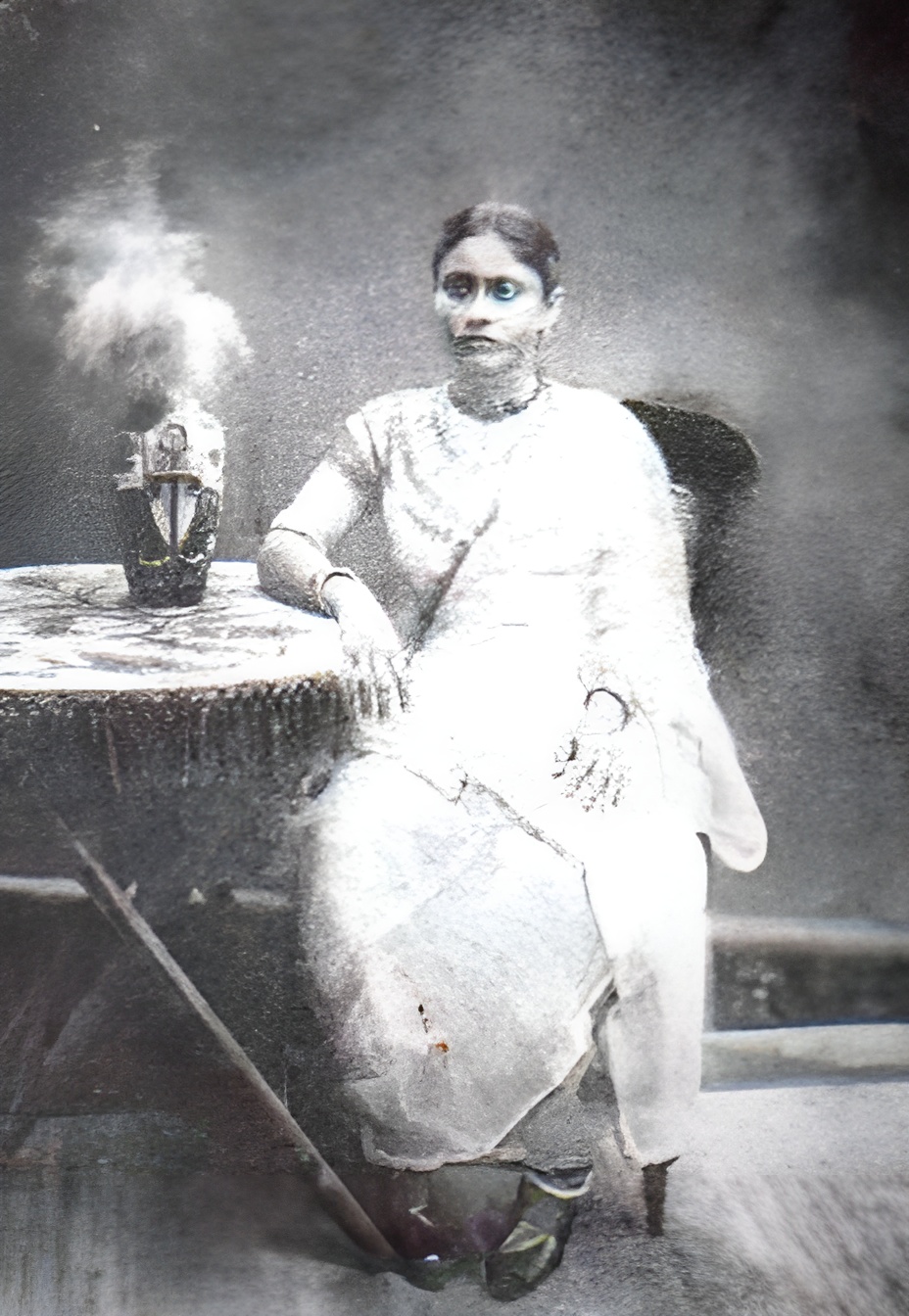
Reba Muhuri’s book Baiji O Thumri reveals another fascinating aspect of baiji life. She writes that baijis had to learn social etiquette thoroughly: how to behave, walk, sit, stand, smile, and interact with people. Such training was essential for entertaining society’s elite.
My name is Gauhar Jan
Baijis held musical gatherings either in their own courtyards or at venues chosen by patrons. These performances were known as mehfils or mujras. Among the renowned baijis who came from India to perform in Dhaka were Gauhar Jan, Noorjahan, Malka Jan, Siddheshwari, Janki Bai (“Chhappan Chhuri”), Jardan Bai (mother of film star Nargis), Kohinoor, and Indubala.
Syed Muhammad Taifur records that in 1896, Gauhar Jan performed at a wedding hosted by the Kazi family of Dhaka, an event he personally witnessed. Gauhar Jan’s mother was Malka Jan, who was equally proficient in Urdu, Persian, and Hindi. Her 108-page poetry collection contained 106 ghazals. Researcher Somnath Chakraborty notes:
“Malka Jan possessed the secret of casting the spell of a mujra, and she did not keep that knowledge hidden from her beloved daughter Gauhar Jan. She had poured out and taught her daughter all the arts of tricks and charms.”
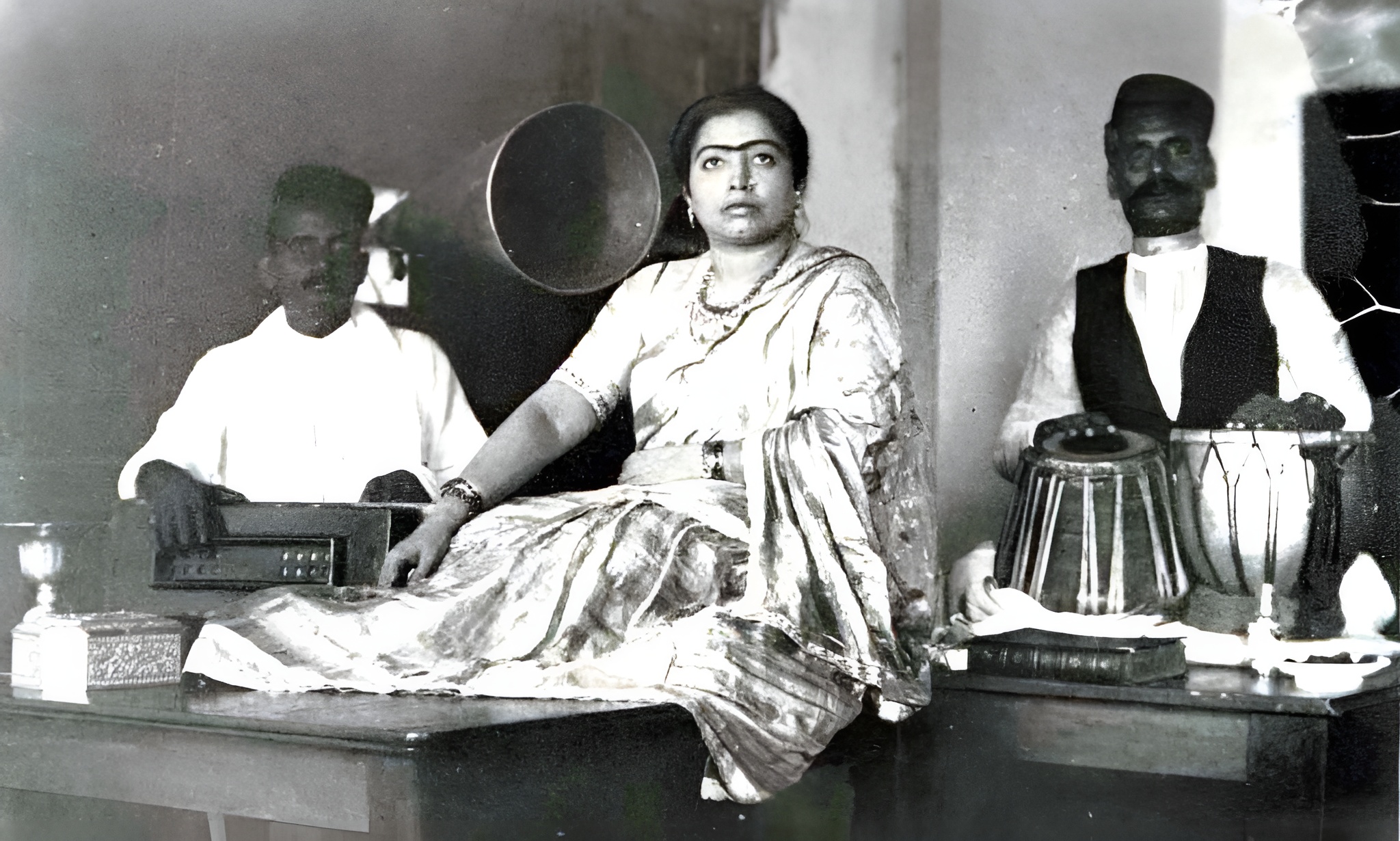
Gauhar Jan frequently changed costumes between dances during a single performance, something highly unusual for the period. Her jewellery and fashion choices were equally innovative. In many ways, Kolkata's fashion trends began with the garments she commissioned. Her postcard-sized photographs sold briskly: black-and-white prints cost one anna, while coloured versions sold for two annas.
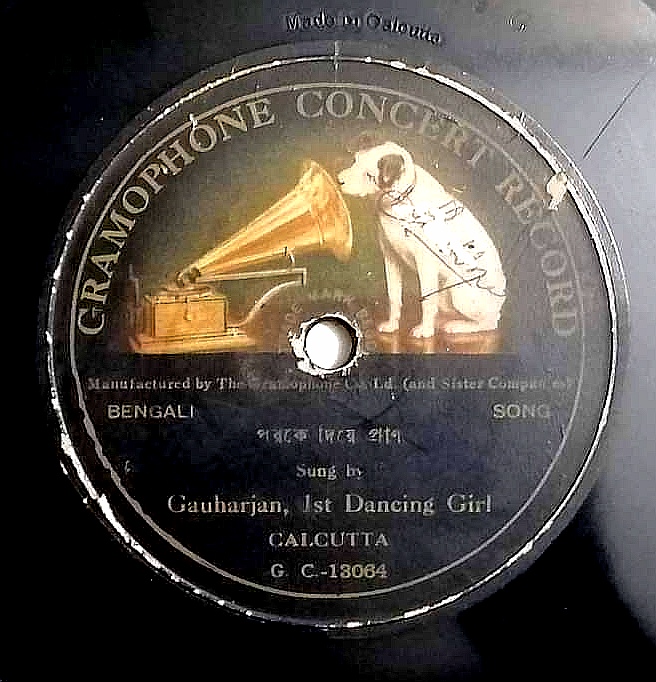
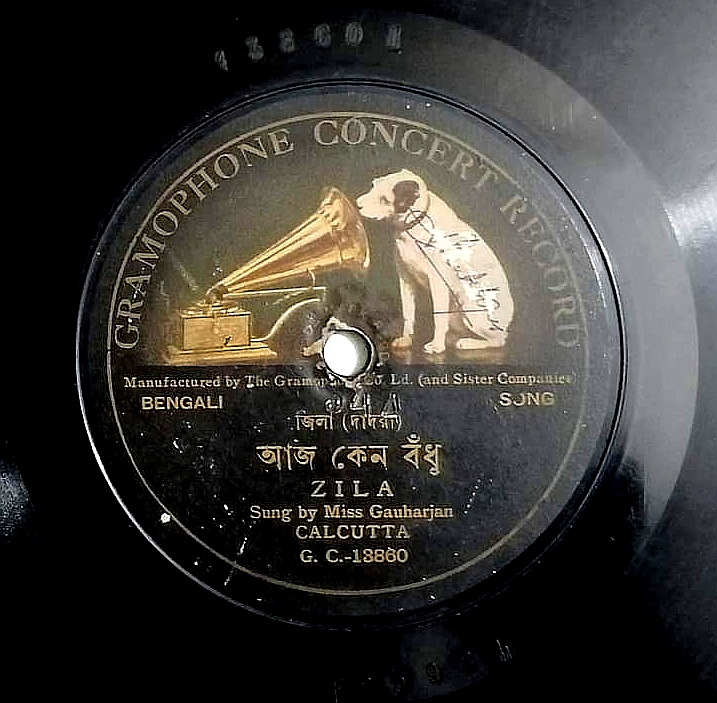
In 1902, Gauhar Jan became one of the first Indian performers to record songs on gramophone discs. Unlike most baijis, she also sang Bengali songs. Record labels bearing the inscriptions “Sung by Gauhar Jan, 1st Dancing Girl” and “Sung by Miss Gauhar Jan” have survived.
Her repertoire included Bengali, Hindi, Urdu, Persian, Marathi, Punjabi, and English songs. She would perform according to the demand or request. One of her notable songs, sung in the Tritaal rhythm of Raga Bhupali—'Kacha chaiye daiya, balhar kare daiya, anjan bane baiya...'—still creates a wave of resonance in the hearts of listeners, time and again, even after all these years. What a strange, magical charm lay in Gauhar's voice! Once the song ended, she would famously announce, “My name is Gauhar Jaan.”
‘Rasiya tori ankhiya re, jiya lalachaye’
Another celebrated performer who enchanted Dhaka’s rangmahals (entertainment palaces) and jalsaghars (music salons) with countless thumris in the Bhairavi raga was Harimati Baiji.
Mizanur Rahman’s Dhaka Puran recounts, “In Harimati Baiji’s voice, the melody of ‘Rasiya Tori Ankhiyare, Jiya Lalchaye’ in Bhairavi raga would spill out of the lanes of Jindabahar and crash upon the streets of Islampur. Drunken passers-by, hearing it, would cry ‘Hai Rasiya!’ and roll on the road.”
Artist and writer Paritosh Sen echoes similar memory in Jindabahar. He wrote, “Harimati Baiji’s room is clearly visible from our veranda. True to her daily routine, she has struck up a song in Raga Bhairavi, ‘Rasiya tori ankhiya re, jiya lalachaye’. The melody of this refrain from a song set in the Thumri style has filled our Zindabahar lane to the very brim.”
Baiji performances in Pratibha Basu’s memoirs
During the Hindu Jhulan festival, wealthy merchant families regularly hosted baiji gatherings. Among the most famous venues was the Thakur Bari of Lalmohan Saha. Elegant babus dressed in Dhakai dhotis and spotless white Punjabis gathered there, surrounded by the fragrance of attar. Silver trays laden with betel leaves, cardamom, and cloves adorned the assemblies.
Writer Pratibha Basu attended one such gathering and later described it in her memoir Jiboner Jalchhobi, “In this gathering, there is only one elderly woman; all the rest are young girls. The Baiji struck up a song—‘Samo jhulamebhi radheka na jhulate hain, baki sakhiyo apan gale lagato hai...’—while the dandy babus, diffusing the scent of attar and flaunting the pleated hems of their dhotis, expressed their delight by calling out chants of ‘Hay! Hay!’ and ‘Marhaban!’. Once the song ended, the Baiji took her seat. Now, it was the young girls' turn to knock the wealthy, aristocratic babus off their feet with the rhythmic chime of their ghungroos and the dramatic swirls of their ghagras, as the babus showered them with money.”
Gangajali: A famous baiji house
During the British era, Zindabahar was the hunting ground of baijis and courtesans. That era saw a class of highly cultured prostitutes who were not only skilled in dance and music but also deeply entrenched in luxury and indulgence. Most of them were beautiful dancers and singers. Coming into contact with them, the wealthy and aristocratic class of Dhaka enjoyed life as if they were living in Indrapuri (the mythical palace of Lord Indra).
Playwright Sayeed Ahmad, in his autobiographical book 'Jiboner Satrong' (The Seven Colours of Life), described the story of Gangajali. Emerging from Patuatuly, right at the entrance leading straight to Johnson Road, stood Gangajali, with a Kali temple right beside it.
Sayeed Ahmad’s writing captures a highly sensual description of the physical allure of the baijis here, “The building was named Gangajali... The baijis would come to Gangajali, stay for a few days, and then return to their respective homelands. Some baijis ended up staying in that house permanently. We used to stand downstairs and listen to them practice their singing. As evening approached, the music and dance would begin. Gangajali would come alive with the strains of Thumri and Dadra. And during the day, their practice sessions continued... Before sunrise, almost all the baijis would go to that river ghat to bathe... They would dip into the river water to purify themselves. Then they would return in a single file, wrapped in towels (gamchas). Their well-rounded breasts would eagerly accentuate through their wet clothes. My friends and I would stare, completely spellbound, at the way they walked.”
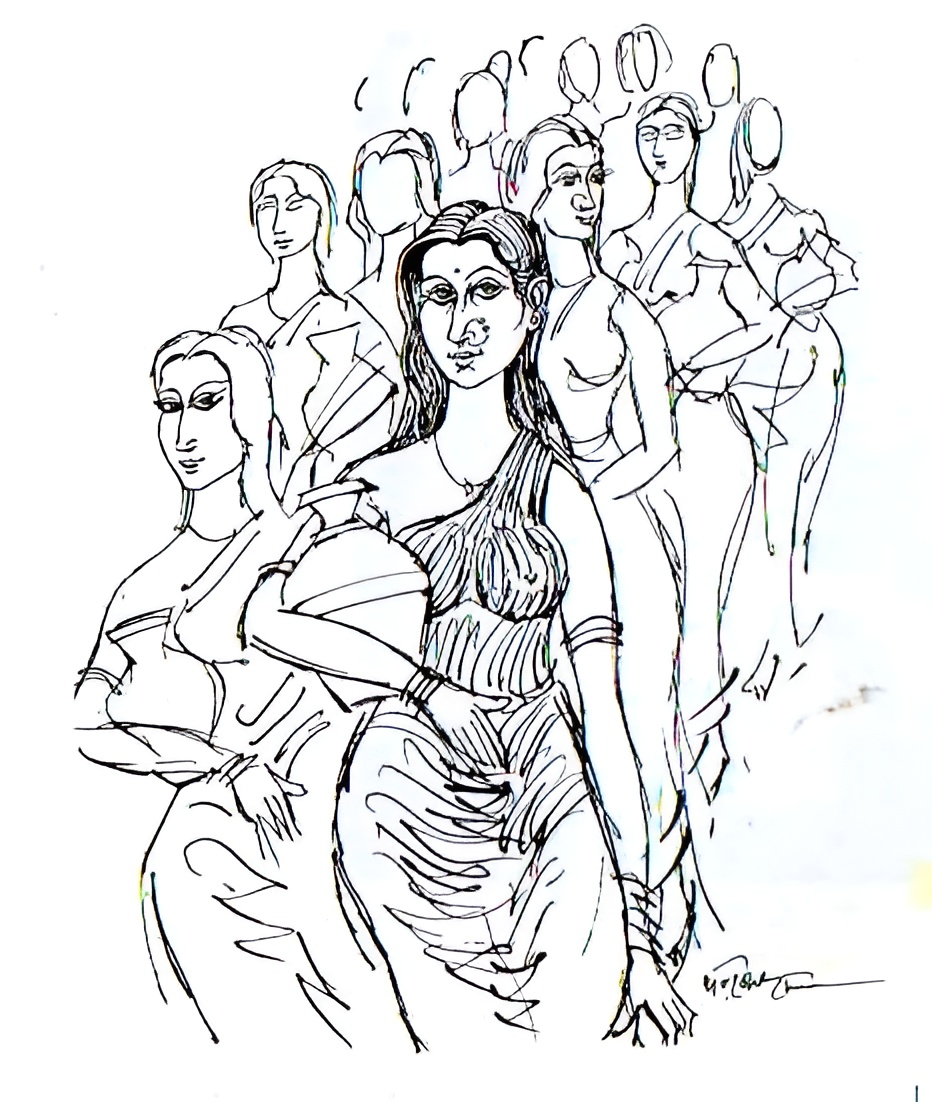
Today, that Gangajali is gone, and so is the Kali temple. The baijis of that era also found a place in the works of contemporary poets. Syed Shamsul Haq, in his poetry collection 'Amar Shohor' (My City), expressed the essence of these uninhibited baijis—
“Who else but me still walks through Postogola
And anxiously searches for those full-bosomed women
Who bathe in the river's current at dawn
Whose footsteps can be heard from afar.”
From the brothels to the theatre stage
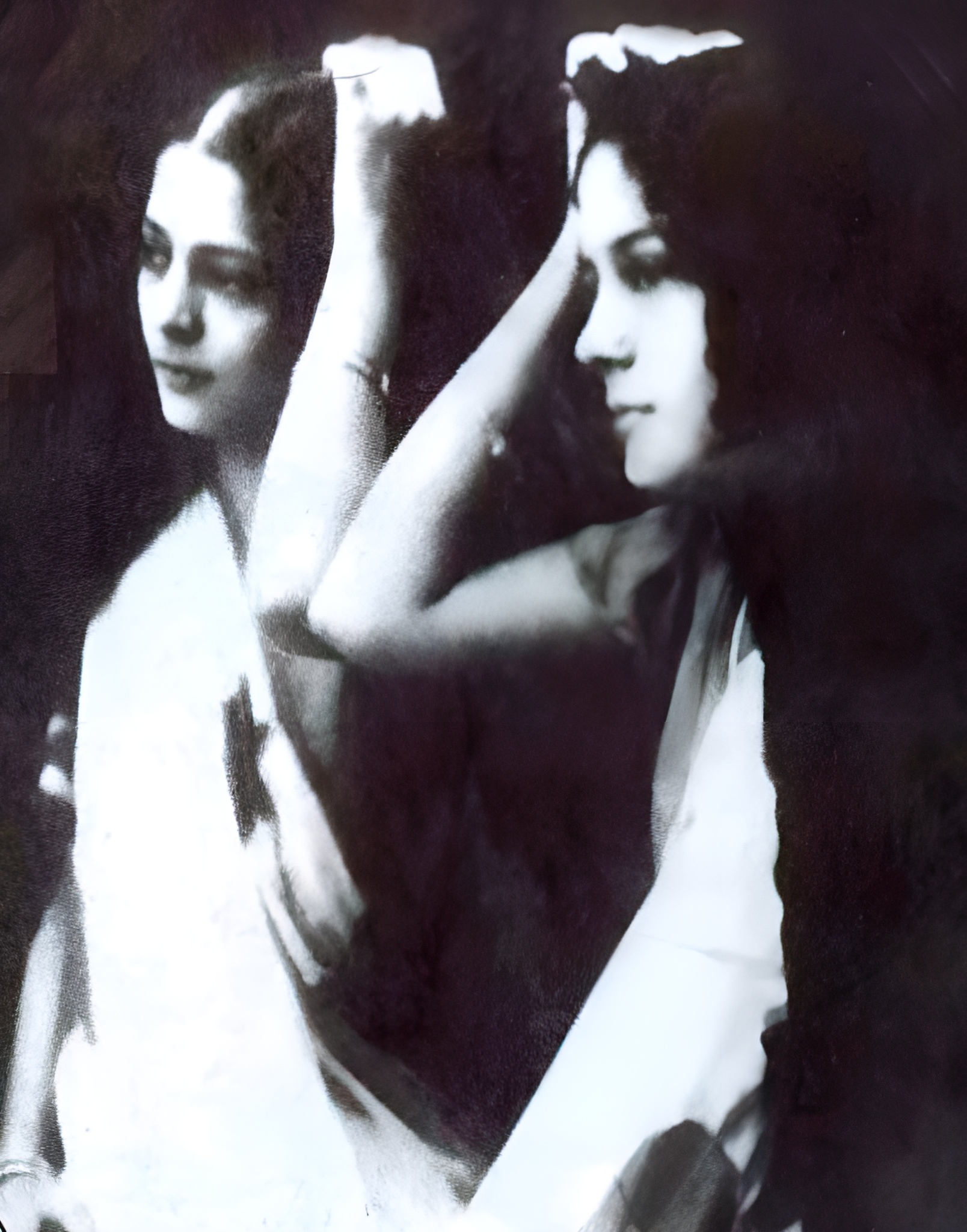
In 1873, for the very first time, the women of Kolkata were granted permission to perform on the theatre stage. However, the pioneers of this new dawn were primarily the women from the brothels who were highly skilled in music and dance. It was through their hands that women made their formal entry into the world of theatre. From the late nineteenth century until the 1930s, almost all actresses were simultaneously vocalists as well. Artists like Binodini, Tinkari, Tarasundari, Angurbala, and Indubala bore the glorious legacy of this tradition. Kanan Devi was also a successor to this lineage. She attained immense audience popularity in both acting and music. On the other hand, Lalita, the heroine of The Last Kiss, the first full-length silent film produced in Dhaka, also had her roots in the red-light district. This teenage actress’s real name was Buri, who was brought into cinema from Badamtoli. She made her film debut at the tender age of fourteen. Charubala, a co-actress in the same film, came from the brothels of Kumartuli, while Devbala was brought from the quarters of Zindabahar Lane.
The negative outlook towards baiji music
The disdain towards baiji music was not merely confined to ordinary society; rather, this attitude was vividly apparent even in the mindsets of many renowned artists and maestros (ustads). A notable example of this was seen in Dhaka. A wealthy man named Gournitai Shankhanidhi had invited Noorjahan Begum, a nationally renowned Urdu-speaking vocalist, to a cultural gathering. In due time, the assembly gathered, the audience waited with breathless anticipation, and Noorjahan sat on the stage, poised to begin her song. But at that exact moment, Gournitai Babu, in a drunken voice, suddenly blurted out—“Baiji, sing an intoxicating song that hits like a punch to the gut.” Infuriated by this insulting address, a resentful Noorjahan Begum politely offered her salaam to everyone present in the gathering and walked out of the assembly.
Another proof of such a negative perspective can be found in India. When Ustad Wazir Khan, the renowned musician of the Rampur court, expressed his willingness to accept Ustad Allauddin Khan as his disciple, the latter had to take a solemn oath—that the knowledge acquired must never be given to the unworthy, bad company must be avoided, livelihood must not be begged for through this art, and in particular, baijis or courtesans must never be taught music. This very oath makes it explicit that a deep-seated distrust and derogatory attitude towards the baijis prevailed even among the highest guardians of classical music.
The tradition of Kulinism (caste system)
Alongside this long cultural odyssey, the people of Dhaka city repeatedly had to confront various natural disasters—earthquakes, tidal surges, tornadoes, and famines. The most ruthless victims of these disasters were women. Amid displacement, the loss of kin, and social uncertainty, countless women had to survive within the harsh realities of a patriarchal social structure. Meanwhile, during the latter half of the twelfth century, the spread of the Kulinism (Koulinya Protha) or caste system in the Indian subcontinent made the situation even more dreadful. Within Kulin society, this custom granted a form of social legitimacy to polygamy. In marriage, age, compatibility, or humane considerations held no weight; the primary objective became the preservation of ancestral Kulin status. Consequently, underage boys were wedded to middle-aged women, and octogenarian elders were bound in matrimony with adolescent girls. In this regard, Sri Kedarnath Majumdar wrote in his book Dhakar Biboron o Dhaka Shohochor (An Account of Dhaka and the Dhaka Companion) — “A ten-year-old boy began marrying a 35-year-old virgin, and an 80-year-old elder began marrying a 12-year-old girl… gradually, polygamy degraded into a despicable business.”
Dhaka: A city teeming with courtesans
Presumably, the final sanctuary for these abandoned women was the brothel. Furthermore, extreme economic disparity during that era was another major driver pushing courtesans into this profession. It is known from Sir Charles D'Oyly’s 1824 book ‘Antiquities of Dacca’ that a system for buying and selling slaves existed in Chawkbazar back then. In Bengal, the price of female slaves was very low. Young female slaves were generally used as prostitutes.
In the eighteenth and nineteenth centuries, Dhaka was a city teeming with courtesans. Amidst the red-light districts and baiji houses, one would spot signboards reading: ‘Grihastha Bari’ (respectable families). According to data from Dhaka Magistrate Henry Walters’ ‘Census of the City of Dacca and Municipal Proc.’ dated March 25, 1879, the number of prostitutes in Dhaka was 234 in 1830; by 1870, this number had increased to 783. In 1901, out of a city population of 90,542, the number of courtesans was 2,164. According to unofficial estimates, their numbers were even higher.
Evidence of the widespread nature of prostitution in those days is found in the 1864 weekly newspaper Dhaka Prokash: “...Gradually, the number of prostitutes in Dhaka has increased immensely. It is no exaggeration to say that the number of prostitutes here now has quadrupled compared to what it was 10 years ago. Almost all the fine single-story and two-story buildings on both sides of the main road are now filled with prostitutes. It can be said that there are virtually no excellent buildings on either side of the highway that are free from connection to brothels...”
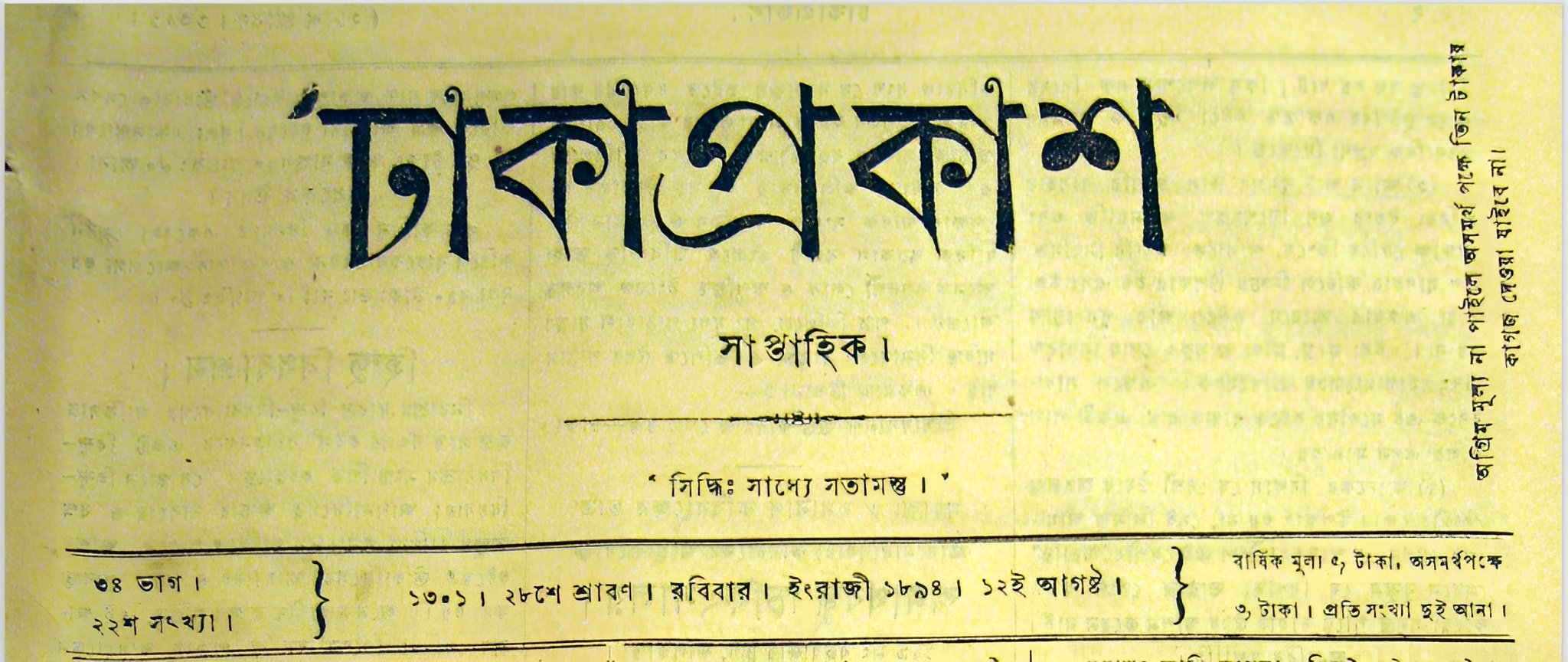
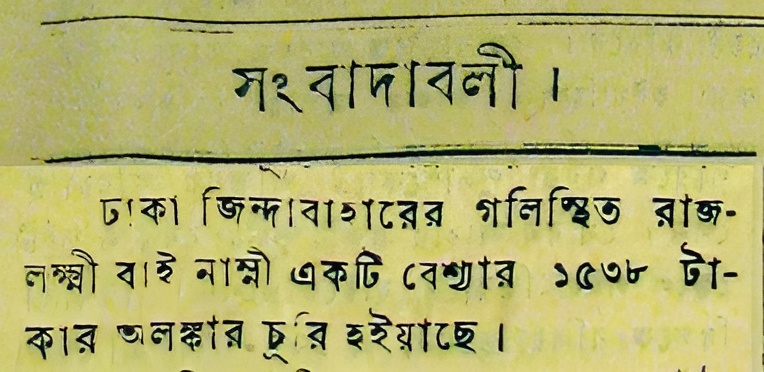
In those times, news about courtesans was frequently published in newspapers, often advising their relocation outside the city limits. Prostitution had reached such a stage that in an 1869 meeting of the Commissioners of Dhaka Municipality, an Armenian landlord named J.G.N. Pogose proposed the establishment of a lock hospital (a medical facility created to treat sexually transmitted diseases) to suppress syphilis among the city's prostitutes. From James Taylor's ‘Topography of Dacca’ (1840), it is known that most of the quarrels, disputes, and homicides in Dhaka back then revolved around prostitutes. The same tone resonates in Nazir Hossain's ‘Kingbodontir Dhaka’ (1876).
Ganiur Raja’s visits to the brothels
A vivid picture of intoxication and visits to brothels in the Dhaka of that era is masterfully portrayed in the autobiography of Ganiur Raja, the eldest son of the mystic poet Hason Raja, titled ‘Ganiur Rajar Dhaka Bhromon’ (Ganiur Raja’s Travels to Dhaka, dated 12th Bhadra 1312 Bangabda). In this diary, he skillfully chronicles the social realities of the contemporary courtesan culture. It reveals that alongside visiting brothels, many kept mistresses (rakshita) during that period. One such individual was Nanna Miya, the son of the famous landlord of Dhaka, Moulvi Golam Mowla Saheb. When Ganiur Raja inquired about how much Nanna Miya spent on that mistress, the landlord Suna Miya replied, “The salary of that wench is 100 rupees per month, she also has a maidservant whose salary is 1 rupee, and a male servant whose salary is 5 rupees. Besides that, the barber and washerman are on the official payroll, and around 10 to 12 rupees are spent monthly on her food. ...She is habituated to both ganja and alcohol, but she smokes ganja a bit more; Nanna Miya provides it all, and altogether approximately 125, 150, or even more rupees are spent on her in some months...”
This was at a time (June 28, 1903) when 12 seers of rice could be bought for 1 rupee in Dhaka, a monthly expense of over 150 rupees for a mistress was undoubtedly a stark manifestation of the prevailing courtesan culture.
The traditional Sanchibandor
During the Mughal era, Badamtoli in Dhaka housed a massive wholesale market for Sanchi betel leaves, hence the name Sanchibandor (Sanchi Port). A courtesan quarter developed centred around this port. Thrilling, untold information is revealed in the contemporary novel ‘Sanchibandor First Lane’ by fiction writer Saladin, published in 1959. War-weary, exhausted Gora (white) soldiers would come to the alleys of Sanchibandor to rejuvenate themselves. The jingling of Ashrafi (gold) coins would set off the rhythmic chiming of anklets on the feet of the courtesans. Feuds over courtesans occurred frequently. In the dead of night, a courtesan and her victorious suitor would often dump the corpse of a dead soldier into the waters of the Buriganga River .Society here was matrilineal. If a child born to such a woman was male, an inevitable death awaited him; they were killed using salt or oil. On top of that, there was police harassment. Exceptions did occur occasionally. When a courtesan's son, having escaped the clutches of pimps, grew up and found himself treated as an outcast in the broader professional society, the boy's clenched fist would tighten around his own mother’s throat out of anger for giving him birth. For this reason, a daughter born of their loins was a mother’s sole hope and anchor. It was this daughter’s earnings that kept the mother alive in her old age.
‘Kandupatti’ in Rabeya Khatun's memoirs
The remnant of the roaring trade that courtesans enjoyed between the Mughal and British eras was Kandupatti (the present-day Nawabpur area). A classmate of fiction writer Rabeya Khatun was Renu, the daughter of a courtesan from this very Kandupatti. The author highlighted Renu’s life story in various ways in her book ‘Shopner Shohor Dhaka’ (Dhaka: The City of Dreams). Inquiries from classmates regarding Renu’s paternal identity would embarrass her. Her classmates’ curiosity about the musical soirées (mehfil) and the sound of anklets at Renu’s house knew no bounds. Although theoretically a high status was sometimes ascribed to courtesans, experience shows that society looked upon them with extreme disdain.
In this regard, Mizanur Rahman gives a poignant description in his book ‘Dhaka Puran’:
“Once I saw four women carrying a bier on their shoulders. Silently following them were a few more women, with two or three children beside them. They were weeping. I suppose they were taking their mother to some unclaimed crematorium ghat, because she was not destined for the crematorium of respectable folk. If a courtesan did not leave behind enough money, her final resting place would be the bosom of mother Buriganga. The irony was that even the male pimps feared a loss of honour if they carried the corpse! Hence, those helpless courtesans were carrying the bier themselves.”
The courtesans of Zindabahar Lane
Syed Ali Ahsan wrote an extraordinary novel based on the courtesans of Zindabahar, drawing from the author's childhood memories at the beginning of the twentieth century. Describing a forbidden alley in Zindabahar, he wrote:
“There are many rooms; in front of almost every room, a hurricane lantern burns, and a woman stands silently. In front of the rooms whose doors are closed, there is neither a lamp nor a woman. ...I noticed that occasionally one or two men arrive; they lift the lamp to inspect the women, exchange a few words, and then the women lead the men inside the room with the lamp in hand and shut the door. This seemed like a strange game to me...The men were impatient, but the girls remained still and unwavering before the lights.”
Elsewhere in the novel, he wrote:
“In the Zindabahar area, a new world would be born in the dim darkness after dusk. Stepping out of our house and crossing the gate, if one walked a bit to the left, there was an alley to the right. At the entrance of that alley, I used to see a bottle shop. It wasn't actually a bottle shop; it contained bottles full of local and foreign liquor and toddy (tadi). These were sold in the evening. Those who bought the bottles would head down the alley with them. A peculiar clamour could then be heard from within the alley—the sound of laughter, slurred speech, sometimes anger, sometimes singing. All these sounds, blending with the smell of liquor and toddy, created a turbulent environment. Seeing and hearing all this frightened me. I understood nothing, but it felt as though something forbidden was taking place. A desire to pierce through this veil of forbiddenness and look inside would often arise.”
Social welfare activities of the baijis
Not just common courtesans, but even the baijis, who were highly proficient in dance and music, were looked down upon by society. Although their financial solvency placed their social standing above that of common courtesans, they constantly faced hurdles in achieving social respectability and establishing family relations. The wedding of the beautiful, only daughter of a non-Bengali high-ranking official in Dhaka was broken off right at the wedding assembly because the gentleman’s mother had been a tawaif (courtesan) of a Nawab.
Yet, though deemed impure in the eyes of society, they lacked nothing in human virtues. In 1874, when Nawab Abdul Ghani called upon the landlords and the wealthy to introduce a pure water supply system in Dhaka, none responded. Only Rajlakshmi and Amirjan, two baijis branded as fallen women by society, stepped forward, donating five hundred rupees each (though the Nawab eventually declined everyone's money and donated one lakh rupees himself).
After the 1886 earthquake, when the Kali temple of Zindabahar collapsed, Rajlakshmi had it rebuilt. She also contributed a large sum for the renovation of the Ramna Kali temple. Folklore also suggests that Nosibun Baiji had dug a pond in Siddique Bazar.
The Second World War, the partition of the subcontinent, and the abolition of the zamindari system irrevocably altered the course of baiji culture. The once-familiar baiji quarters were transformed, as the strains of the sarangi, the rhythms of the tabla, and the chime of anklets gradually fell silent. Their wistful melodies faded into the void of time, while the lights of the jalsaghars slowly dimmed and disappeared into history. Today, the memory of the baijis survives only in the recollections of a handful of musicians and elderly witnesses, and in a few rare photographs, within whose fading frames lingers a poignant history of neglect and oblivion.
Hossien Muhammed Zaki is a researcher. He can be contacted at zakiimed@gmail.com. The article has been translated by Miftahul Jannat.
Send your articles for Slow Reads to slowreads@thedailystar.net. Check out our submission guidelines for details.
Early Bengali advertising / Ghosts, gods, and swadeshi pride

Love, faith and family: Inside World Cup players’ tattoos

Can migration help win a World Cup?
A crime history of Bengal: When rivers became a haven for dacoits
Mohajir manuscripts: Field notes from Dhaka Aliya Madrasa

What has changed since the USA ’94 World Cup? Almost everything
Historic Six-Point Movement: The photographs they suppressed

The Tofail Bhai I knew
Mustafa Zaman Abbasi: The man who heard music in the wind