Makkah Pact: The geopolitics beyond Islamic solidarity

No other region in the world has stirred our emotions more persistently and protractedly than the Middle East. One can trace today’s Iran-Israel conflict to the ambiguous Hebrew-Persian relations of pre-biblical times (confirming why Islam is not the reason for the current conflict). By destroying Solomon’s Temple in Jerusalem in 586 BC, Neo-Babylonian King Nebuchadnezzar II implanted hatred between the two peoples. Cyrus the Great, however, facilitated the rebuilding of what became Jerusalem’s Second Temple after 539 BC and liberated captive Jews (further confirming how both Jews and Persians have a human heart so conspicuously missing in today’s zealously driven onslaughts by their policymakers). That sunnier face could return today if Iran’s ayatollahs go. Such is the thinking among policymakers in Jerusalem and Washington.
Both views may fall far short of capturing unfolding realities. Collateral damage from Israeli and US bombings may have irreversibly hardened public opinion in Iran against Israel. Another form of collateral damage comes from Iran strategically bombing US bases in neighbouring countries, potentially inflaming Sunni-Shia schisms.
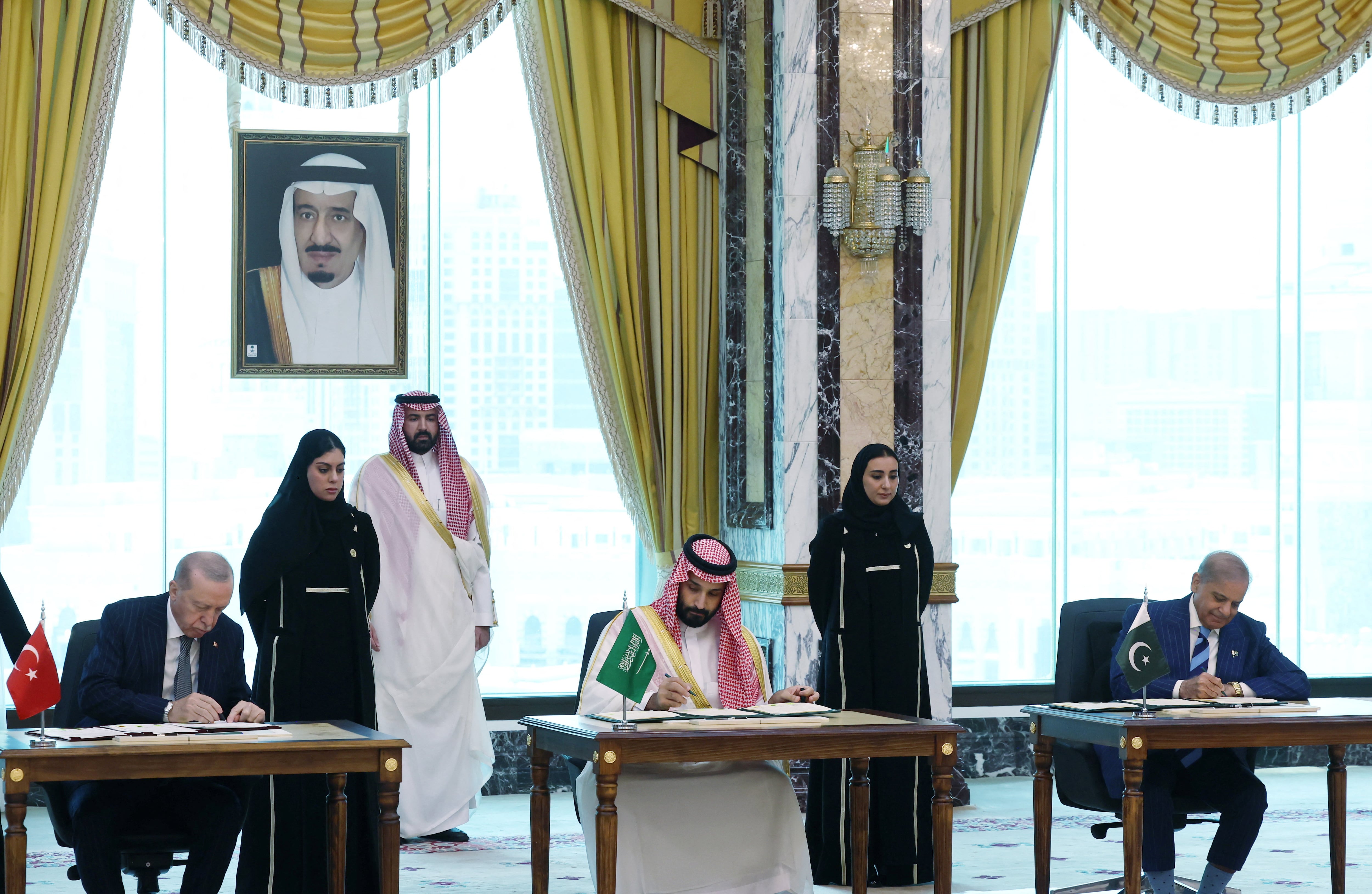
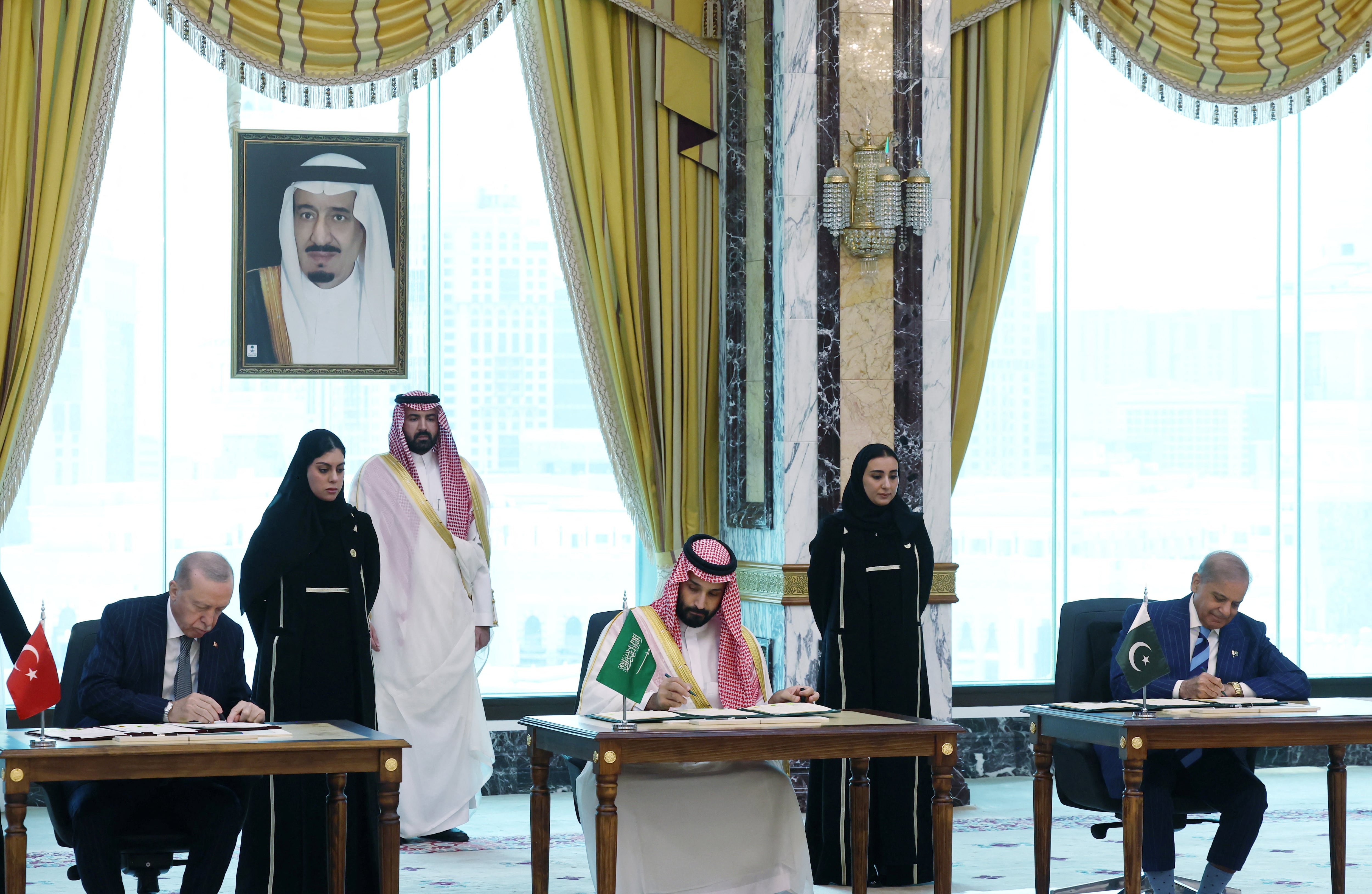
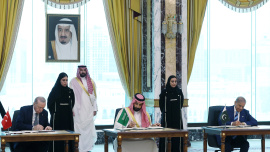
Last month’s Makkah Pact depicts this dichotomy. Meant to overtly unify Sunni neighbours against Shia Iran, while invoking one of Islam’s most revered sites to do so, it has instead induced regional countries to covertly seek a mutual modus operandi with Iran, even as ‘rebel’ groups such as the Houthis elevate their grievances. Beyond flagging Iran as the primary target, the Pact permits at least three other long-term possibilities: serving as (a) a defensive measure should Israel target the next layer of perceived Muslim adversaries, as Pakistan, Saudi Arabia, and Türkiye have analytically become; (b) an offensive measure, as Pakistan hinted in mid-September when raising the prospect of Houthi missiles striking Makkah Pact territories in the struggle to control the Bab-el-Mandeb waterways (which the Houthis have almost done), potentially disrupting Saudi oil flows through the Red Sea amid the explosive situation in the Strait of Hormuz; or (c) a global rallying cry for Muslims to coalesce, much in the tradition of BRICS Plus and the Shanghai Cooperation Organisation (SCO) in this century.
Although its seeds were sown well before the Iran War began in February 2026, Israel's growing defence cooperation with Greece, a neighbouring European Union member, also brought into focus one of its historical regional adversaries, NATO member Türkiye. Do we now begin to see the larger picture that the Makkah Pact portrays? NATO membership may not necessarily bring Türkiye all the support it would seek should Israel's ‘push’ turn to ‘shove’.
Bangladesh seeks membership of both BRICS Plus and the SCO, while discussion of it joining the Makkah Pact continues to grow. Given the geographical and logistical realities, any such alignment would be more sentimental than pragmatic. Its military has neither Pakistan’s nuclear capabilities nor Saudi Arabia’s state-of-the-art armoury, and it is far from mustering sophisticated NATO-type partnerships of the kind Türkiye has developed. With more people below the poverty line today than before the pandemic began, Bangladesh also ranks among the world’s dozen most congested, polluted, and climate-vulnerable countries—priorities demanding more attention than fiddling with fumes.
When the Middle East coughs, the world typically catches the proverbial flu. We saw that twice in the 1970s: first, through petroleum price hikes; then, as if to drive that message home, through the ousting of the CIA-backed Pahlavi dynasty. If the ‘West’ was troubled by losing a client, the ayatollah-based theocracy perturbed it even more. Yet that development also prepared the ground for Islamophobia to gain prominence after the ‘Red Scare’ receded by 1989. A coincidental but eye-catching publication by Samuel Huntington, The Clash of Civilizations? (in 1993), gave the ‘West’ another street-level reason to target Muslims: immigration. Of course, the 2026 Iran War is the latest case of this ‘flu’. The disruption surrounding the Strait of Hormuz has thus far demonstrated enough economic firepower to reconfigure global trade routes, supply chains, and resource flows. Because of all of the above, global alignments cannot but change. This is drama unfolding on stage for this generation to witness—and to learn how to control panic from—rather than for the next generation to explain these tectonic changes to us retrospectively.
The Makkah Pact already offers a glimpse of this. Although its seeds were sown well before the Iran War began in February 2026, Israel's growing defence cooperation with Greece, a neighbouring European Union member, also brought into focus one of its historical regional adversaries, NATO member Türkiye. Do we now begin to see the larger picture that the Makkah Pact portrays? NATO membership may not necessarily bring Türkiye all the support it would seek should Israel's ‘push’ turn to ‘shove’. Türkiye has already revived strategic cooperation with two countries once connected through RCD (Regional Cooperation for Development, established in 1964) and CENTO (Central Treaty Organization, established in 1955), most notably Pakistan. By overtly framing the geopolitical Makkah Pact around Islamic solidarity, Saudi Arabia can appeal to more Muslim countries while covertly keeping channels open with Iran. Yet, in the longer term, Israel may loom increasingly large in Saudi strategic calculations, particularly if regional tensions continue to escalate.
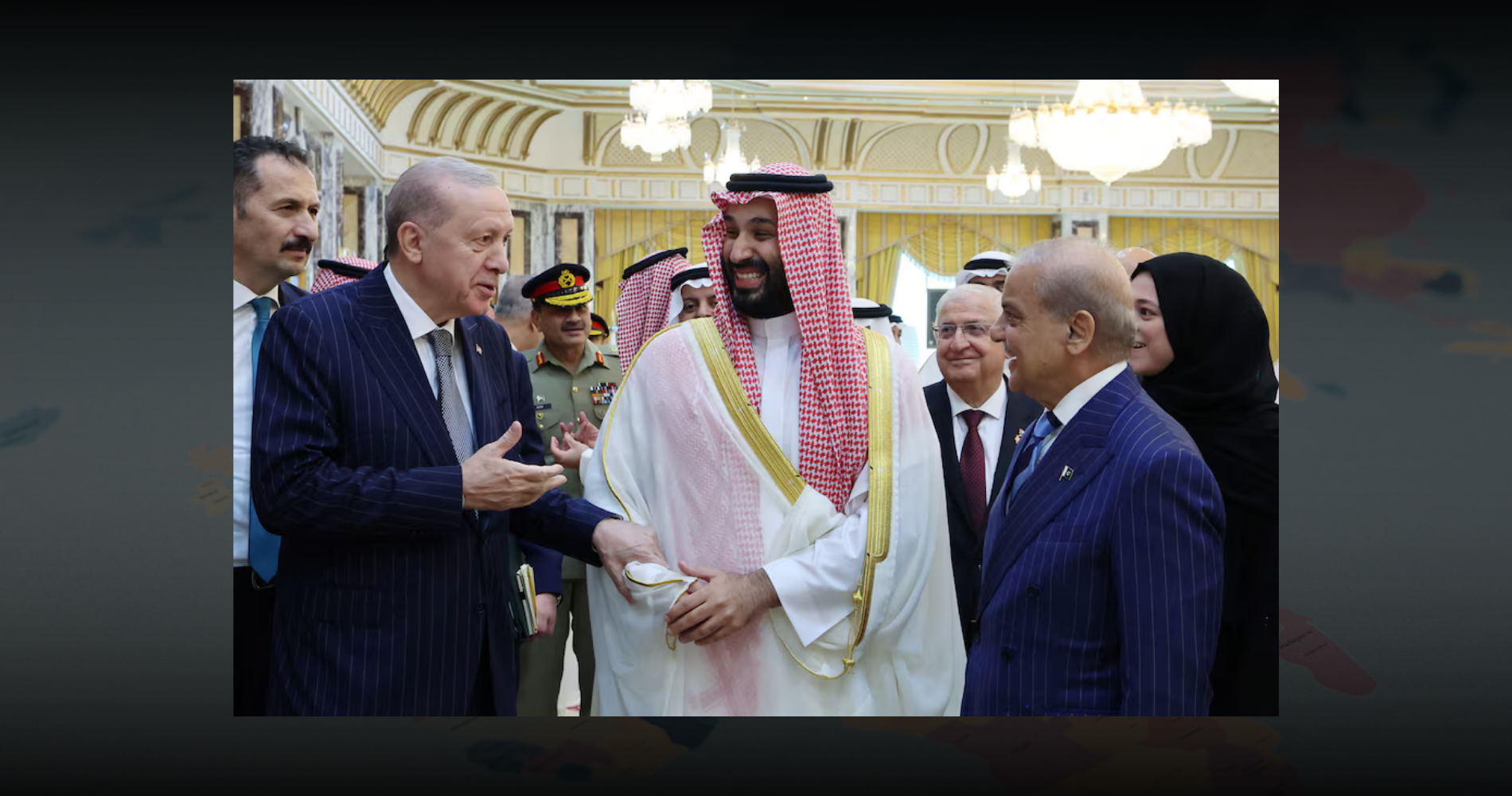
Pakistan's entry spices things up. Not only was it involved in efforts to facilitate peace between the warring countries—and doing so vigorously—but once those efforts faltered for reasons largely beyond Pakistan's control, it put on its warrior's clothing for the Makkah Pact. That pact followed the September 2025 Strategic Mutual Defence Agreement between Pakistan and Saudi Arabia. Though conceived as a defensive arrangement, Pakistan could potentially derive broader strategic benefits from the new pact. Should the Makkah Pact place Pakistan's nuclear capabilities behind the defence of Saudi Arabia and Türkiye, Islamabad might also expect those two countries to provide diplomatic or strategic support during a future confrontation with India. If so, this would be no mean feat. Meanwhile, India and Israel have deepened defence cooperation of their own, with their relationship elevated to a Special Strategic Partnership in February 2026. Discussions around Israeli systems such as the Arrow missile defence system, Rafael's David's Sling and Iron Dome, and Rafael and Elbit's Iron Beam have further highlighted the expanding defence dimension of that relationship.
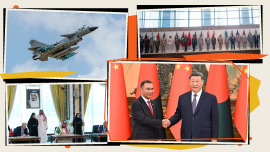
This is where the ‘thickening plot’ goes global. With the Middle East fracas knocking on India's doors, Pakistan's trump card would be China. In the May 2025 India-Pakistan military confrontation, Pakistan deployed Chinese-made Chengdu J-10C fighter aircraft alongside other Chinese military technology, while India operated aircraft including the French-made Dassault Rafale and Mirage 2000, as well as the Russian-designed MiG-29. Pakistan also launched Operation Bunyan-un-Marsoos during the confrontation. Any future India-Pakistan confrontation unfolding alongside heightened India-Israel defence cooperation would inevitably bring the Pakistan-China strategic relationship into sharper focus.
As a possible global window opens for the Makkah Pact, the United States cannot but enter the cauldron. Its inability thus far to secure a comprehensive resolution to the Iran conflict, alongside the strains imposed by the war on US military resources and regional deployments, points to the limits of American power. Domestic pressures reinforce these constraints. Household costs have risen, driven in part by higher fertiliser, gas and petroleum prices, while uncertainty surrounding the war has added to political pressures in a midterm election year. These developments have weighed on voter confidence. A Reuters/Ipsos poll in September put President Donald Trump's approval rating at 35 percent, only slightly above a record low of 33 percent recorded earlier.
Pakistan's entry spices things up. Not only was it involved in efforts to facilitate peace between the warring countries—and doing so vigorously—but once those efforts faltered for reasons largely beyond Pakistan's control, it put on its warrior's clothing for the Makkah Pact. That pact followed the September 2025 Strategic Mutual Defence Agreement between Pakistan and Saudi Arabia. Though conceived as a defensive arrangement, Pakistan could potentially derive broader strategic benefits from the new pact.
Israel, too, faces its own domestic political pressures. The political consequences of the war and the shifting balance among competing parties add another layer of uncertainty to the regional picture. To say that US-Israel relations are at a crossroads may be going too far, but the relationship is operating within a considerably more complicated regional and domestic political environment than before.
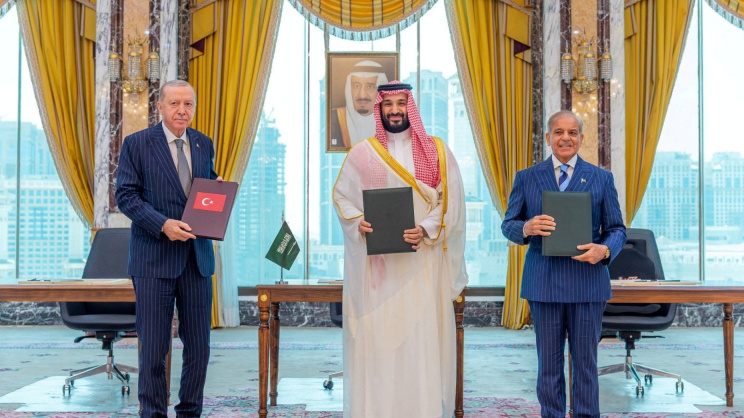
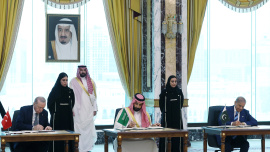
All in all, Makkah Pact ripples may ultimately prove more consequential than Makkah Pact provisions. There is a growing question over whether Saudi Arabia increasingly views the arrangement not simply through the prism of Iran, but as a broader insurance policy against future regional threats. Türkiye remains in the strategic front seat, while Pakistan brings both its military weight and nuclear capability to the arrangement. The pact itself formally establishes collective deterrence: an armed attack against any one of the three signatories is to be regarded as an attack against all three. How those wider ripples develop may open a Makkah Pact ‘Chapter Two’: a country-specific appraisal from those outside the ‘inner three’ signatories.
Dr Imtiaz A Hussain is a professor in the Department of Global Studies and Governance (GSG) at Independent University, Bangladesh (IUB).
Send your articles for Slow Reads to slowreads@thedailystar.net. Check out our submission guidelines for details.
Myanmar’s deteriorating crisis and the political future of the Rohingya
Bangladesh between India and China: The dilemma of defence diversification
What Bangladesh should ask before joining the Makkah Pact

Nepal’s difficult passage: Political change meets ecological crisis
BRICS at 20: Why the New Delhi Summit matters to the Global South

From Balfour to sanctions: Why the UK’s ban on Israeli settlement trade matters

Ganges Water Treaty: A new bargain or a new dispute?
Bangladesh and the Mecca Pact: The national security questions we are missing
From Chinese fighter jets to the Mecca Pact: Bangladesh’s strategic future?