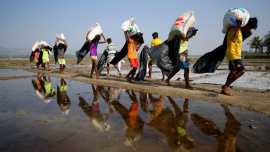
Why India and Bangladesh need a new approach to transboundary rivers
South Asia is the region most vulnerable to climate change, according to the Sixth Assessment Report (2022) of the Intergovernmental Panel on Climate Change (IPCC). Yet this vulnerability is being compounded by a rapidly growing population, poverty, poor governance, water scarcity, and transboundary water conflicts.
After South America, South Asia is home to one of the world's largest river systems, which has shaped civilisations for millennia. These rivers not only sustain the region's culture, economy and environment, but their natural flows are also fundamental to climate resilience and ecological stability. There is no doubt that climate change is placing growing pressure on these rivers by raising temperatures, accelerating the retreat of Himalayan glaciers, and intensifying monsoon rainfall. Equally important, however, are increasing conflicts over transboundary rivers and the persistent failure to view rivers as interconnected social-ecological systems. Together, these human and climatic pressures are amplifying the adverse impacts of climate change across the region.
In broad terms, social-ecological systems describe the dynamic interactions between human societies and natural ecosystems, and the deeply interconnected relationships that determine their resilience to environmental and social shocks such as climate change and pandemics. From this perspective, a river is shaped not only by climate, hydrology, land and geography, but also by governance, institutions, economic and cultural activities, and the complex interactions among them, all of which underpin people's livelihoods. While this article does not seek to provide an exhaustive roadmap for resolving transboundary water conflicts, it highlights several key reasons why rivers must be understood through a social-ecological systems lens if we are to address the climate crisis effectively.
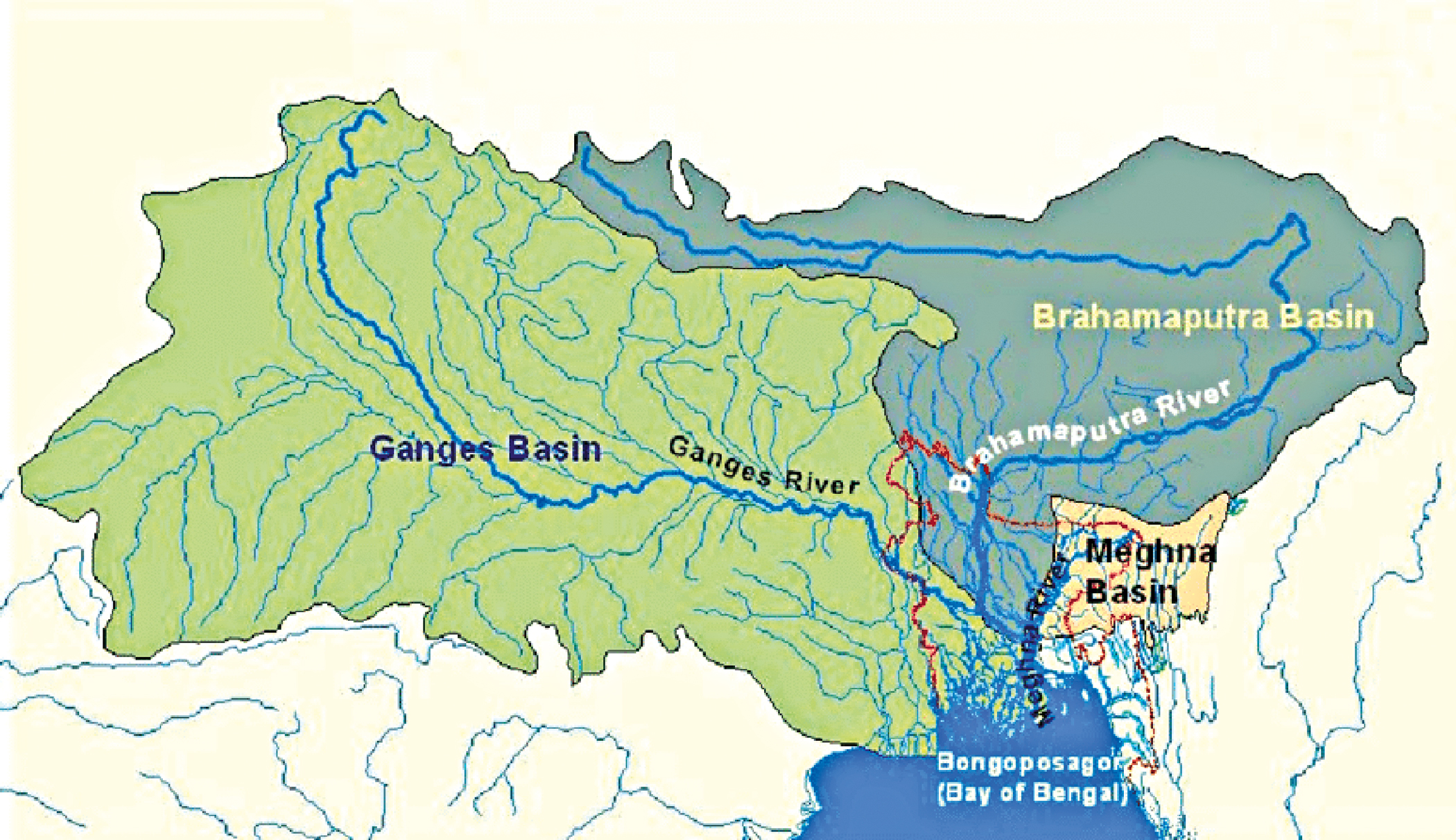
First, the impacts of the Farakka Barrage and the Ganges Treaty between India and Bangladesh deserve renewed attention, as they remain both significant and politically sensitive issues with profound implications for people-to-people relations between the two countries.
The Ganges Treaty is due to expire in December 2026. Signed in 1996 for a period of 30 years on the principle of equal sharing, the Treaty is conditional upon a minimum flow threshold rather than guaranteeing water flows at all times. The consequences of reduced flows caused by the Farakka Barrage are now clearly evident across the social-ecological systems of nearly half of Bangladesh. According to our recent research, the Ganges during the dry season, together with three other major rivers among Bangladesh's ten principal rivers, has already crossed the safe operating space. The impacts extend from water scarcity to the degradation of aquatic ecosystems and fish habitats, declining agricultural productivity, the deterioration of mangrove ecosystems, and increasing salinity.
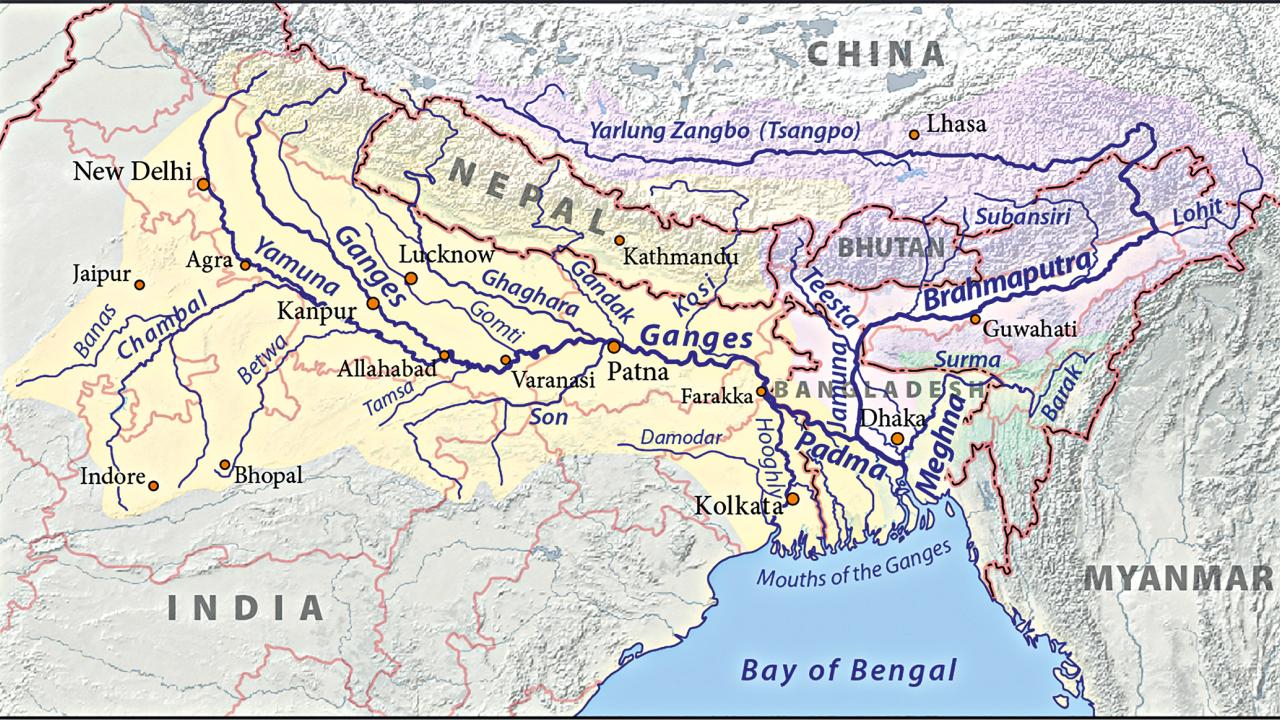
Once a mighty river with powerful flows, parts of the Ganges have now become so depleted that they can sometimes be crossed on foot. Known as the Padma in Bangladesh, the river was once among the country's richest fishing grounds and a major source of affordable nutrition. Although Bangladesh's fisheries sector has undergone a remarkable transformation through closed-pond aquaculture, supported by increasing production inputs, natural fish production from rivers is in steep decline as a consequence of the Farakka Barrage.
The repercussions are not confined to Bangladesh. The decline of hilsa—a fish deeply embedded in the cultural identity of millions of people in West Bengal and central to festivals such as Jamai Sasthi and Durga Puja—has also had significant consequences for India.
Though climate change has negatively affected the flow of the Ganges, we must also recognise that nearly 1,000 dams have been built across the Ganges River basin in India, significantly altering, restricting, and diverting the river's natural flow. Therefore, both future climate change projections and the diversion of upstream water through dams must be explicitly taken into account during negotiations for the renewal of the Ganges Water Treaty.
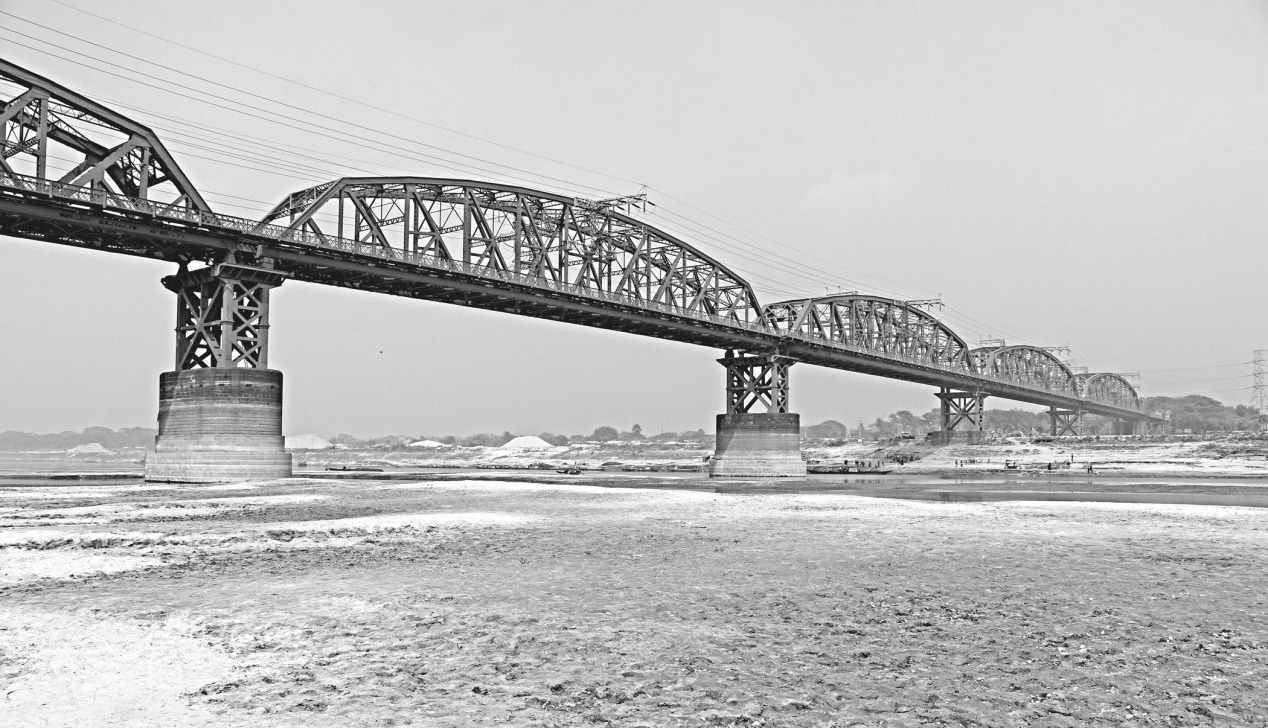
Second, the transboundary nature of rivers means that local risks inevitably extend across borders. The growing threat of water scarcity in the lower reaches of the Ganges in Bangladesh is amplifying the impacts of climate change by altering surface heating and cooling patterns. The geophysical characteristics of the vast Ganges-Brahmaputra-Meghna (GBM) river basin require sufficient upstream river flows to push back increasing salinity and sea-level rise from the Bay of Bengal. Without adequate upstream flows, one of the world's largest mangrove forests could be severely disrupted and, in the long term, irreversibly damaged, affecting not only the regional climate balance but also the Sundarbans in the Indian part of the delta.
Importantly, the Ganges in India and several major rivers in China are among the most polluted in the world, largely because of poorly managed industrial waste, untreated urban sewage, and agricultural runoff. These pollutants are carried downstream by river flows. But what happens when those flows are severely reduced by dams or by the absence of effective transboundary water-sharing agreements? Reduced flows diminish rivers' natural capacity to transport pollutants, threatening the health of downstream ecosystems, estuaries and coastal waters.
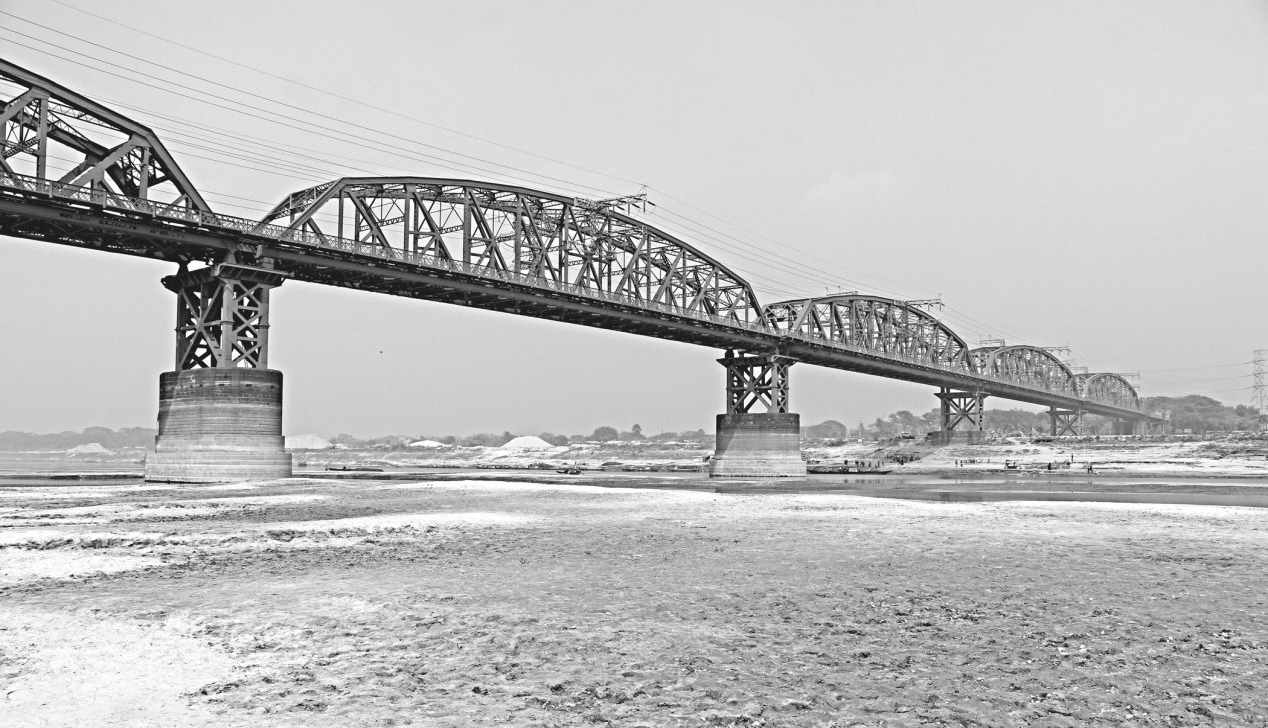
The cascading consequences of human intervention through dams on transboundary rivers are therefore felt not only beyond India's borders but also within India's own social-ecological system. According to Indian experts, flood risks in Bihar have increased significantly because of the progressive accumulation of silt upstream of the Farakka Barrage between Patna and Bhagalpur. By slowing the river, the barrage traps sediment, reduces the channel's carrying capacity, and over time creates a self-reinforcing cycle of more frequent and severe flooding. These feedback loops destabilise the river system, increasing flood risks through channel changes and altered water depths, even as further engineering interventions are introduced to mitigate those very risks.
Third, strengthening leadership in addressing climate change and transboundary water conflicts is imperative for a better and more sustainable future for the 3 billion people living across the Ganges-Brahmaputra-Meghna (GBM) river basin.
The Ganges Water Treaty, which expires in December 2026, is essential not only for rebuilding people-to-people relations between India and Bangladesh but also for addressing climate change and other transboundary river issues, including those affecting the Brahmaputra River basin. China is constructing what has been described as the world's largest dam—the "mother of all dams"—which could not only reduce river flows but also increase flood risks in both India and Bangladesh. Bangladesh and India have both announced plans to build major infrastructure projects to respond to developments on the Ganges and the Brahmaputra, respectively.
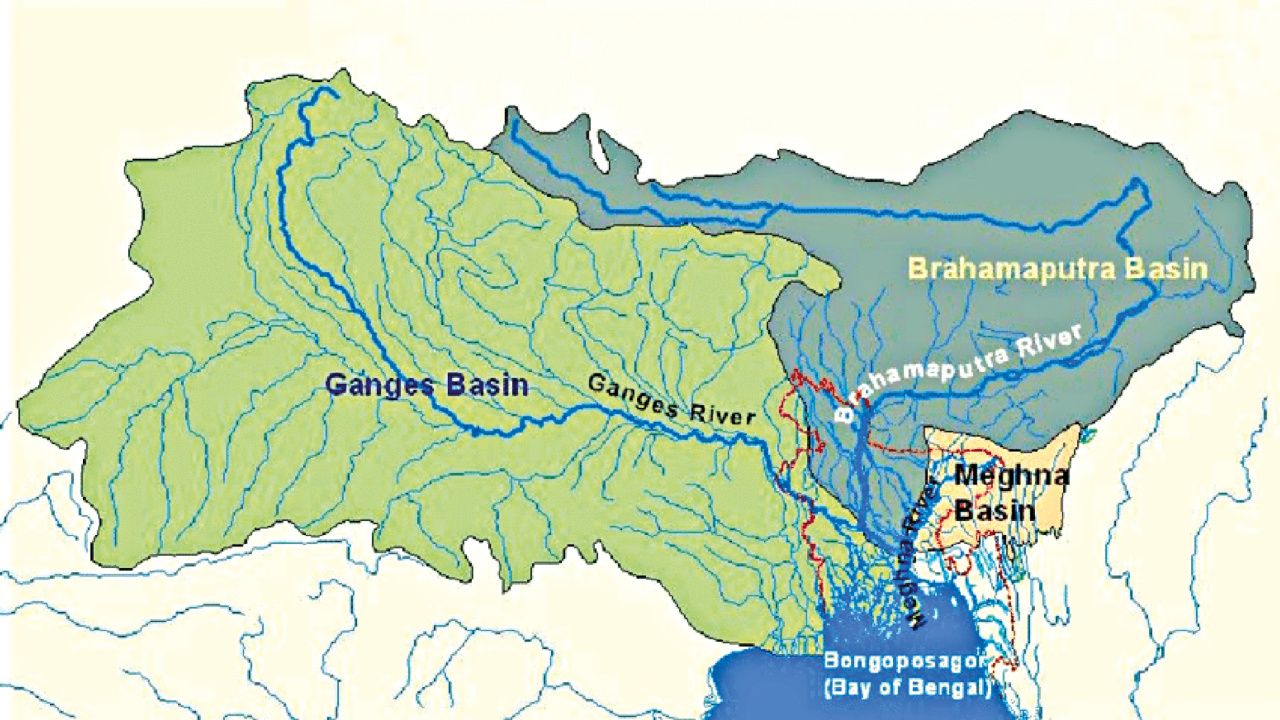
However, increasing political instability, rivalry, and countermeasures often place additional stress on social-ecological systems and may ultimately lead to social collapse in the long term. Ultimately, these pressures will increase food and water insecurity and drive migration across the Ganges-Brahmaputra-Meghna (GBM) river basin, where more than 3 billion people live in India, China and Bangladesh.
Real-time, data-driven monitoring, greater data transparency, and science-based diplomacy supported by artificial intelligence can help restore trust in resolving transboundary water conflicts and prevent severe damage to livelihoods caused by flash floods. A tax-based approach to water sharing could also be considered, whereby countries that use more water pay more, with the revenue shared among the countries within the river basin.
The solution to transboundary water challenges is neither simple nor straightforward. It requires sustained cooperation among riparian countries to ensure fair and equitable water-sharing treaties, ecological restoration, and technological innovations that maintain healthy river flows. Political leaders must urgently place human wellbeing, water security, and climate resilience at the centre of their policy agendas, ensuring that these commitments endure despite changes in governments or political regimes. The safe operating space framework for rivers could provide a robust scientific basis for monitoring and maintaining river systems within ecologically safe limits. Applying this framework across the Ganges-Brahmaputra-Meghna basin would help track the impacts of climate change, guide evidence-based policymaking, and support a more sustainable future for both India and Bangladesh.
Dr Md Sarwar Hossain is Associate Professor and Director of the Postgraduate Programme, School of Social & Environmental Sustainability, University of Glasgow. He is also Editor-in-Chief of the journal Mitigation and Adaptation Strategies for Global Change.
Alamgir Kabir is Assistant Professor in the Department of Environmental Science at Bangladesh University of Professionals.
Sheikh Rokonuzzaman is with Riverine People.
Send your articles for Slow Reads to slowreads@thedailystar.net. Check out our submission guidelines for details.
The future of the Bangladesh-China-Myanmar Economic Corridor

Superpower rivalry in space: The invisible battlefield of the Iran war
The new world of geoeconomics: From comparative advantage to coercive advantage
BIG-B and Bangladesh's road to Southeast Asia
China–Bangladesh Community: Bandwagoning, soft alignment, or rhetoric?
The global refugee crisis and Bangladesh's Rohingya challenge
Rohingya deaths in landslides call for a reckoning with systemic failures

For Rohingya camps, measles control requires tailored interventions

How the education vacuum is fuelling crimes in Rohingya camps