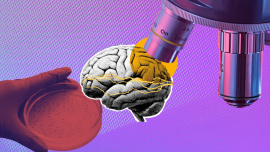
Are your thoughts, feelings and actions really your own?
Have you observed any sudden changes in your thoughts, feelings, or any kind of behavioural responses?
These changes may actually be connected to the presence or vibe of someone close to you — it could be a family member, a friend, a coworker, or your partner. You may be noticing that the behaviour, thinking, or speaking style of the people around you is exerting a positive or negative influence on your own behaviour, thoughts or speech.
However, have you ever wondered what the reason behind this is? What does science say?
To understand why this occurs, initially we need to look at the scientific explanation. So, let us begin with a fact that humans are inherently social creatures. As a result, our body and brain unconsciously begin to adopt the thoughts, feelings, or actions of the people around us.
The way people around us speak or react can significantly shape the emotional environment and spread positive or negative energy. However, not all influences spread equally. Negative energy often spreads faster compared to positive energy because our brain notices discomfort faster than ease.
Psychologists call this phenomenon “emotional contagion.” It is a quiet process through which people unconsciously absorb and mirror the emotions of others in their surroundings. When we interact with people, our brains mirror the emotional states we observe. That is why our mood is lifted or drained according to the mood of the person in front of us.
For example, if you’re around someone who is frustrated, you might automatically start feeling tense even if they haven’t said anything. At the same time, if you’re with someone calm and peaceful, you may feel relaxed.
There is another related concept, which is called “subtle and direct influence”. This means that a person’s energy can be felt either subtly or directly and strongly through their communication style, body language, or tone of voice.
Subtle influence happens indirectly when you feel tense or delighted around an angry or peaceful person through their tone, attitude or behaviour, even though they have not said a word. Suppose one of your friends shares their academic results and mentions how focused they feel on their studies, you may start feeling motivated to study too, even though they never told you to do it.
On the other hand, direct influence happens when someone openly tells you what to do or clearly expresses his or her mood, which directly affects you. If a teacher tells a student, “You must study for the upcoming exam; otherwise, you won’t receive a good grade,” this is an example of direct influence.
A neurological factor that makes this influence stronger is the role of social bonding circuits especially oxytocin. This hormone is released in close relationships and makes the brain more sensitive to that person’s emotions and behaviour. As a result, the moods of the people closest to us have a stronger impact on us:
If they are sad, you feel low.
If they are stressed, you feel tense.
If they are happy, you feel lighter.
These processes explain how the emotional atmosphere around us can shape our thoughts, mood, and even our perceptions.
Let’s do a self-test for deeper insight. Think about your most recent conversation with a friend or anyone else you had. Did you unconsciously pick up any accent, tone, or emotional vibe from them? Perhaps it was their choice of words, accent, a calm or loud voice, or some other kind of energy. Take a brief moment to introspect.
Now, think about the person you spend the most time with — do they lift your mood or drain it? Even your social media platforms subtly shape your mood and behaviour. Has it ever happened to you that you started scrolling through your newsfeed during free time, but suddenly saw an offensive comment or an emotional reel that instantly shifted your mood?

In today’s era, social media platforms play a significant role in shaping our moods.
Our mood does not shift only through conversations or screens; it can be changed in many other ways as well. Facial expressions, body language or your environment also play a prominent role in shifting your energy. A smirk, a blank face, crossed arms or any stressful environment can make you feel uneasy, anxious, or angry. You do not need anyone to tell you what to think or how to behave; their energy does it unconsciously.
The way people around us speak or react can significantly shape the emotional environment and spread positive or negative energy. However, not all influences spread equally. Negative energy often spreads faster compared to positive energy because our brain notices discomfort faster than ease.
Anger, arrogance, or persistent frustration are common forms of negative energy as we know. If you are around someone angry or anxious, you will automatically feel the tension even if you were calm just a moment ago. This explains why you often feel frustrated after interacting with a toxic person.
However, this also works in the other way around. Positive energy, such as hopefulness, calmness, and patience, brings encouragement and relief. A person who is calm and confident naturally spreads positive energy to others as well. Their energy makes everything easier and clearer for you, even if they do not do anything.
We are constantly giving and receiving energy from each other, as part of being human, and the people around us inevitably influence our thoughts, feelings, and actions. Ultimately, becoming aware of these subtle influences allows us to respond more intentionally rather than simply react, making us more mindful in how we engage with others and ourselves.
Sinthia Khan is an undergraduate student of English at East West University.
Send your articles for Slow Reads to slowreads@thedailystar.net. Check out our submission guidelines for details.

Bengali Muslims and the ghosts of India's citizenship politics

How Nobel laureate Anne Carson discovered new possibilities within language

The history of caste is not what we think

And still, my father lives
Bangladesh's Article 26 challenge: Reforming laws, protecting workers' rights

The double burden behind women’s empowerment

After America leaves, what next for Iraq?

From al-Andalus to the Mughals: How empires become identity

Bangladesh’s solar growth: Will the incentives be enough?