


Women and the climate crisis in Bangladesh
27 September 2026
•
Slow Reads Special
Tajuddin Ahmad: A life for Bangladesh
23 July 2026
•
Slow Reads Special
Interactive / The haor crisis explained
16 May 2026
•
The Haor Crisis

Interactive: Bangladesh Labour History · 1881 - 2026 / Fight for Justice
30 April 2026
•
In Focus
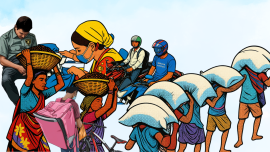
Justice at work for all
30 April 2026
•
Slow Reads Special
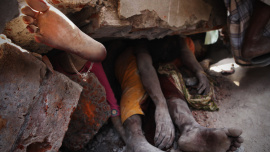
The Price of Labour
23 April 2026
•
Slow Reads Special
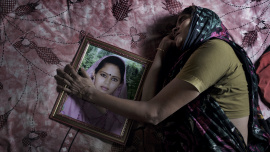
Interactive / How many more lives before workplaces become safe?
23 April 2026
•
Price of Labour
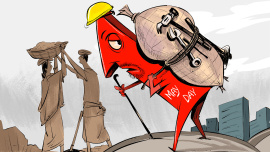
The expansion of wage labour and the message of May Day
1 May 2026
•
Big Picture
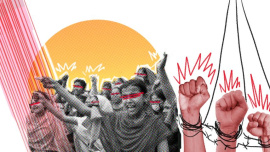
In conversation with Richard Wolff / Can workers seize the opportunity as Western capitalism declines?
30 April 2026
•
Big Picture

Unequal homes
Across every region of the country, within families of many different communities, classes, and professions, countless individuals are being subjected to physical and psychological violence. What follows is a brief attempt to outline the legal framework governing marriage, divorce, maintenance, and child guardianship under the laws currently in force in Bangladesh.
8 March 2026
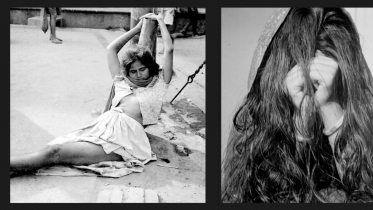
The Australian doctor who witnessed what Bangladesh wanted to forget
Dr. Davis explained that this violence was not incidental, but rather a calculated strategy taken by the Pakistani Army.
3 March 2026
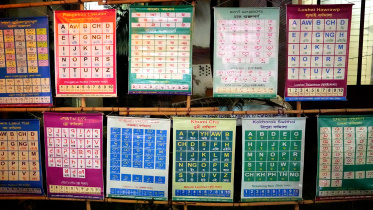
Beyond Bangla: Why Bangladesh’s other languages matter
Many of the mother tongues spoken by Adivasi and other smaller ethnic communities are at risk of extinction.
21 February 2026
The Bawm language at a crossroads
On International Mother Language Day, the story of the Bawm language in Bangladesh stands as both a testament to resilience and a warning of fragility.
21 February 2026
The last speaker of Saura
When this correspondent visited Saura Palli in Rajghat Union on Monday, the frail elder whispered only a few words in his native tongue: “If I die, the language will die. Please take initiative to save my mother tongue before I die. My identity lives in this language.”
21 February 2026
Preserving the A’chik tongue
For generations, this heritage thrived as an oral masterpiece, surviving without a formal indigenous script.
21 February 2026
Hajong and the cost of being unwritten
Official recognition remains vague, often buried under larger language labels.
21 February 2026

Bangla in the age of algorithms
For the first time in history, language evolution is partly being steered by machines trained on digital data.
21 February 2026
Thar: A language born on the rivers
The Thar language of the Bede is not merely a means of communication; it is a bearer of their history, culture, and social existence.
21 February 2026
Will the next generation speak Kokborok?
At present, Kokborok has very limited written and literary development in Bangladesh.
21 February 2026
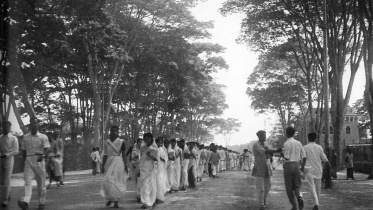
Bangladesh in many voices
Ekushey today is to recognise that protecting linguistic diversity is inseparable from protecting cultural memory, social justice, and the right to be heard.
20 February 2026
What two decades with Hyow taught me about language loss
The word ‘Hyow’ refers to the Chin ethnic community, which belongs to the South Central (formerly Kuki-Chin) branch of the Tibeto-Burman language family.
20 February 2026
Language, power, and the erasure of Kol
The shift from ‘Kol’ to ‘Santali’ is not merely terminological; it denotes changing regimes of representation, power, and visibility.
20 February 2026
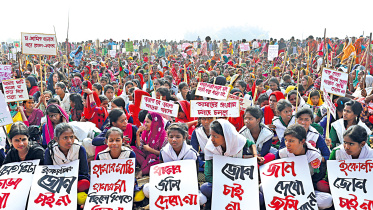
Those who remain invisible in Bangladesh’s political imagination
The most invisible and unheard communities in Bangladesh include, among others, ethnic communities or adivasis, tea workers,
31 January 2026
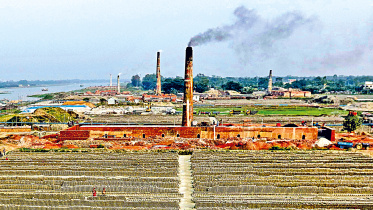
Bound by dadan
At the heart of Bangladesh’s brick kiln industry lies a recruitment system that quietly sustains inhumane exploitation.
31 January 2026
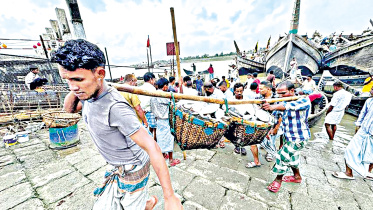
Fish stocks collapse in the Bay of Bengal, fishermen at risk
A historic decline in fish stocks in the Bay of Bengal is reshaping both the marine ecosystem and the lives of thousands of coastal fishing families.
24 January 2026

The making of folk poet Jasimuddin
Jasimuddin remembered singing songs to himself. He could not remember the words but remembered putting his own words into some of them.
4 January 2026
The history we walked past
The Muktijoddhas made do with whatever weapons and tools they had available.
15 December 2025
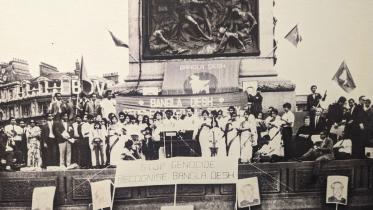
A PEOPLE’S WAR, A WORLD’S RECKONING
We revisit 1971 not as an isolated national event but as a moment woven into larger histories.
15 December 2025
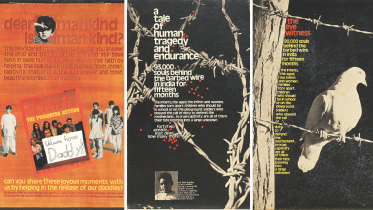
The war after the war: Pakistan’s POWs and postal propaganda
Postal evidence supports the view that a propaganda campaign was underway as soon as the army surrendered.
15 December 2025