Remembering Yayoi Kusama: My encounters with the master of infinity
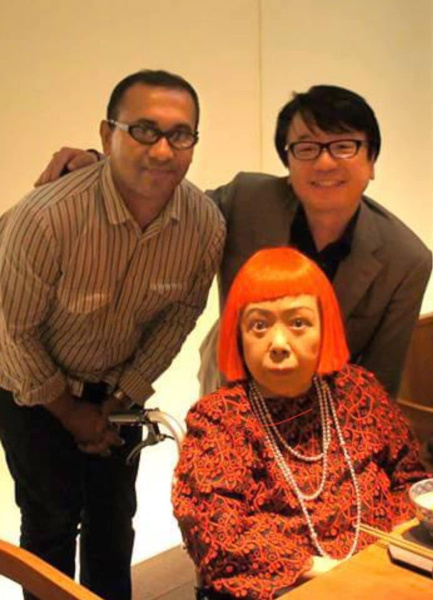
Back in 2008, when I began to be represented by Ota Fine Arts, I first met artist Yayoi Kusama at the Ota Fine Arts Gallery in Tokyo. She had rarely appeared in public for many years, even at her own solo exhibitions anywhere in the world. Since Kusama and I were represented by the same gallery, we had frequent opportunities to meet and get to know each other. She was always soft-spoken and seemed very slow in her movements. I always felt that she was a reserved, bold and seemingly resilient person. As a dedicated artist, Kusama was always independent, intensely focused, ambitious in her creative work and highly disciplined in maintaining an art-centred routine, while also remaining deeply eccentric well into the 1990s.
When I was exhibiting at the Aichi Triennale in 2010, at the Aichi Prefectural Museum of Art in Japan, she visited my fighter-aircraft art project in a wheelchair, and we talked about my artwork and creative process. She took a long time to look at my artworks. I was so glad to share my experience with her, while she herself struck me very much as a wunderkind—an intuitive artist.
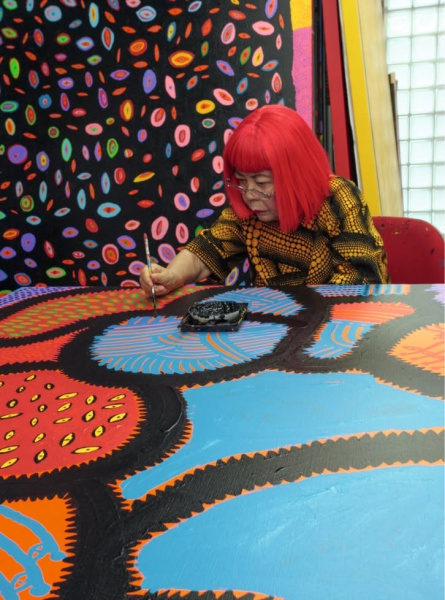
A life of quiet discipline
Japanese polka-dot artist Yayoi Kusama died on 14 August 2026, at the age of 97, in Tokyo. She spent her final years voluntarily living in Seiwa Hospital, a psychiatric hospital in Tokyo's Shinjuku area, one of the city's major commercial and entertainment districts. Her studio was around the corner from the hospital. Kusama continued painting daily until her death. The avant-garde artist left behind a groundbreaking legacy spanning more than seven decades and extending across the world. In the 1990s, interest in her work surged globally, turning her into an iconic and universally beloved contemporary artist, recognised for her signature red wig and distinctive polka-dot aesthetic.
“I’ve always experimented with various expressions in art. Among them, I especially put my heart and soul into environmental art. My art is not only with paper and a brush, but the world I see is an endless space. I create environmental art to prove the great spirit of inquiry in the diverse human history. It is environmental art that I could devote all my efforts to as a way to seek truth with all my heart.”
Her studio assistant shared with us details about her daily life and how she spent her time. Since she lived in a hospital with many nurses, studio assistants and doctors around her, Kusama used to begin her day with a glass of water and a simple breakfast of bread or soft foods such as boiled grains, starchy vegetables or fruit, accompanied by green tea. Kusama continued to display her keen and unique sense of fashion. She had numerous books in her room, although she rarely read them.
Anti-war activism and artistic isolation
While I was in Tokyo, we heard that Kusama had worked through poverty, obscurity and isolation in New York's male-dominated art scene during the 1960s, even as she pioneered radical performance art, soft sculptures and mirror installations. She developed a strong political conscience, staging anti-war and nude demonstrations during the Vietnam War. During her years in New York, she also shared an intense, close yet platonic relationship with the reclusive American artist Joseph Cornell.
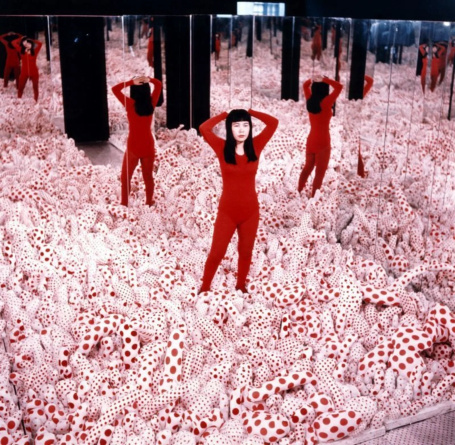
At the turn of the 2000s, I met a couple of people in the New York art scene who were very close to Kusama. I always believed that Kusama was an evergreen figure, perpetually relevant to the art world. Kusama dressed formally for private views and wore kimonos that she had brought from Japan.
In the 1960s, during the Vietnam War, Kusama staged demonstrations in New York. These events countered violence through activism in the form of naked body-painting happenings and love-ins. Her first Anatomic Explosion, featuring naked dancers, took place on 15 October 1968 opposite the New York Stock Exchange. The artist's press release stated: ‘The money made with this stock is enabling the war to continue. We protest this cruel, greedy instrument of the war establishment.’
I fight pain, anxiety, and fear every day, and the only method I have found that relieves my illness is to keep creating art. My life is a dot lost among thousands of other dots. I fight to find love and a mystery of human life.
Art as survival
She spent nearly the entire day painting, developing artworks, writing poetry, working on fiction, planning art projects and approving major projects for future exhibitions around the world. She frequently noted that this rigorous daily practice of creation was her primary coping mechanism for dealing with lifelong hallucinations, anxiety and fear. She showed an absolute and lifelong devotion to art, using her daily creative practice to survive severe mental illness and build a revolutionary global career. In recent years, as she became physically weaker, she adapted her process by sitting in a wheelchair and working on large canvases placed completely flat on a table. She rarely met casual visitors or outsiders. Her studio officials allowed only 20 visitors at a time every six months.
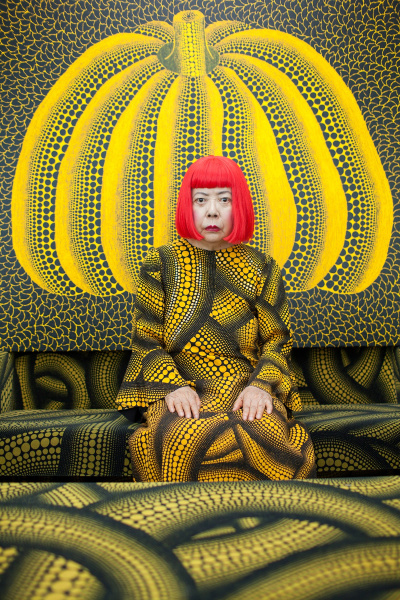
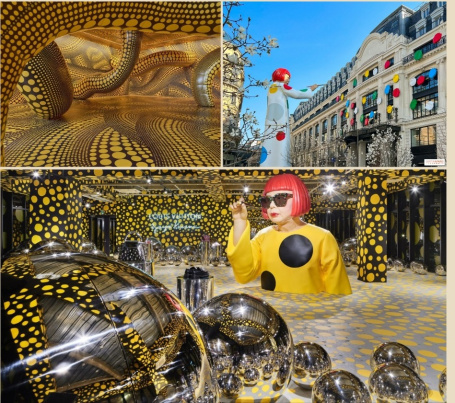
In recent years, Kusama continued to design her own clothes, using patterns from her paintings on bespoke fabrics. She often complemented her outfits with brightly coloured wigs to complete the distinctive ‘Kusama look’. She was also a model and designer for many famous companies, including Louis Vuitton, Toyota, the Japanese telecommunications company KDDI and others.

Infinity, dots and pumpkins
Yayoi Kusama is famous for her immersive Infinity Mirror Rooms, repeating polka-dot patterns and vibrant pumpkin sculptures. She is equally iconic for her scarlet or pink-coloured bob wigs and coordinating, brightly patterned outfits that often feature her signature polka dots. From the 1950s to the 2020s, Kusama produced vivid paintings, often featuring polka dots and other recurring motifs, as well as sculptures and vast installations that frequently drew on her experience of hallucinations.
One of Yayoi Kusama's most famous quotes reflects on her mental health and creative drive: “I fight pain, anxiety, and fear every day, and the only method I have found that relieves my illness is to keep creating art. My life is a dot lost among thousands of other dots. I fight to find love and a mystery of human life.”
She also expressed her commitment to environmental art: “I’ve always experimented with various expressions in art. Among them, I especially put my heart and soul into environmental art. My art is not only with paper and a brush, but the world I see is an endless space. I create environmental art to prove the great spirit of inquiry in the diverse human history. It is environmental art that I could devote all my efforts to as a way to seek truth with all my heart.”
Courtesy of Yayoi Kusama Studio, Inc.
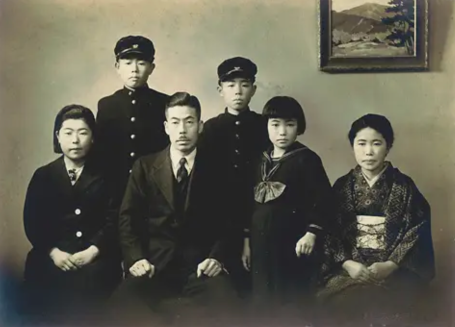
Kusama was born in Matsumoto, Japan, on 22 March 1929, into a well-off family that cultivated and sold plant seeds. At the age of 10, she began experiencing vivid hallucinations of dots, flowers and patterns that enveloped her and spoke to her. Her mother discouraged her artistic pursuits, while a troubled family dynamic fuelled deep psychological and sexual anxieties that she eventually channelled into her creative work.
Firoz Mahmud is a contemporary artist who was represented alongside Yayoi Kusama by Ota Fine Arts in Tokyo. Formerly based in Tokyo, he now lives and works in New York.
Send your articles for Slow Reads to slowreads@thedailystar.net. Check out our submission guidelines for details.

Dress and morality : The politics of what women wear
Is being single at 35 a failure?
Travelling through books / One more page please, Mama

BTV does not need a new look to have a new future
Why is there so much anxiety about women’s bodies?
Buddhadeva Bose: As I knew him

End of reading? A post-literate society in the making
Can I still be the daughter they need?
What death teaches us about life