


Darwinian evolution: How Tigers are reshaping their Test identity

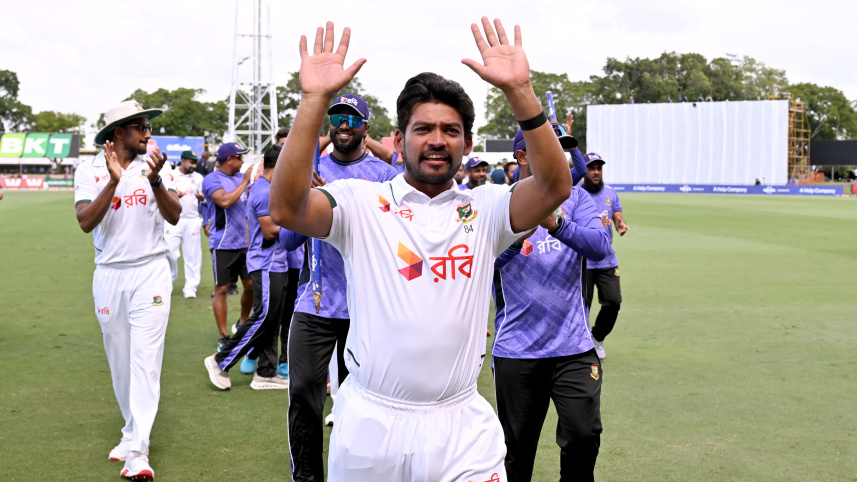

“The Bangladesh of 23 years ago and this Bangladesh are not the same.” When Najmul Hossain Shanto made that statement on the eve of the Darwin Test, many might have quietly smirked.
Just a month and a half earlier, Bangladesh had suffered a humiliating innings defeat against Zimbabwe, and the raw memory of being bundled out for just 54 in the warm-up match in Australia was still fresh. Critics had found fresh ammunition to question the trajectory of Bangladesh in red-ball cricket, while fans were left anxiously pondering just how many days it would take for the Tigers to fold in the series opener.

Yet by the fourth day of the Darwin Test, Shanto demonstrated that his pre-match conviction was far from mere rhetoric. Leading his side to an unforgettable victory, the captain proved his words right. Granted, the lack of edge and consistency in overseas conditions remains evident. Still, an undeniable reality persists: overcoming numerous limitations, Bangladesh’s Test side is quietly making strides forward.
A glance at the statistics of Bangladesh’s first two decades in Test cricket compared to the numbers over the last three and a half years offers a clear outline of this transformation. In their first 20 years with Test status, Bangladesh managed just 14 victories from 119 matches -- a period where moments of heartbreak and embarrassment far outweighed the triumphs. That narrative, however, has shifted dramatically in recent times. Over the past five and a half years, 13 wins have come from 41 Tests. More recently, across the last three and a half years, Bangladesh have emerged victorious in 12 of their 24 matches. Capping off this run is the historic feat of defeating Australia on their own turf.
At the heart of this turnaround lies an unprecedented depth in the pace attack. Moving away from the defensive approach of relying solely on home spin traps, Bangladesh are now riding on a potent pace battery capable of dismantling opposition lineups on foreign soil. The depth and efficacy of Bangladesh's current pace attack arguably place it among the top teams in world Test cricket. The team toured Australia without primary weapon Nahid Rana and another crucial operator, Shoriful Islam, yet the rest of the seamers ensured their absence went virtually unfelt.

Alongside the bowling surge, Bangladesh’s lower-middle order now ranks among the most impactful in Test cricket. In the Tests won over the last three and a half years, positions 6 through 8 have averaged over 35 runs per innings. Batters like Mehidy Hasan Miraz and Litton Das have repeatedly shown the composure to forge crucial fifty-plus partnerships under pressure, turning matches on their head. Furthermore, in the victories over the past two years, numbers 8 and 9 have contributed nearly 15 to 18 percent of the team's total runs -- a metric that rivals the top Test-playing nations.
Of course, recurring top-order failures, lapses in batting temperament, and lingering inconsistency remain major areas of concern. The team could very well falter in the next Test, and performance fluctuations in the days ahead would hardly come as a surprise.
The structural shift away from heavy spin reliance started under Mominul Haque’s captaincy, which bore immediate fruit in the landmark 2022 Test win against New Zealand at Mount Maunganui. The mantle has since passed to Shanto, who deeply cherishes Test culture and has maintained that tactical continuity, giving it fresh momentum and a modern flair.
Bangladesh are by no means an established Test power just yet. However, leaving behind those years of struggle, Shanto and his men are moving in the right direction with a clear vision -- and these recent statistics stand as the strongest testimony to that evolution.
 For all latest news, follow The Daily Star's Google News channel.
Comments