


Fatigue, high altitude or voodoo: Team management perplexed over Nahid Rana's injury
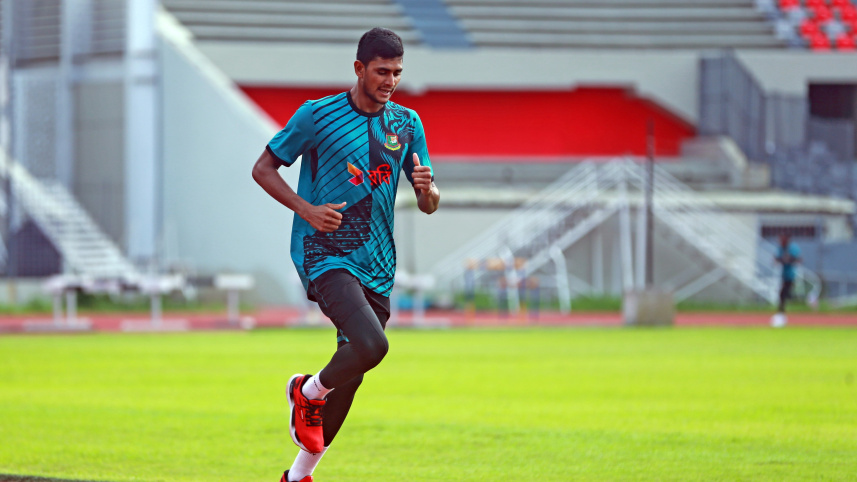
The Bangladesh Cricket Board (BCB) and its medical department remain perplexed about how Nahid Rana sustained his injury during the Tigers' tour of Zimbabwe earlier this month, despite his workload being carefully managed.
The injury has puzzled officials to such an extent that even some involved in injury management have jokingly wondered whether voodoo or black magic played a role.

Rana is scheduled to leave for Australia on Tuesday for a comprehensive medical assessment, with the BCB looking not only at injury management but also long-term injury prevention. While the immediate focus will be on assessing his shin bone injury, BCB sources said he will undergo a series of full-body scans to obtain expert opinions on preventing future injuries.
The injury has not only put the BCB's medical department under scrutiny but also raised questions over the team management's planning, given that Rana could have been rested during the Zimbabwe tour.
Although the shin injury is now a priority, the BCB is still searching for answers as to how Rana suffered the Grade 2 side strain that ruled him out of Bangladesh's two-Test tour of Australia next month. Given how diligently the fast bowler manages his fitness, officials have discussed a range of possible causes.
While a few have humorously floated supernatural explanations, BCB officials are far more interested in scientific ones.
Side strains are common among fast bowlers. However, officials believe a combination of body fatigue, mental stress, travel fatigue, Zimbabwe's high altitude and match intensity may have contributed to Rana's injury.
Those within the BCB are largely in agreement that excessive workload was not the cause. Fatigue, however, remains a significant consideration.
One BCB official pointed to the number of injuries Bangladesh players have suffered during tours of Zimbabwe, citing Litton Das's Grade 2 hamstring injury in 2022 among other cases.
Harare sits at a higher altitude of more than 1,000 metres compared to Dhaka. Sources said GPS trackers worn by players recorded unusually high heart rates throughout the tour. Rana's heart rate reportedly approached 200 beats per minute.
"Heart rate mainly relates to how much blood it's pumping. A high rate means more blood is being pumped to supply oxygen. So when does the rate increase? When the demand can't be fulfilled. The amount of oxygen that should be supplied in one inhalation is not being supplied," one official explained.
"So your energy falls, but you can't reduce the workload because Rana wants to bowl at 150 kph. He will keep trying to reach that pace, and that could be one of the reasons for the injury. When your body is already working overtime because of the altitude and you are not reducing your pace, it will take a toll. Maybe we couldn't prepare him adequately for that," the official said.
Given that Bangladesh's cricketers are not accustomed to high-altitude training, officials believe it could have increased the risk of injury. The BCB's medical department is also yet to reach the level of sports science available in many developed cricketing nations, nor does it possess the facilities required for controlled high-altitude training.
Sluggish outfields can also increase injury risk, as they place greater strain on the calf muscles.
While Rana's workload was managed, officials have also discussed the balance between his acute and chronic workload.
Acute workload refers to the amount of work or training completed over the previous seven days, while chronic workload measures the average workload over the previous four weeks. A sudden imbalance -- for example, bowling two overs one day and 10 the next -- creates a sharp spike in workload that can shock the body.
As a result, even after being rested, a player returning to bowl may experience a sudden increase in acute workload relative to chronic workload, raising the risk of injury.
Overplaying can also lead to muscle fatigue that even the bowler may not recognise, particularly in the muscles associated with side strains. Rana has been involved in intensive cricket over the past few months, and despite being rested for the one-off Test, accumulated muscle fatigue may still have contributed after his involvement in the ODI and T20I series in Zimbabwe.
While superstition led a few to jokingly mention the "screams coming from the stands close to the dressing room" in Zimbabwe as a possible factor, those within the BCB believe the scientific explanations are far more plausible.
Rana's rehabilitation will begin after his return from Australia and will take place in four stages.
 For all latest news, follow The Daily Star's Google News channel.
 The first is pain management, during which the medical team will ensure the injured area is completely pain-free. This will be followed by strength building to restore muscle strength in the affected area. The third stage, progressive bowling, will gradually reintroduce him to bowling through short run-ups before increasing intensity. Finally, the workload and fitness phase will gradually build his bowling workload until he is ready for competitive cricket.
Once all four stages are completed, Rana will have to pass a series of fitness tests before receiving match clearance.
For now, BCB sources say Rana will have to continue managing the shin bone issue he has lived with for the past few years. However, they believe the side strain will not affect his pace in the long run as rehabilitation beckons the fast bowler.
Comments