


VAR controversy rocks Manchester derby: Why Haaland’s goal stood and Foden saw red
Manchester City won the 199th Manchester derby 1-0 at Old Trafford on Sunday despite playing with 10 men for most of the match, but the game was overshadowed by two major VAR controversies involving Phil Foden’s red card and Erling Haaland’s winning goal.
Both decisions were based on the precise wording of the International Football Association Board (IFAB) Laws of the Game. However, they also raised questions about how those laws are applied to situations that can look very different in real time.

Why was Phil Foden shown a red card?
The first major incident came in the 23rd minute. Manchester United captain Bruno Fernandes tangled with Foden and bundled the England international heavily to the ground before remaining over him aggressively.
Foden reacted while lying on his back, kicking both legs upwards and catching Fernandes in the midriff with his studs.
Referee Michael Oliver immediately showed Foden a straight red card. His explanation over the match communications system was: “Red card Phil Foden -- kick out into the body of Bruno.”

VAR quickly reviewed the incident and agreed with the decision.
“That looks like a clear red card to me. Looks to be a secondary movement. Confirming the red card for Manchester City No.47,” the VAR said.
The key phrase used was “secondary movement.” Under IFAB Law 12, violent conduct is when a player uses or attempts to use excessive force or brutality against an opponent when not challenging for the ball. In refereeing terms, a secondary movement can separate an accidental or involuntary movement from a deliberate act of retaliation.
Foden’s initial movement came as he fell to the ground. But once that movement had stopped, his kick was considered a separate action. The ball was not being contested, the challenge was over and his studs made contact with Fernandes’ body. That meant VAR had little room to overturn the decision. Under the strict interpretation of the law, the red card was justified.
However, City’s frustration was that Fernandes was not punished for his role in starting the confrontation.
In modern refereeing, the player who starts an incident can escape punishment if their initial action is judged careless or reckless rather than violent, while the player who retaliates can often receive the heavier punishment, which has been one of the criticisms of VAR in recent times.
Why was Haaland’s goal allowed?
The bigger controversy came around the hour mark when Haaland scored the winner.
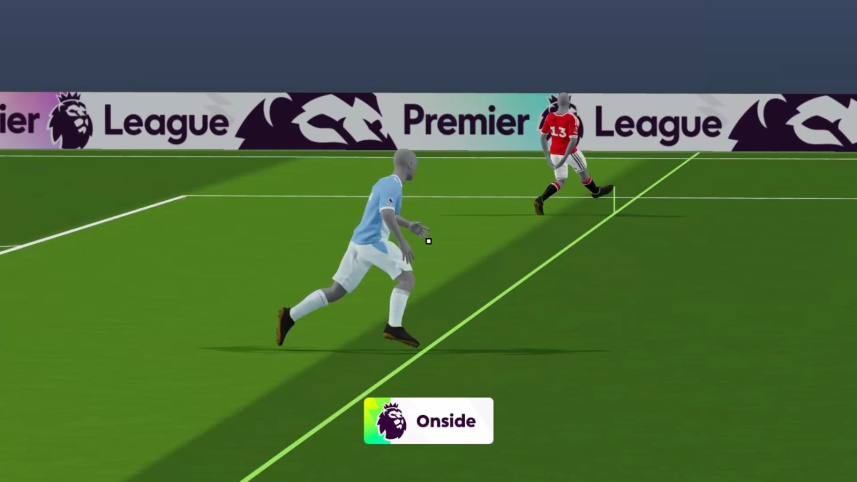
City sent the ball into the United penalty area, where Enzo Fernandez made a diving attempt to head it. He missed, and Haaland pounced. The assistant referee initially flagged Haaland for offside, but VAR overturned the decision.
Semi-automated offside technology showed that Haaland was marginally onside, with the trailing boot of a recovering defender keeping him level.
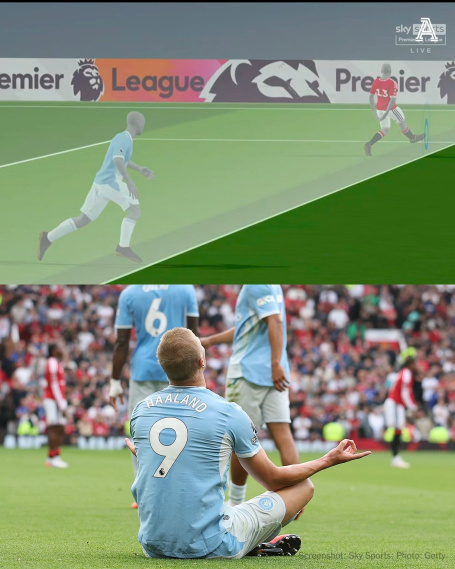
The question, then, was whether Fernandez had interfered with play. Fernandez was in an offside position when he attempted to head the ball, but simply being offside does not mean a player has committed an offence under IFAB Law 11.
An offside player can be penalised if they interfere with an opponent by challenging for the ball, clearly attempting to play a nearby ball in a way that affects an opponent, or making an obvious action that affects an opponent’s ability to play the ball.
 For all latest news, follow The Daily Star's Google News channel.
 Fernandez’s diving attempt appeared to meet the second and third conditions. He tried to play a nearby ball, and his movement caused defender Lisandro Martinez to react. Behind him, Martinez had to adjust his position, change his stride and prepare for Fernandez’s movement before trying to clear the ball.
However, VAR took a narrower view. Fernandez did not touch the ball, make contact with Martinez or block the goalkeeper’s line of sight. Officials therefore decided that Martinez was still able to play the ball and that Fernandez had not interfered enough to be penalised.
The official explanation was: “VAR checked the referee’s call of no goal for offside -- and determined that Haaland was in an onside position and recommended that the goal was awarded. The VAR also deemed that while in an offside position, Fernandez didn’t play the ball.”
VAR's decision to overturn the assistant referee's call drew criticism from former Manchester United defender Gary Neville, who was working as a co-commentator for Sky Sports.
“I'm going to need the offside rule explained to me because it's lost me,” Neville said during the broadcast. “I think when they look back at this, they will recognise they got it wrong.”
Neville’s argument was that the decision did not take into account how defenders actually react in these situations.
A defender cannot simply ignore a player making a diving attempt at a ball. The attacker’s movement can force the defender to shift his weight, change his position and adjust his timing, even if there is no physical contact.
Martinez, who was directly involved in the incident, was also unhappy with the decision.
“Every season, they come to explain their rules and then they make that kind of mistake,” the Argentine said after the match. “It's an injustice.”
Under the strict interpretation of the IFAB laws, both decisions can be explained.
Foden’s kick was considered a clear act of violent conduct because it was a separate, deliberate movement towards Fernandes after the initial collision had ended.
Fernandez, meanwhile, was in an offside position but was judged not to have interfered with Martinez enough to meet the threshold under Law 11.
The laws are designed to give officials clear technical standards, but football is also played through instinct, movement and split-second reactions.
In Foden’s case, VAR focused on the final kick rather than the confrontation that preceded it. In Haaland’s goal, it focused on whether Fernandez physically crossed the threshold for interference rather than how his movement affected Martinez’s attempt to defend.
The Manchester derby therefore offered another example of the tension between the technical wording of football’s laws and the way the game is experienced on the pitch.
Comments