


Beyond the past: How Spain won again
When Miguel de Cervantes wrote that "too much sanity may be madness," may be football was the last thing on his mind. Yet the history of Spanish football often seems to prove his point. Few countries have believed so deeply in a particular way of playing the game, and for so long had so little to show for it on the biggest stage.
For much of the twentieth century, Spain occupied a curious place in international football. It produced exceptional players, influential coaches and clubs that shaped the European game, yet World Cups repeatedly slipped beyond its reach. Admiration came easily. Trophies did not.

The paradox only became more striking as the decades passed. Alfredo Di Stefano emerged as one of football's greatest figures without ever playing in a World Cup. Emilio Butragueno inspired a generation but never reached the summit of international football. Raul Gonzalez spent years carrying the expectations of an entire nation, only to see every campaign end with another quarterfinal, another disappointment, another debate about what Spain lacked when the pressure became greatest. Gradually, elegant failure became part of the country's footballing reputation.
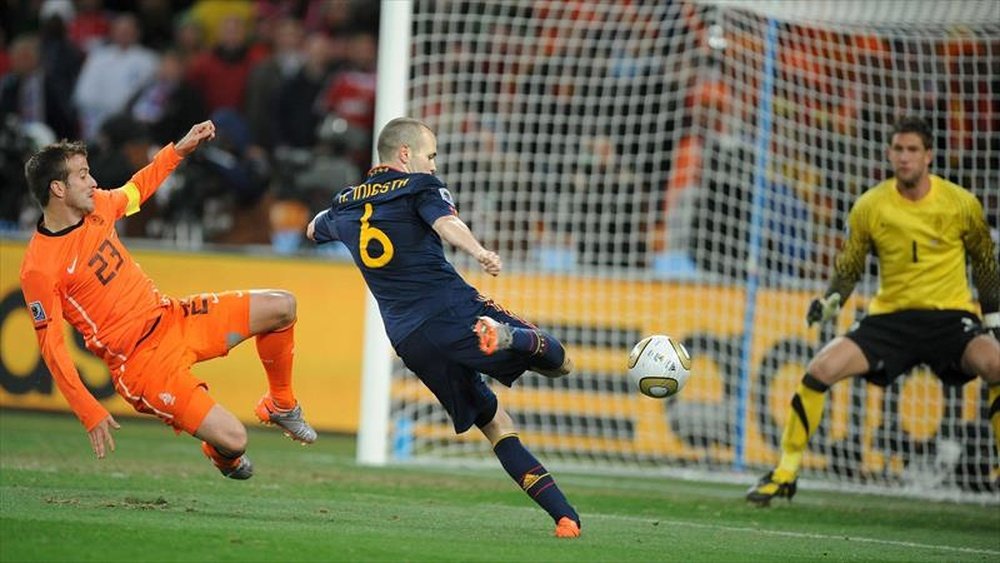
That long narrative changed in Johannesburg. Andres Iniesta's goal against the Netherlands did more than settle the 2010 World Cup final. It changed the way Spain understood itself. For decades the country had travelled to major tournaments with hope and returned with regret. Overnight, it became the standard others wanted to imitate.
With Euro 2008 before it and Euro 2012 after it, the World Cup victory came to represent far more than a single successful tournament. Those three titles together established a footballing model that influenced coaches, academies and national teams across the world. Possession football, once viewed as a stylistic preference, suddenly became the dominant language of the modern game.
No football idea, however, remains untouched forever. The generation that carried Spain to those titles gradually disappeared. Xavi stepped away. Iniesta left European football. Iker Casillas, Carles Puyol, David Silva, Sergio Busquets, Cesc Fabregas and others slowly became part of memory rather than the present. As familiar faces disappeared, a different question began to shadow Spanish football: had the philosophy itself reached its limits?
For a while, the evidence appeared difficult to dispute. Spain collapsed in the group stage in Brazil in 2014. The exits in Russia and Qatar only strengthened the impression that the country's golden age had passed. Around Europe a convenient explanation took hold. Tiki-taka had become predictable. There was possession, critics argued, but too little purpose. Plenty of control, but not enough threat. It sounded convincing, although it explained less than many people assumed.
What disappeared after 2012 was not Spain's footballing philosophy. It was the extraordinary group of players capable of expressing that philosophy almost flawlessly. Those are not the same thing. Football ideas rarely disappear overnight. More often, they enter a period of adjustment while a new generation learns how to interpret them differently.
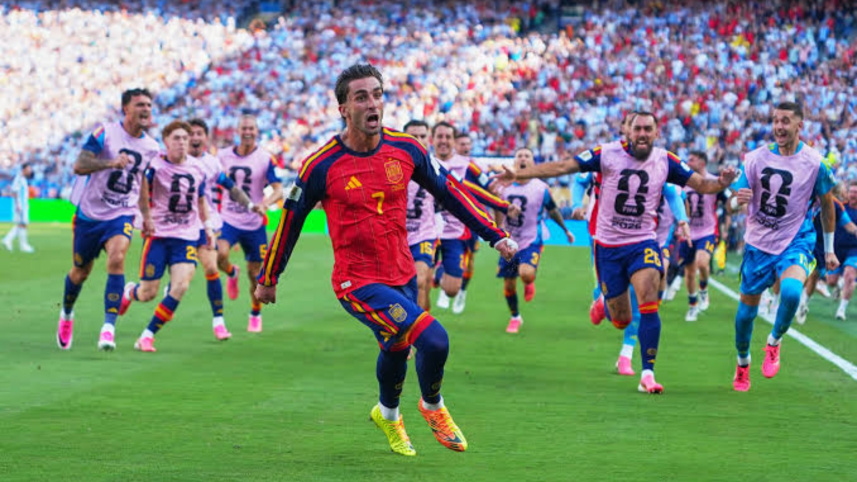
That process reached its clearest point on the afternoon of July 19, 2026. The record books will reduce the final to a single line: Spain 1 – 0 Argentina after extra time. Ferran Torres scored in the 106th minute. Statistics rarely tell the whole story, and this one certainly does not.
Spain arrived in the United States as European champions, but they also looked like the tournament's most balanced side. Their progress to the final never depended on dramatic escapes or isolated moments of brilliance. Austria were beaten comfortably. Belgium pushed Spain harder than anyone expected before Mikel Merino settled the quarterfinal late on. France, with one of the deepest squads in world football, gradually found themselves playing a match almost entirely on Spain's terms.
Argentina came with a different burden. They were defending champions. Lionel Messi, now 39, was widely expected to be playing the final World Cup match of his career. Victory would have placed Argentina alongside Brazil's legendary back-to-back champions of 1958 and 1962. Instead, the night belonged to Spain.
Not because they overwhelmed Argentina from the opening whistle. They did something far more difficult. They refused to abandon the football that had brought them there.
Even as the match became increasingly tense, Spain resisted the temptation to rush. Possession continued to circulate with patience rather than anxiety. Argentina defended resolutely for long periods, but maintaining that concentration came at a cost. As the game stretched into extra time, the spaces slowly began to appear. Torres recognised one before anyone else did. His finish lasted only a moment. The football that created it had been evolving for sixteen years.
Looking back, it is tempting.
 For all latest news, follow The Daily Star's Google News channel.
Comments