


How to stop France: Break the rhythm or pay the price

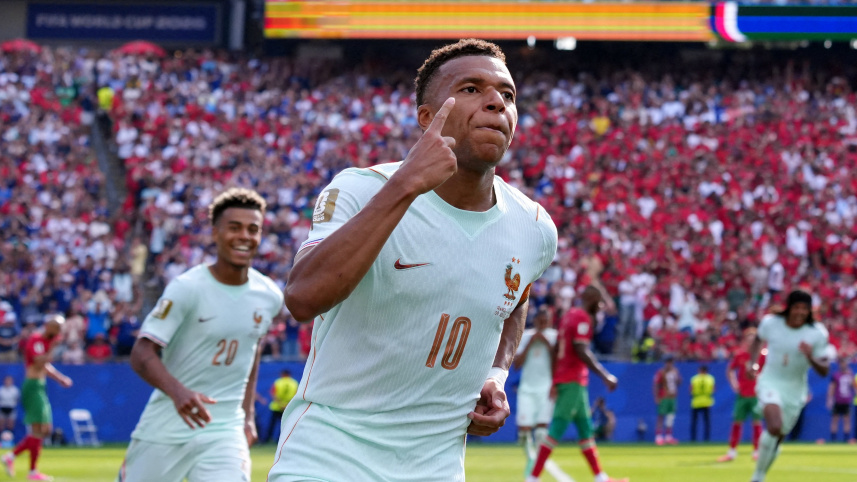
Coming into the 2026 FIFA World Cup, France were always tipped as the team to beat.
That expectation was hardly surprising. Led by perennial World Cup star Kylian Mbappe, Didier Deschamps' side boasts a formidable array of attacking talent, with Michael Olise, Ousmane Dembele, Bradley Barcola and Desire Doue all capable of deciding games. Few teams can match that blend of pace, creativity and technical quality.

Yet France have not had everything their own way in this tournament. They struggled to establish control in their opener against Senegal before being dragged into a bruising Round of 16 contest by Paraguay. That match showed there is a way to make life uncomfortable for Les Bleus.
Their quarterfinal against Morocco, however, offered no such resistance.
The game in Boston was expected to be France's toughest test yet. Instead, it turned into one of their most comfortable performances of the tournament as they controlled the game almost from start to finish and walked away with a 2-0 win.
For Morocco, it was a familiar ending. France had also ended their fairytale run in the 2022 World Cup semifinals by the same scoreline. But the context this time was very different.
Back in Qatar, Morocco were the tournament's surprise package, becoming the first African nation to reach a World Cup semifinal. This time, they arrived as no longer underdogs but genuine contenders expected to challenge the big boys.
Instead, they barely laid a glove on them.
Morocco did not register a shot on target until the 83rd minute, when Azzedine Ounahi's long-range effort was comfortably pushed away by Mike Maignan. Even in a goalless first-half France had already attempted 10 shots, while Morocco managed only one effort, an off-target Achraf Hakimi freekick.
The statistics reflected what unfolded on the pitch: France dictated the tempo from the opening whistle, while Morocco spent most of the evening chasing shadows.
"We wanted to play our usual game, and we'd worked on certain aspects of that with the coach in training, but football isn't an exact science, and things didn't go the way we'd planned," Morocco midfielder Ayyoub Bouaddi admitted afterwards.
That assessment perhaps explains where the game was lost.
Against a team as fluid as France, simply trying to play your own football is rarely enough. With Mbappe, Dembele, and Doue stretching defences with explosive pace and Olise constantly finding pockets of space between the lines, France thrive once they establish their rhythm.
The challenge is preventing them from ever finding it.
Paraguay provided the clearest blueprint in the previous round. They pressed aggressively, denied Olise time on the ball, disrupted Mbappe's runs with physical challenges, and turned the match into an attritional contest. France eventually prevailed 1-0 through a penalty, with Mbappe later admitting his side had to "play the dirty game" to get over the line.
Morocco never managed to create that level of discomfort. France were allowed to dictate possession, control the spaces and attack at their preferred tempo, turning a contest that promised so much into a surprisingly one-sided affair.
Of course, disruption alone is not enough. Teams still need the quality to impose themselves when opportunities arise. Morocco's ambition to stay true to their own style was understandable, but against a side of France's calibre, that approach has to be paired with an ability to break their flow.
Otherwise, France become relentless.
That has been the defining lesson of their World Cup so far. When opponents unsettle them, France can be made to work.
Whether it is Belgium or Spain in the semifinals, or even a potential final against Argentina, the message is now unmistakable. Beating France is not just about executing your own game plan. The first task is to stop them from executing theirs.
 For all latest news, follow The Daily Star's Google News channel.
Comments