


Salah and the history of 'Panenkas' at the World Cup
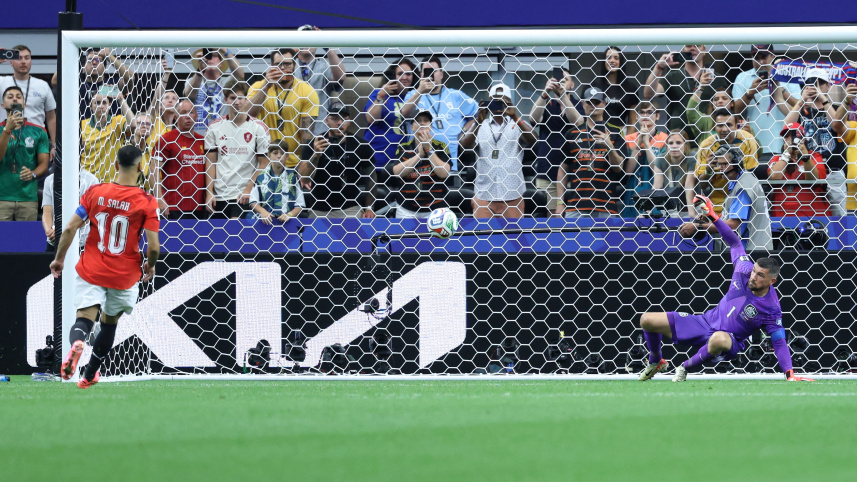
When Mohamed Salah calmly chipped his penalty down the middle to help Egypt beat Australia in the FIFA World Cup 2026 Round of 32, he not only secured the Pharaohs' first-ever World Cup knockout victory but also added his name to a story that began 16 years before he was born.
The Panenka penalty, named after Czechoslovakia midfielder Antonin Panenka, first entered football folklore in the UEFA EURO 1976 final. Panenka's daring chipped effort from the spot prompted the legendary Pele to describe him as "either a genius or a madman".

Salah is the latest player to successfully reproduce the technique on the World Cup stage, showing composure under immense pressure by deceiving the goalkeeper into expecting a powerful strike before delicately lifting the ball into the net.
The first player to attempt a Panenka at a World Cup was Panenka's compatriot Michal Bilek during Czechoslovakia's opening match of the 1990 tournament in Italy. With his side already 4-0 up against the United States, Bilek tried to emulate Panenka but failed to fool goalkeeper Tony Meola, who stood his ground to make the save. It remained the only Panenka attempt at a World Cup in the 20th century.
The technique returned to the tournament in spectacular fashion in 2006.
In his final match before retirement, France captain Zinedine Zidane chipped his penalty against Italy goalkeeper Gianluigi Buffon in the World Cup final, the ball striking the underside of the crossbar before crossing the line. France, however, went on to lose the final, while Zidane's farewell became equally remembered for his red card following his infamous clash with Marco Materazzi.
Earlier in the same tournament, Ukraine's Artem Milevskyi had become the first player to successfully convert a Panenka at the 2006 World Cup. After Andriy Shevchenko missed Ukraine's opening penalty in a goalless shootout against Switzerland, substitute Milevskyi calmly chipped the ball past Pascal Zuberbuhler to help send his side into the quarter-finals.
At the 2010 World Cup in South Africa, Uruguay striker Sebastian 'Loco' Abreu produced one of the tournament's most memorable moments. Introduced as a second-half substitute against Ghana, Abreu confidently converted the decisive penalty with a Panenka to send Uruguay into the semi-finals after Asamoah Gyan's dramatic late miss in extra time.
The 2018 finals in Russia produced contrasting memories of the technique.
Hosts Russia reached the quarter-finals but substitute Fyodor Smolov's attempted Panenka was saved by Croatia goalkeeper Danijel Subasic in the shootout. Mario Fernandes also missed as Croatia progressed to the last four.
Four years later, Achraf Hakimi delivered one of the defining moments of the tournament in Qatar. After a goalless draw with Spain, the defender, born in Madrid, calmly chipped the decisive penalty to send Morocco into the World Cup quarter-finals for the first time.
Further history was made by another North African nation in 2026.
Following a dramatic draw with Australia, Egypt's place in the last 16 was decided by penalties. After Harry Souttar's miss handed the Pharaohs the initiative, Salah stepped up for Egypt's third kick. Using his trademark run-up, he slowed at the last moment before delicately lifting the ball beyond the stranded Mathew Ryan, moving Egypt to the brink of a famous victory and writing another chapter in the history of the World Cup Panenka.
 For all latest news, follow The Daily Star's Google News channel.
Comments