


Why Argentina coach Scaloni cannot play safe against Tuchel’s England

The weight of 2022 was born from a desperate, 36-year hunger.
When Argentina arrived in Qatar, they carried the crushing weight of a nation obsessed with securing a long-awaited third star -- a mission fuelled by the emotional ticking clock of Lionel Messi’s expected farewell.

This time, across the pitches of North America, the burden is entirely inverted. A battle-hardened squad is playing to explicitly ironclad Messi’s immortal legacy as they attempt to defend their crown -- a historic feat not achieved by any nation since Pele’s Brazil in 1962.
The floodgates of silverware that opened with the 2021 Copa America transformed this squad into a hive mind. In 2022, they famously rode their luck before finding their true element in an explosive, bad-tempered quarterfinal against the Netherlands. That victory ignited a peak that carried them through stylish masterclasses against Croatia and France.
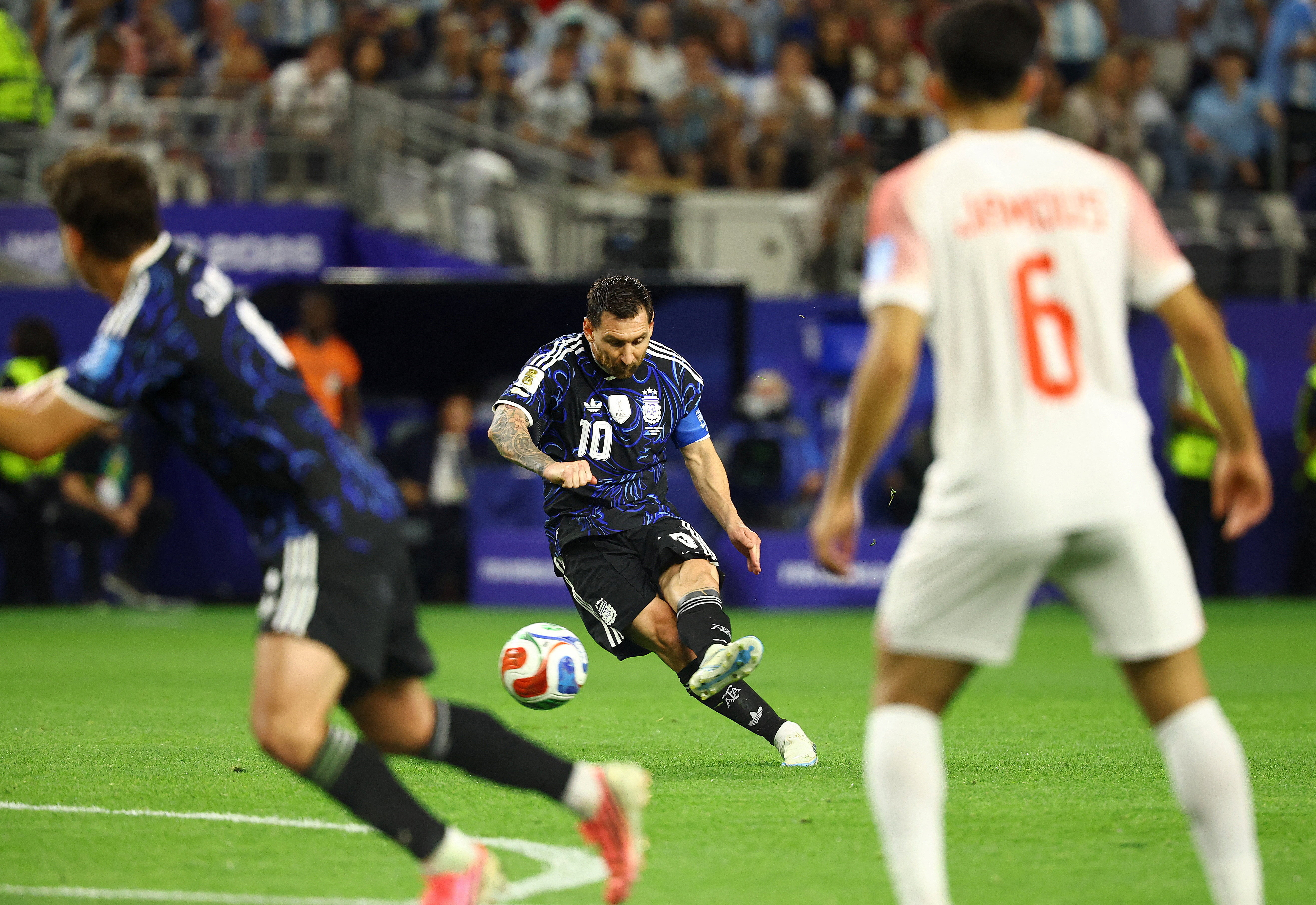
But even then, La Albiceleste were never an intimidating, flawless machine. They won because playing with Messi meant they always possessed an ultimate weapon; one that allowed them to stare directly into the abyss and walk away unscathed.
They had limitations then, notably losing attacking midfielder Giovani Lo Celso right before the tournament, but they could stretch the pitch through Angel Di Maria on the left and surprise opponents with the unheralded, fresh energy of Enzo Fernandez, Alexis Mac Allister, and Julian Alvarez.
The Premier League blueprint
Ahead of this semifinal clash under the towering steel rafters of Atlanta's Mercedes-Benz Stadium, however, the element of surprise has entirely evaporated.
Following their triumph in Lusail, the likes of Enzo, Mac Allister, and Lisandro Martinez were immediately snapped up by elite English clubs. Alongside Emiliano Martinez and Cristian Romero, they have spent the last few years plying their trade in the intense, hyper-analytical laboratory of the Premier League.
The domestic familiarity cuts both ways. Thomas Tuchel’s England squad is packed with players who view the Argentines as familiar -- facing them or playing alongside them in domestic fixtures.
The English think-tank possesses years of data, video footage, and direct on-pitch muscle memory to simulate Argentina's central tendencies in any given crisis. They have memorised Enzo’s turning radius and Mac Allister’s passing triggers under pressure. The mystique of the world champions has been systematically solved in the training grounds of England.
The stagnation of the old guard
Messi’s move to Inter Miami had acclimatised him to North American surroundings, maximising his physical comfort on this continent. Building on that familiarity, Lionel Scaloni has found himself leaning on his trusted, veteran old guard more heavily than ever.
Aside from deploying Thiago Almada on the left to fill the massive void left by Di Maria, Scaloni has largely stuck to his tried-and-trusted weapons. It is a logical choice -- this group has proven it on the grandest stages, even dismantling archrivals Brazil 4-1 in the qualifiers.
But a dangerous, lopsided polarisation has emerged. Argentina look increasingly, exhaustingly reliant on their 39-year-old captain to act as their sole lifeline.
Messi has delivered in legendary fashion, leaving his mark on almost every aspect of their play, but doing so required him to play a staggering 330 minutes across three knockout matches in just eight days. That is a brutal physical toll for a veteran in the twilight of his career.
Without Di Maria, Argentina severely lack natural width. They cannot stretch elite defences, which deprives Messi and the central midfielders of the half-spaces they need to destabilise low blocks.
At best, Scaloni has tried an "A.1" plan -- becoming more direct with long balls and throwing both Lautaro and Alvarez up front when chasing a game -- but there is no distinct Plan B.
 For all latest news, follow The Daily Star's Google News channel.
 The spark beyond Messi
However, beneath this structural stagnation, a crucial psychological breakthrough occurred in the dying moments of the quarterfinal against Switzerland. Julian Alvarez’s stunning, extra-time Golazo (Spanish for spectacular goal) was the best thing that could have happened to this squad alongside the victory itself.
For the first time in a high-stakes tournament moment, Argentina witnessed a match-winning flash of pure individual brilliance from a player not named Lionel Andres Messi Cuccitini. This moment highlighted the fascinating tactical evolution of Alvarez himself.
Having spent two seasons under the watchful eye of Pep Guardiola -- the man who shaped Messi’s career -- he migrated to Atletico Madrid to join a mini-Argentine colony under Diego Simeone, whose own son Giuliano Simeone plays alongside Alvarez at both country and club levels.
Years ago, during Alvarez's first days at Manchester City, Guardiola famously left his squad in stunned silence when he pointed to the quiet, newly arrived forward and predicted, "You know who doesn't say anything is going to end up champion?"
Guardiola, out of everyone, knew what lay ahead. Under him, Alvarez learned spatial discipline and manipulation. Under Simeone, he graduated from the "school of suffering," learning how to hunt transitions and score out of absolutely nothing.
He has become the ultimate hybrid weapon for this match: forged by the man who built Messi, but hardened by a manager who understands defensive warfare better than anyone.
Combined with Lautaro Martinez also finding the back of the net against the Swiss, a wave of profound optimism has swept through the camp. In a tournament where margins are razor-thin, it is paramount that Argentina’s primary finishers do not suffer from a deficit of self-belief.
Even auxiliary weapons, like Mac Allister -- whose late arrivals into the box and lethal aerial ability off headers have become a genuine threat -- need to feel that the scoring burden is shared.
The trap of predictability
However, suffering remains an unavoidable, deeply embedded experience for this team; a tax Argentina always seems destined to pay before they can taste glory, or otherwise. The question is whether Scaloni can survive the next wave of it by standing still.
When comparing raw, position-by-position talent, this Argentina squad lacks the depth of world-class individuals found in the ranks of England, France, or Spain. They are simply a group uniquely assembled to complement this specific iteration of Messi.
When they lose momentum, they look alarmingly vulnerable and out of ideas for long stretches, prone to conceding quickly. For too long, opponents have given Argentina too much respect out of fear of Messi alone, only realising when their backs were against the wall that La Albiceleste were there for the taking.
"Why fix what isn't broken?" Scaloni might argue.
But this team looks genuinely broken when they aren’t playing well, and their late-game fitness has looked second-best in the knockout rounds. Leaving it late against an England side who are ticking a lot of the correct boxes would be suicidal.
The Argentine mastermind needs to plan to kill this game inside 90 minutes, unleashing his best attacking football in the first half before England can firmly assert their authority.
Breaking the Fellowship
To achieve this, Scaloni could introduce organised chaos to actively counter his team’s stagnation of ball distribution.
This match is a clash of coaching philosophies: Scaloni, the master of man management and dealing with emotional highs, against his German counterpart Tuchel, the cold, hyper-detailed tactician who treats football like an open-ended mathematics problem. If Argentina play a slow game without integrating unpredictability, Tuchel’s machinery will eventually solve the integral equation.
Like Saruman in the industrial depths of Isengard -- a nod to J.R.R. Tolkien’s The Lord of the Rings -- Tuchel has spent this tournament assembling a modern, compact arsenal specifically engineered to go all the way.
The English machine is running smoothly, even though they haven’t displayed their peak prowess, and it already has the hyper-talented forces of France or Spain in their sights for the final.
To counter this calculated threat, Scaloni has for inspiration a mythic strategy pulled straight from the heart of that same epic: the original Fellowship must break if Frodo is to ever drop the ring into the fires of Mount Doom. The World Cup final is that distant peak, but Argentina cannot reach it by relying blindly on the old guard that won the last war.
The default starting eleven has become a known quantity, easy to plan against. Scaloni needs to proceed without his trusted council and introduce an unexpected catalyst to break Tuchel's algorithmic preparation.
Instead of treating a starlet like Nico Paz as a late-game sub, the manager could drop him directly into the gears of Tuchel’s engine from the get-go. Youngsters like Paz, or even left-back Valentin Barco, who were completely absent from the Qatar roster, offer something the exhausted veteran core desperately lacks: an unburdened hunger completely devoid of the fear of failure or any traumatic triggers.
They do not carry the physical or psychological fatigue of defending a crown because they haven't won it yet. They want their own star.
A radical blueprint
A radical tactical gamble demands that Scaloni sacrifice Nahuel Molina, weaponising the industrious Rodrigo De Paul at right-back to act as an auxiliary, combative right-midfielder. This opens a slot to reintroduce Giovani Lo Celso into the engine room, forming a highly technical, rapid-passing midfield triangle with Enzo and Mac Allister to accelerate the central distribution.
Up front, Almada, who brought much-needed urgency in the Switzerland match extra-time, could penetrate on the left, while Nico Paz is unleashed on the right -- not as a traditional winger, but as a fearless, technical extension of the spaces Di Maria and Messi used to share, disrupting Tuchel's calculations before England can establish a rhythm.
What Argentina possess to counter England's deep arsenal is the "Messi-Astra" (Astra is a Sanskrit-derived word, meaning weapon) and an abundance of faith. Human psychology dictates that having won it all in Qatar, the veteran core needs something deeper than mere sporting desire to pursue a fourth star.
They have shown a willingness to endure agonising stretches against Cape Verde and Switzerland, but desire alone will not carry them past the penultimate hurdle.
For history, not just for Messi
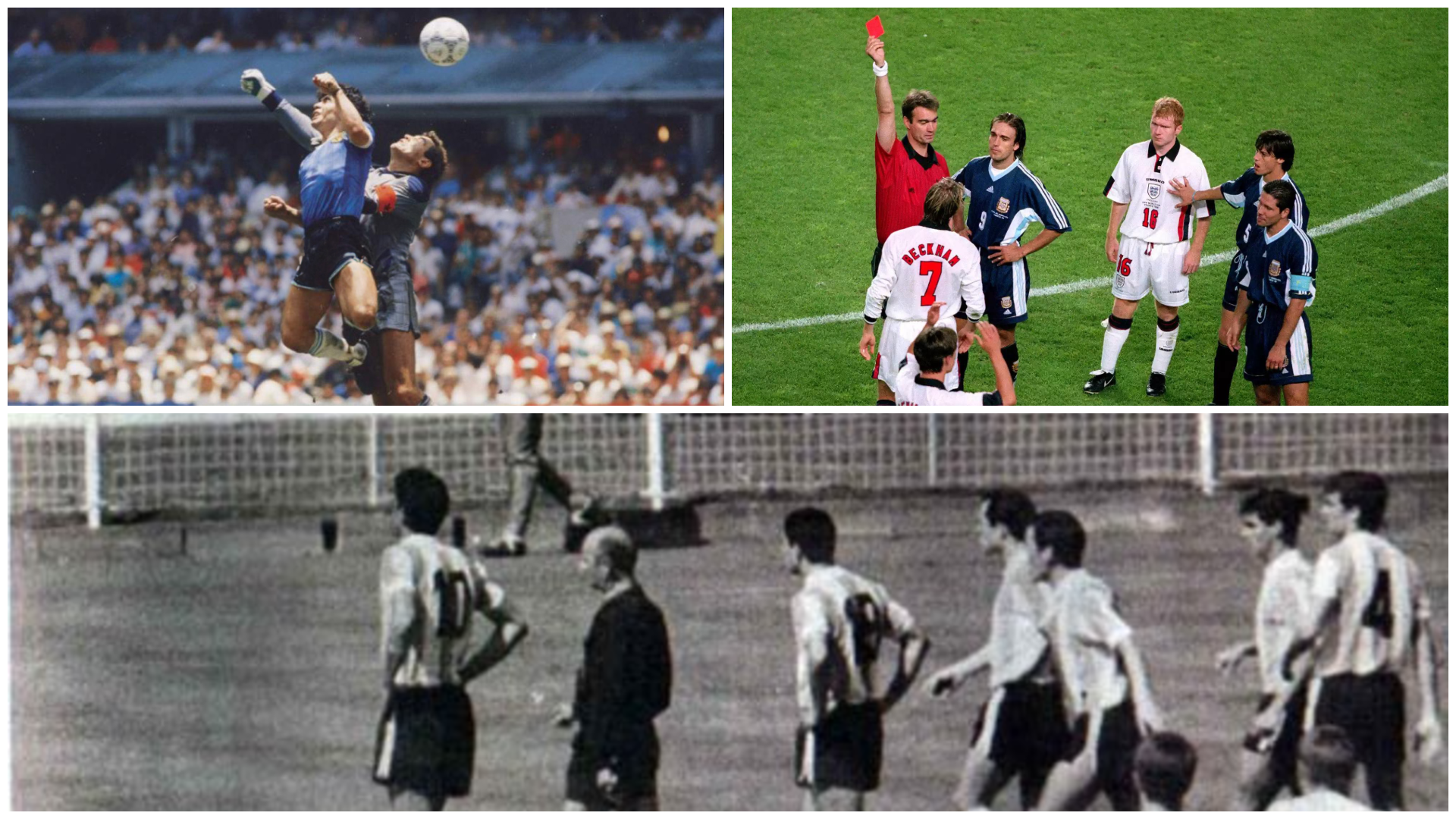
The historical undercurrents add an undeniable friction. Despite a fierce international rivalry, Argentina and England have not contested a single friendly in over two decades.
Messi has historically mesmerised English clubs in Europe -- his performance against Manchester United in the 2011 Champions League final at Wembley Stadium in London remains the cream of the crop -- but he has never faced the English national team.
The Three Lions are arriving with an aggressive confidence, perfectly captured by former England midfielder Joe Cole on The Rest is Football podcast: “We will have to put Lionel Messi to bed. We’re going to put him to bed," Cole warned.
“I'm saying it now, England are going to the World Cup final, we’ve got too much pace for Argentina and we’re going to beat them, I feel it in my bones.”
England's attackers will be licking their lips at Argentina's recent defensive stumbles, even as their defenders remain wary of Messi's lethal individual brilliance.
Yet, the pressure cooker favours the South Americans. Unlike England, who are suffocated by a generational trophy drought and a merciless domestic media, Argentina are playing with the freedom of reigning champions, celebrating each victory by dancing and singing “for Leo’s last…” in the dressing room. Reaching the semifinals already guarantees Messi two more matches at this tournament -- including a potential third-place match -- ensuring a grand farewell.
But beating England to reach the final changes the entire narrative. For the average Argentine, conquering their oldest footballing nemesis en route to a back-to-back crown would make a 2026 triumph feel even greater than the romantic fairytale of 2022.
To comprehend why a victory over England feels even grander than a normal title match to the people of Argentina, recall the legendary perspective from former captain Roberto Perfumo on the 1986 quarterfinal:
"In 1986, winning that game against England was enough. Winning the World Cup that year was secondary for us. Beating England was our real aim."
For 1978 World Cup winner Daniel Bertoni, he saw this as a battle over who truly "owns" the modern game. "England is the classic rival.
“It is for reasons of politics and history but also because we feel football is our game and so, when we play England, we are claiming back what we see as ours and what you see as belonging to you," said Bertoni.
The universe has so far conspired to carry Messi and Co to this threshold, but blind faith in late-game grit and singular Messi magic will crumble if Scaloni chooses the safe path.
Qatar was for Messi; Atlanta is for history. Scaloni's men have the stage; now they must strike before the trap closes.
Against Tuchel’s machine, caution is the ultimate hazard. Argentina must dare to break their own mold -- for in the arena of history, fortune favours only the brave.
Comments