


How genetics is changing the future of cancer care

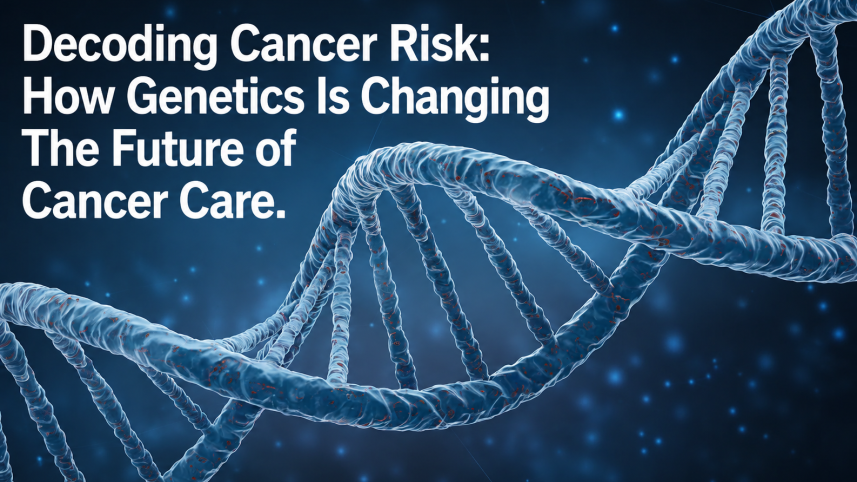
For many people, cancer feels unpredictable — a disease that strikes without warning. But doctors today increasingly understand that, in some families, cancer risk may be quietly written into their genes long before symptoms appear.
At the SPSOC-2026 Peritoneal Surface Oncology Conference held in Singapore in March this year, Clin Asst Prof Chiang Jianbang of the National Cancer Centre Singapore (NCCS) spoke about how cancer genetics is transforming the future of cancer prevention, early detection, and personalised treatment.

A Consultant in the Division of Medical Oncology and Cancer Genetics Service at NCCS, Dr Chiang works closely with patients and families affected by hereditary cancers. His message was clear: cancer care should no longer begin only after a tumour appears.
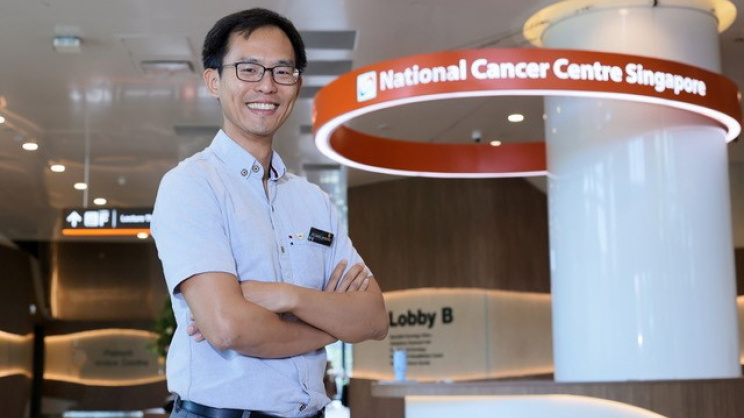
“By the time many patients see a medical oncologist, it is often too late,” he said during the conference discussion. “What we want is proactive care — identifying high-risk individuals early, monitoring them closely, and detecting cancers at stage zero or stage one rather than stage four.”
According to him, hereditary cancer syndromes remain widely under-recognised across the world. Yet identifying these risks early can potentially save not only one patient, but entire families.
Cancer genetic testing looks for inherited genetic variants that increase a person’s risk of developing certain cancers. While not all cancers are hereditary, some are strongly linked to family history. Breast, ovarian, colorectal, uterine, and certain kidney cancers may sometimes run in families because of inherited genetic changes.
One of the best-known public examples was actress Angelina Jolie, who publicly revealed that she carried a BRCA gene variant associated with a high risk of breast and ovarian cancer. Her decision to undergo preventive surgery drew global attention to hereditary cancer syndromes. Dr Chiang noted, however, that modern approaches have become far more nuanced.
“In the past, we often relied on radical surgery,” he explained. “Now, surveillance and early monitoring can sometimes achieve similarly good outcomes.”
The importance of genetics lies not only in treatment, but also in prevention. During his presentation, Dr Chiang highlighted that hereditary cancer syndromes affect entire blood-related families because close relatives may share the same inherited risk.
“If one person carries a hereditary cancer-related gene variant, family members may also be at risk,” he said. “So we do not just manage the patient in front of us — we think about the whole family.”
This family-wide approach is becoming increasingly important in Asia, where conversations about family medical history are often limited. Doctors say many people still do not discuss cancers openly within families, causing warning signs to be missed.
The warning signs can include several close relatives with cancer, cancers occurring at unusually young ages, multiple cancers in the same person, or rare cancers appearing repeatedly within a family. In such situations, genetic counselling and testing may help clarify inherited risks.
At NCCS, patients first undergo pre-test genetic counselling before testing is considered. Blood samples are usually used because they provide the most reliable DNA material. Once results are available, specialists explain the findings to patients and help create personalised surveillance plans.
Dr Chiang stressed that genetic testing is no longer as prohibitively expensive as it once was. “Years ago, testing cost around US$2,000 per gene,” he said. “Now multi-gene panel testing has reduced costs significantly.”
Advances in genomic medicine are also changing cancer treatment itself. Certain inherited genetic variants can help doctors determine whether patients may respond better to targeted therapies such as PARP inhibitors or immunotherapy.
Still, misconceptions remain common.
“One of the biggest fears patients have is that genetic testing automatically means surgery,” Dr Chiang said. “But hereditary cancer knowledge is more like driving at night with headlights on — you can see the risks ahead and plan accordingly.”
He also emphasised the urgent need for more Asian genomic research. Much of today’s global genetic data comes from European populations, while Asian populations remain underrepresented despite making up a major portion of the world’s population. Researchers in Singapore are now trying to build larger regional genomic databases to better understand cancer risks among Asian communities.
For countries like Bangladesh, where cancer cases continue to rise and late diagnosis remains common, experts believe awareness about hereditary cancer could become increasingly important in the years ahead.
“Family history could save lives,” Dr Chiang said. “If we know who is at higher risk, we can intervene earlier, monitor more carefully, and hopefully prevent advanced cancers before they happen.”
 For all latest news, follow The Daily Star's Google News channel.
Comments