


Future of real estate lies in safety & sustainability
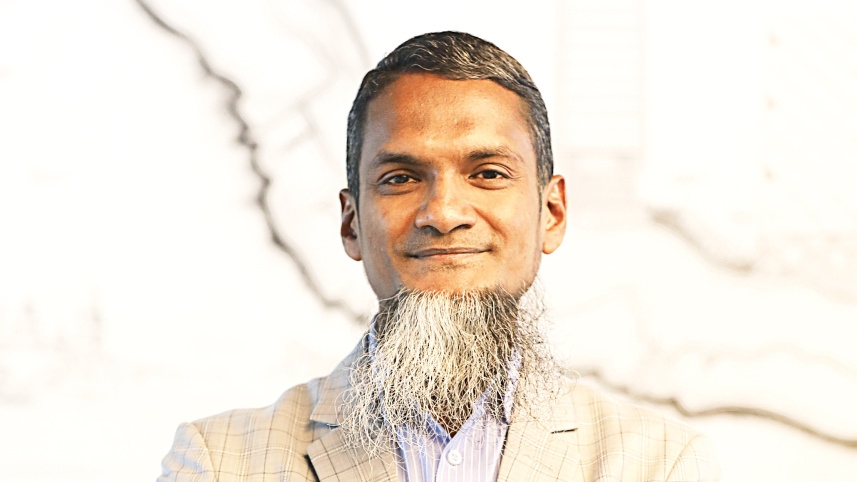
Md Hafiz Al Asad
Chief Project Management Officer
Shanta Holdings Limited

We start with safety by design, working with specialised consultants to meet BNBC, engineering and global fire-safety standards from day one. That discipline drives our sustainability: energy-efficient designs, insulated facades and low-waste construction, because a building that respects the environment is also one that lasts.
As Dhaka’s urban landscape grows increasingly dense, the demands on safety, structural integrity and environmental sustainability have never been higher. In this interview, Md Hafiz Al Asad, Chief Project Management Officer (CPMO) at Shanta Holdings, discusses how design innovation, life-cycle safety, digital transformation and professional property management is raising the benchmark for the local construction industry, paving the way for global recognition.
The Daily Star (TDS): As our cities grow denser, how is your company redefining building safety, fire security and BNBC compliance across a project’s entire lifecycle?
Md Hafiz Al Asad (MHAA): We practice safety by design, embedding rigorous structural and operational safety protocols across every phase, from initial planning to post-handover management. In design, we collaborate with local and international consultants to comply fully with BNBC and global NFPA standards. Our projects also feature dedicated escape routes, advanced detection and suppression systems and smoke controls, all managed by an Integrated Building Management System (IBMS). During construction, we strictly enforce Standard Operating Procedures (SOPs) and Environment, Health, Safety and (EHS) policies to protect workers, the public and neighbours alike.
TDS: How is your company integrating energy efficiency, environmentally responsible materials and climate-resilient design in its projects?
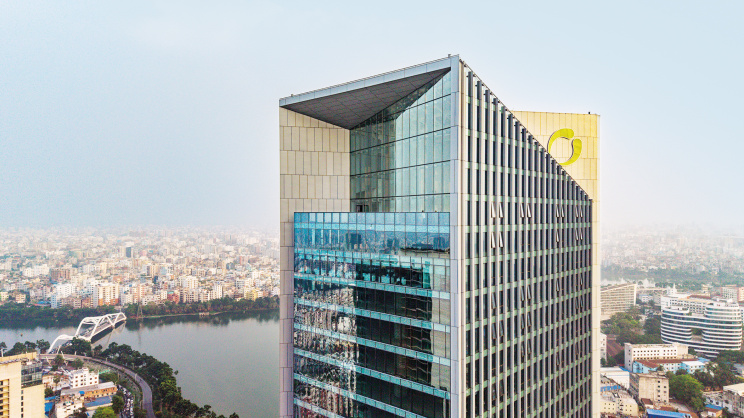
MHAA: Sustainability is fundamental to long-term building resilience. We integrate advanced features, such as low-E double-glazed unitised facades insulated with argon gas, featured at Shanta Forum, Pinnacle, and Dhaka Tower, to reduce heat gain. These features are complemented by high-efficiency chillers, efficient indoor air filtration, zero-ozone-depleting refrigerants, and water-efficient plumbing features. During construction, we minimise environmental impact by utilising aluminium system formwork (ASF) and sustainable construction materials, such as Autoclaved Aerated Concrete Blocks. Additionally, to address Bangladesh’s climate and flood vulnerabilities, our designs incorporate robust stormwater drainage, natural ventilation and on-site water treatment plants.
TDS: How are innovations such as Building Information Modeling (BIM), smart monitoring systems, or AI-enabled project management improving safety, quality and efficiency in your developments?
MHAA: Driven by innovation, we designed Dhaka Tower entirely using Building Information Modelling (BIM) with our highly skilled team of engineers. BIM maps architectural, structural, mechanical, electrical and plumbing systems in a virtual 3D space, allowing us to resolve design clashes before construction and reduce rework and material wastage. For smart operations, we implemented IBMS in high-rises like Pinnacle and Forum. Serving as the operational heart, the IBMS displays all major mechanical, electrical and fire safety systems on a single, real-time screen, allowing centralized monitoring to ensure energy efficiency and immediate emergency localisation.
TDS: What initiatives has your company taken to improve worker safety, training and occupational health at project sites?
MHAA: Protecting our workforce is our highest priority, supported by a zero-tolerance safety-first culture. Site safety is maintained through standardised SOPs, EHS policies, mandatory permit to work protocols, daily toolbox meetings and strict PPE enforcement. For complex, deep excavations like Dhaka Tower, mechanical ventilation systems are installed to supply clean, breathable air. Finally, we protect the surrounding community from debris and dust by installing multi-level safety canopies and protective netting. We also have dedicated professional on-site medical team to support the workforce for any kind of health issues.
TDS: Looking ahead, what policy reforms, industry collaborations, or technological advancements do you believe are essential for raising Bangladesh’s real estate and construction sector to globally recognised safety and sustainability standards?
MHAA: With the real estate and construction sectors contributing nearly 15% to Bangladesh’s GDP, major reforms are essential to achieve global standards. First, we need a robust implementation framework for the BNBC, ideally through an independent auditing body similar to the RSC model in the RMG sector. Second, we must actively adopt green practices like LEED and digital systems like BIM to improve long-term resilience, supported by capacity-building partnerships with professional bodies like the PMI Bangladesh Chapter. Third, streamlining approval processes requires closer collaboration between developers and regulators like Rajuk, the Fire Service and Civil Defence. Finally, expanding urban boundaries and accelerating planned developments in upcoming parts of the city and beyond will relieve pressure on central Dhaka, enabling developers to build more efficient, accessible and affordable housing for middle-income families.
 For all latest news, follow The Daily Star's Google News channel.
Comments