


Building Thorough Payment Ecosystems
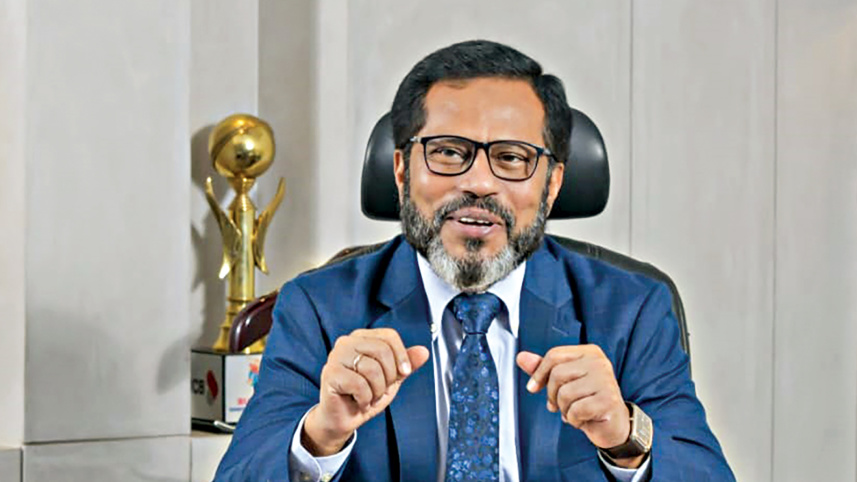
Mohammad Mamdudur Rashid
CEO
United Commercial Bank PLC. (UCB)

Bangla QR marks a milestone in our transition toward a modern, inclusive economy. UCB is committed to expanding merchant acceptance and bringing informal businesses into the formal ecosystem, ensuring that paying with a scan becomes a natural daily habit for both consumers and merchants.
Bangla QR is an important turning point in Bangladesh’s transition toward a modern, inclusive, and less cash-dependent economy. Mohammad Mamdudur Rashid, Chief Executive Officer (CEO) of United Commercial Bank (UCB), discusses how a unified, interoperable payment infrastructure is essential for bringing millions of grassroots transactions into the formal financial ecosystem and driving the national digital agenda.
The Daily Star (TDS): How do you perceive the role of Bangla QR in driving Bangladesh’s transition toward a truly cashless society?
Mohammad Mamdudur Rashid (MMR): Bangla QR is more than just another payment option; it creates a unified, interoperable infrastructure connecting customers, merchants, and financial providers on a common platform. For years, fragmented proprietary QR systems limited interoperability and slowed digital payment adoption. Bangla QR overcomes this challenge by enabling customers to pay through their preferred banking or MFS app at any participating merchant. With much of Bangladesh’s economy driven by small retailers and informal businesses, Bangla QR has the potential to bring millions of transactions into the formal digital ecosystem—reducing cash reliance, improving transparency, and advancing financial inclusion.
TDS: How are banks, MFS providers, and fintech companies collaborating to ensure seamless, cross-platform transactions for the end consumer?
MMR: The industry is moving beyond isolated payment networks toward a unified ecosystem built on common standards and central bank-backed infrastructure. Customers can now make seamless payments across platforms without worrying about which institution issued the QR code or which app they are using. This collaborative approach delivers greater convenience, wider acceptance, and a more consistent payment experience for consumers. By working together rather than in silos, we are creating a larger national system that benefits all stakeholders.
TDS: What strategies simplify merchant onboarding for street vendors, and how does Bangla QR help formalise their businesses?
MMR: Bangla QR significantly lowers the barrier to entry for small merchants. Instead of investing in costly payment terminals, street vendors and neighbourhood grocers can start accepting payments with a simple QR sticker or stand. Coupled with e-KYC and simplified account opening, banks can rapidly onboard businesses at the grassroots level. Crucially, every digital transaction creates a verifiable financial record. This allows merchants to build a financial footprint that can improve their access to credit and other formal banking services in the future, acting as a catalyst for formalising the informal economy.
 For all latest news, follow The Daily Star's Google News channel.
Comments