


Can Digital Payments Redefine the Economy?
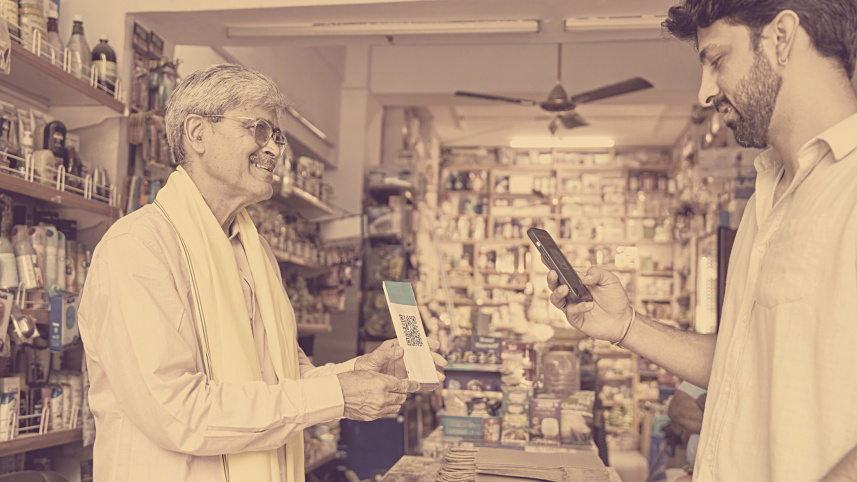
For decades, cash has been the backbone of Bangladesh’s economy. From roadside tea stalls and neighbourhood grocery shops to wholesale markets and public transport, physical currency has remained the preferred mode of payment. Yet the country is gradually entering a new phase, one in which digital transactions are becoming increasingly common. The rapid expansion of mobile financial services, internet banking, digital wallets and, most recently, the introduction of Bangla QR, reflects a broader national ambition to create a cashless economy.
The transition is not merely about replacing paper notes with smartphones. It is about building a more efficient and financially inclusive economy. While Bangladesh has made significant progress over the past decade, questions remain over whether a truly cashless future is achievable and what challenges must be overcome before that vision becomes reality.

Bangla QR and the push for interoperability
One of the most significant milestones in Bangladesh’s digital payment journey is the introduction of Bangla QR, a unified QR code payment system developed under the supervision of Bangladesh Bank. Previously, merchants accepting digital payments often displayed several QR codes, each belonging to a different mobile financial service provider or bank. Customers were required to use the corresponding application, creating unnecessary complexity.
Bangla QR seeks to eliminate this fragmentation. A single QR code enables customers to make payments using multiple participating banks and mobile financial service providers, regardless of which institution issued the QR. This interoperability simplifies transactions for consumers while reducing operational burdens for businesses.
For small and medium-sized enterprises, Bangla QR also lowers the barriers to accepting digital payments. Instead of investing in expensive point-of-sale terminals, merchants require only a printed QR code and a smartphone to begin receiving payments. Such accessibility is particularly important in Bangladesh, where small informal businesses account for a substantial share of economic activity. More importantly, a unified payment ecosystem encourages competition based on service quality rather than exclusive merchant networks, potentially accelerating digital payment adoption across the country.
The digital foundation is already being built
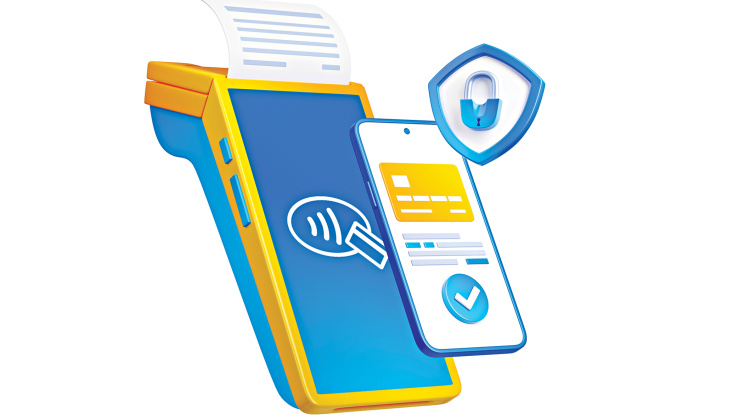
Bangla QR is only one component of Bangladesh’s broader digital transformation strategy. Over the past several years, multiple initiatives have collectively strengthened the country’s digital financial infrastructure.
Mobile financial services have revolutionised financial inclusion by enabling millions of citizens to transfer money, pay utility bills, receive salaries and access government benefits without visiting a bank branch. For many rural communities, digital wallets have become the first practical gateway to formal financial services.
Commercial banks have also expanded internet banking and mobile banking platforms, allowing customers to perform transfers, pay taxes, settle educational fees and conduct various financial transactions remotely. Contactless debit and credit cards are becoming increasingly common in urban areas, while e-commerce platforms continue to encourage consumers to adopt digital payment methods.
Government initiatives under the broader “Smart Bangladesh” vision have further accelerated digitisation. Public service fees, utility bills, tax payments and various government services are increasingly being integrated with digital payment channels, gradually reducing dependence on cash. The COVID-19 pandemic also served as an unexpected catalyst. Concerns over physical contact encouraged both businesses and consumers to experiment with contactless payment methods, leading many first-time users to continue using digital services even after restrictions were lifted.
Why a cashless economy matters
A reduction in cash usage offers benefits that extend beyond convenience. Digital transactions improve financial transparency by creating electronic records, making it more difficult for illicit financial activities and tax evasion to remain undetected. Greater transparency can strengthen public revenue collection and contribute to a more accountable financial system.
Businesses also benefit through improved efficiency. Digital payments reduce the costs associated with handling, transporting and safeguarding cash while lowering the risk of theft and counterfeit currency. For consumers, electronic payments offer speed and convenience. Everyday purchases can be completed within seconds without carrying large amounts of cash, while digital transaction histories assist individuals in tracking their spending.
Perhaps the greatest long-term advantage lies in financial inclusion. Millions of Bangladeshis who have historically remained outside the formal banking system can now participate in digital commerce through mobile-based financial services. Greater participation in the formal economy can improve access to credit, insurance and other financial products that contribute to economic growth.
Obstacles that cannot be ignored
Despite encouraging progress, several structural challenges continue to stand in the way of a fully cashless Bangladesh. Digital literacy remains uneven across different regions and age groups. Many individuals, particularly among older populations and rural communities, remain unfamiliar with mobile banking applications and digital payment procedures. Internet connectivity also varies considerably across the country. Although mobile network coverage has improved significantly, unstable internet connections can disrupt transactions and discourage users from relying entirely on digital payments.
Cybersecurity presents another growing concern. As digital transactions increase, so do attempts at online fraud, phishing attacks and financial scams. Building public confidence requires robust security measures alongside continuous consumer awareness campaigns.
Merchant adoption also remains inconsistent. While large retail outlets have embraced digital payments, many small businesses continue to prefer cash due to concerns regarding transaction charges, taxation or limited understanding of digital systems. Cash also maintains strong cultural acceptance. Many consumers perceive physical currency as easier to manage, universally accepted and less vulnerable to technological failures. Changing long-established financial behaviour often takes years rather than months.
Can Bangladesh become truly cashless?
 For all latest news, follow The Daily Star's Google News channel.
 Countries such as Sweden, US have demonstrated that widespread digital payments are possible, but Bangladesh faces different socioeconomic realities. A large informal economy, varying levels of digital access and differing financial literacy require a gradual transition rather than a rapid replacement of cash.
The success of Bangla QR and other digital payment initiatives will ultimately depend on sustained collaboration between Bangladesh Bank, commercial banks, mobile financial service providers, fintech companies and merchants. Investments in digital infrastructure, cybersecurity, affordable internet access and financial education will prove just as important as technological innovation itself.
Bangladesh has already laid much of the groundwork. The expansion of mobile financial services, interoperable payment systems, digital government services and fintech innovation indicates a clear policy direction. Whether the country reaches a fully cashless future remains uncertain, but its journey towards a digitally connected financial ecosystem is already well underway. If current momentum continues and public trust keeps growing, Bangladesh may not eliminate cash entirely, but it can certainly transform how money moves across the economy.
Comments