


Connecting Grassroots Merchants to the Digital Economy
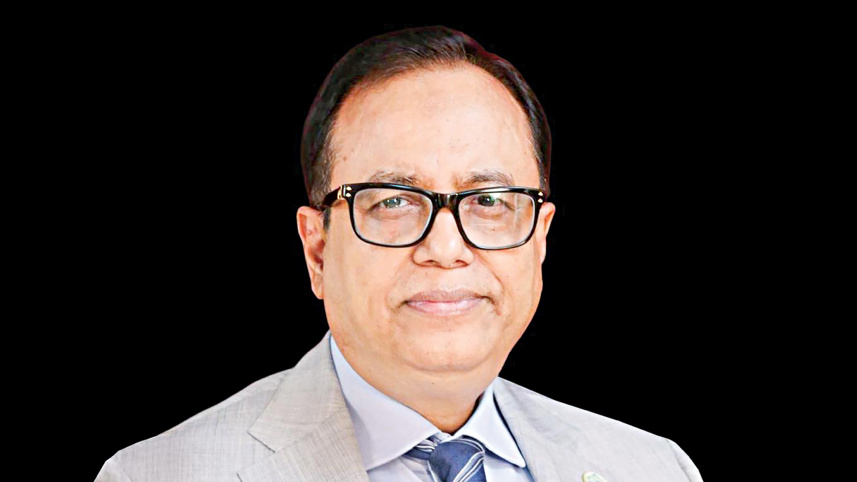
Mati Ul Hasan
Managing Director
Mercantile Bank PLC.

Digital transformation is a strategic priority, and Bangla QR is an important component of our long-term vision. We are actively working on expanding merchant acceptance, strengthening digital payment capabilities, and encouraging customer adoption.
Bangla QR holds the potential to accelerate financial inclusion, improve transaction transparency, and reduce cash-handling costs across Bangladesh. In this interview, Mati Ul Hasan, Managing Director of Mercantile Bank PLC, discusses the significance of a unified payment infrastructure and how the bank is actively expanding merchant adoption to support the country’s digital transformation agenda.
The Daily Star (TDS): How do you perceive the role of Bangla QR in driving Bangladesh’s transition toward a truly cashless society?
Mati Ul Hasan (MUH): Bangla QR is a landmark initiative in Bangladesh’s digital payments landscape. By introducing a single interoperable QR standard across banks, Mobile Financial Services (MFS), and Payment Service Providers (PSPs), it simplifies digital transactions for both consumers and merchants.
TDS: How are banks, MFS providers, and fintech companies collaborating to ensure seamless, cross-platform transactions for the end consumer?
MUH: The success of Bangla QR depends on collaboration across the entire financial ecosystem. Through the National Payment Switch Bangladesh (NPSB), banks, MFS providers, and payment service providers have come together to create an interoperable environment where customers can make payments using a single QR code regardless of their preferred platform. This approach reflects global best practices. National platforms such as India’s UPI, Thailand’s PromptPay, Cambodia’s Bakong, and the Philippines’ QR Ph have demonstrated that unified payment infrastructure drives faster adoption than fragmented systems.
TDS: How can we make Bangla QR a natural, daily habit for everyday retail transactions?
MUH: Global examples such as UPI in India, Pix in Brazil, and PromptPay in Thailand demonstrate that adoption accelerates when digital payments become a practical alternative to cash for routine transactions. For Bangladesh, expanding merchant acceptance, strengthening consumer awareness, and offering seamless user experiences will be crucial.
TDS: From an industry standpoint, what further policy support, tax incentives, or infrastructure developments are needed to accelerate the countrywide rollout?
MUH: Bangladesh has already established a strong foundation through Bangla QR and NPSB. The next challenge is accelerating adoption across all segments of society while maintaining ecosystem sustainability. While Bangladesh follows a standardized 1% MDR framework, markets such as India, China, and Singapore initially promoted digital payments through zero or near-zero merchant charges to encourage adoption and reduce reliance on cash. However, the common lesson from successful ecosystems is that interoperability, convenience, trust, and merchant acceptance ultimately drive long-term growth.
 For all latest news, follow The Daily Star's Google News channel.
Comments