


Visiting Xi vows tighter ties with Tehran
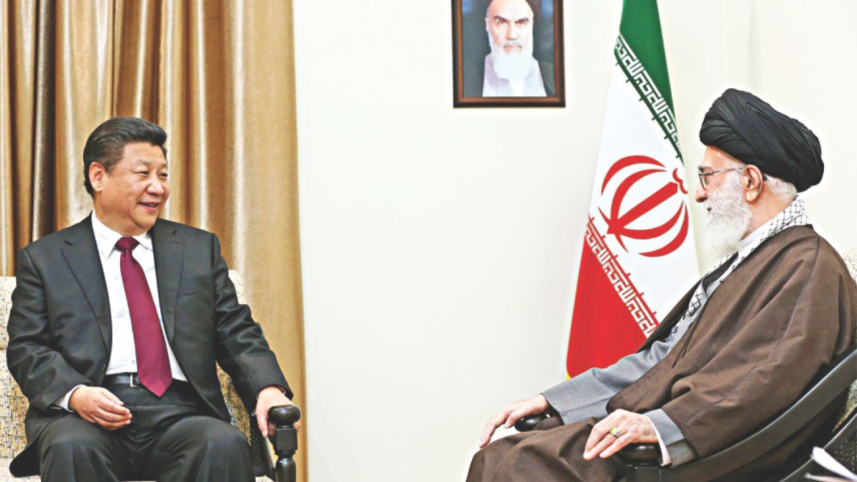
Iranian President Hassan Rouhani yesterday hailed a "new chapter" in relations with China after talks with President Xi Jinping, who is touring the region to boost Beijing's economic influence.
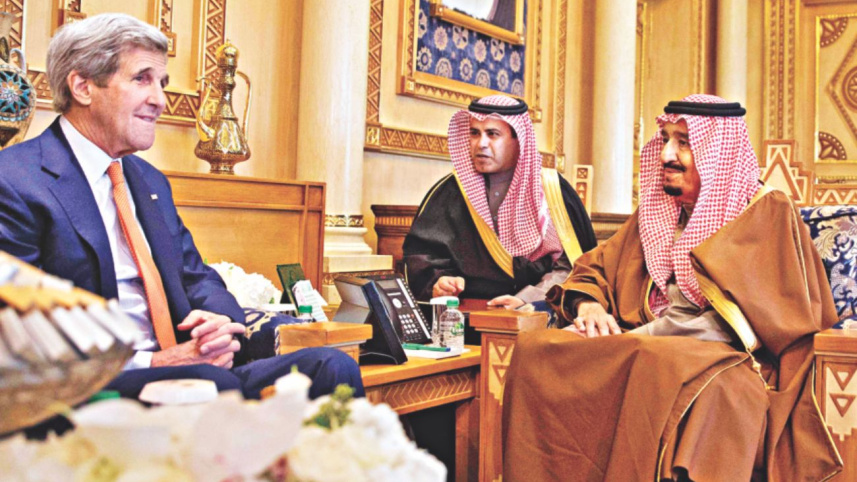
Meanwhile, US Secretary of State John Kerry, on a visit to Saudi Arabia, yesterday sought to reassure Gulf allies concerned about a perceived warming of ties between Washington and Iran.

He also announced that the Syria Support Group of 20 nations and organisations will meet "very shortly" to help push peace in the war-ravaged country.
The Asian giant and the Middle East's foremost Shia power aim to build economic ties worth up to $600 billion within the next 10 years, Rouhani announced.
The two leaders oversaw the signing of 17 agreements in areas including politics, the economy, security and cooperation on peaceful nuclear energy.
"With the Chinese president's visit to Tehran and our agreements, a new chapter has begun in Tehran-Beijing relations," Rouhani said in a televised speech, flanked by Xi.
It is the first visit to Iran by a Chinese president in 14 years, according to state news agency IRNA, and comes just days after sanctions against Tehran were lifted under a historic nuclear deal with world powers.
Xi later met with Iran's supreme leader Ayatollah Ali Khamenei.
Beijing has long taken a backseat to other diplomatic players in the Middle East but analysts say the region is crucial to Xi's signature foreign policy initiative -- known as "One Belt One Road" -- touted as a revival of ancient Silk Road trade routes.
According to Iranian media, more than a third of Iran's foreign trade is carried out with China.
The two presidents issued a joint statement outlining a long-term "comprehensive strategic partnership".
The two countries agreed to enhance cooperation including in fossil and renewable energy, transportation, railways, ports, industry, commerce and services, said the statement, published by Mehr news agency.
China "acknowledges Iran's constructive role in the fight against terrorism and maintaining peace and stability in the region," it added, while supporting Tehran's increased role in regional and international affairs.
Xi's tour, his first of the Middle East as Chinese president, has also taken him to Saudi Arabia and Egypt.
In Riyadh, Kerry held meeting with his Saudi counterpart Adel al-Jubeir and other foreign ministers from the six-nation Gulf Cooperation Council.
"The United States remains concerned about some of the activities that Iran is engaged in other countries," Kerry told reporters, citing as an example Iran's "support for terrorist groups like Hezbollah" in Lebanon.
Saudi Arabia and its Gulf neighbours perceive a lack of US engagement in the region, particularly in the face of what they see as Iran's "interference" in Yemen, Syria, Lebanon and elsewhere.
But, Jubeir, citing Iran as the world's chief sponsor of terrorism, told reporters that he did not see a "coming together" of the US and Iran.
Kerry later met with King Salman and the monarch's son, Deputy Crown Prince Mohammed bin Salman, who is also the defence minister.
 For all latest news, follow The Daily Star's Google News channel.
 Kerry also expressed confidence that Syrian peace talks will go ahead on Monday in Geneva despite a dispute over opposition representation. Yesterday he and his Russian counterpart Sergei Lavrov discussed by telephone the makeup of the opposition side.
Comments