


13m deprived of education: UN
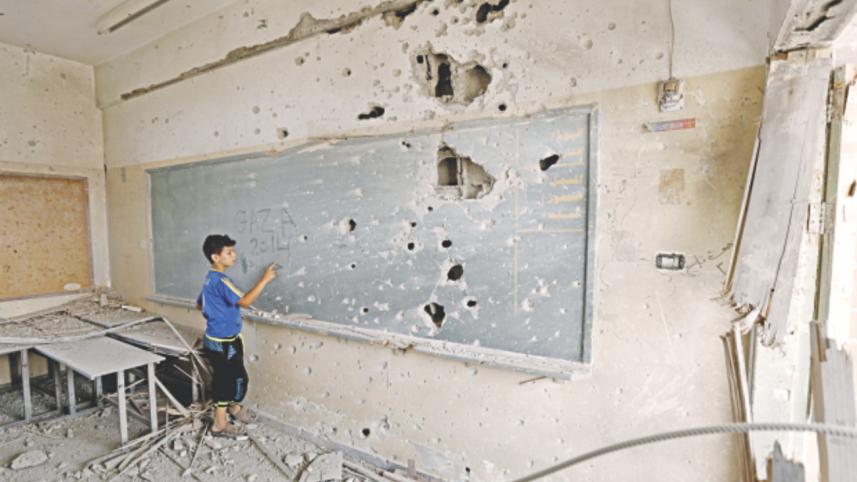
More than 13 million children are being denied an education by Middle East conflicts, the UN said yesterday, warning "the hopes of a generation" would be dashed if they cannot return to classrooms.
In a report on the impact of conflict on education in six countries and territories across the region, the United Nation's children fund UNICEF said more than 8,850 schools were no longer usable due to violence.

It detailed cases of students and teachers coming under direct fire, classrooms used as makeshift bomb shelters and children having to cross active front lines just to take their exams.
"The destructive impact of conflict is being felt by children right across the region," said Peter Salama, regional director for UNICEF in the Middle East and North Africa.
"It's not just the physical damage being done to schools, but the despair felt by a generation of schoolchildren who see their hopes and futures shattered."
Last year alone, UNICEF documented 214 attacks on schools in Syria, Iraq, Libya, the Palestinian territories, Sudan and Yemen.
In Syria, it said education was paying a "massive price" after four year and a half years of conflict.
One in four schools have been closed since the conflict erupted, causing more than two million children to drop out and putting close to half a million in danger of losing their schooling.
In addition, more than 52,000 teachers have left their posts, saddling the country's crumbling education system with an acute skills shortage.
In Yemen, hundreds of schools and colleges have been closed since March, when a Saudi-led coalition launched air strikes on Iran-backed Huthi rebels.
In the embattled Gaza Strip, which saw a 50-day war last year between Hamas militants and Israel kill about 2,200 Palestinians and 73 on the Israeli side, the UN said at least 281 schools had been damaged, and eight "completely destroyed".
Unicef said that violence in Iraq has had a severe impact on the schooling of at least 950,000 children.
Conflict has also affected child learning in Libya with more than half of those displaced in the 2011 chaos reporting that their children cannot attend classes.
UNICEF called for better informal education services in countries affected by school closures and for donor nations to prioritise education funding throughout the Middle East.
 For all latest news, follow The Daily Star's Google News channel.
Comments