


Afghan-based IS expands
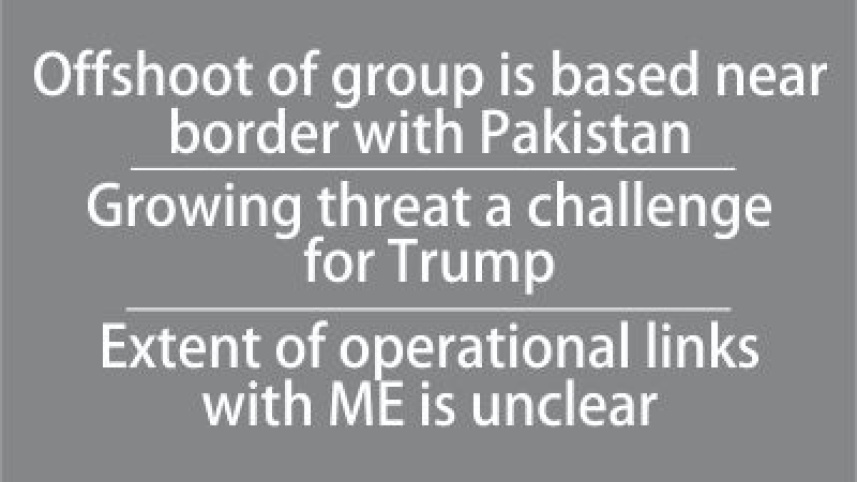
An Islamic State offshoot based near the Afghan-Pakistan border is expanding to new areas, recruiting fighters and widening the reach of attacks in the region, members of the movement and Afghan officials said.
Some members of the so-called "Khorasan Province" of Islamic State claimed responsibility for the recent attack on a Sufi shrine in Pakistan that killed 90 people, and IS gunmen were blamed for the deaths of six local aid workers in the north of the country, far from their stronghold in eastern Afghanistan.

Any expansion would pose a new challenge for US President Donald Trump, as he considers how many American troops to keep in Afghanistan where the main security threat remains the Taliban insurgency.
Trump has vowed to "totally destroy" the Middle East-based Islamic State, yet has spoken little of Afghanistan, where US forces have been posted for 15 years.
Now he has not only the stubborn Taliban to consider, but also militants swearing allegiance to IS, although US officials are generally less alarmed about its presence in Afghanistan than local officials.
"Daesh is not only a threat for Afghanistan but for the region and the whole world," said Shah Hussain Mortazawi, spokesman for President Ashraf Ghani's office, using a common Arabic name for the group.
The extent of direct operational links between IS in Afghanistan and the Middle East remains unclear, although most fighters in the "Khorasan Province" are Afghans, Pakistanis or Central Asians.
Still, three members of the group told Reuters a handful of Arab advisers helped direct propaganda, recruiting and identifying targets for attack.
IS is suspected of carrying out several attacks on minority Shia Muslim targets in Afghanistan, and the February suicide bombing at the Pakistani shrine bore some of the hallmarks of the sectarian group.
The AMAQ news agency, affiliated to IS in the Middle East, said the movement was responsible for the shrine bombing, but Abu Omar Khorasani, a senior member of the Afghan chapter who sometimes speaks for IS there, denied involvement.
"Islamic State has no proper base in Pakistan, but it has sympathizers and links in Pakistan," said one member of the group, based in Afghanistan. "Mostly the attackers and suicide bombers enter from Afghanistan to Pakistan."
Western and Afghan security officials believe fighters frequently switch allegiances between militant groups, making it difficult to know who is to blame for violence.
 For all latest news, follow The Daily Star's Google News channel.
Comments