


Hungry and afraid, Mosul civilians flee
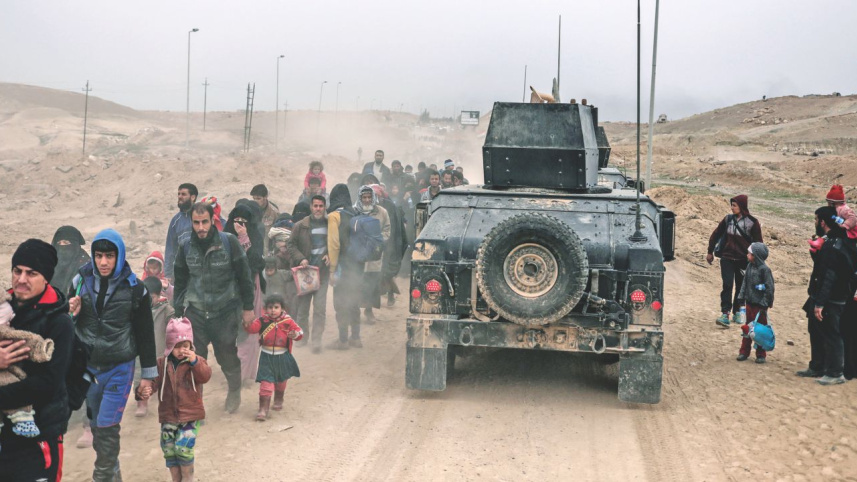
The gunshot rang out as civilians tried to escape the west of Mosul, where Iraqi forces are battling jihadists, killing a father as he fled with his family.
"The sniper shot him in the head. His family was all around him, the children and his wife, they were crying," said Maysun, who saw the shooting as she fled Mosul's Maamun neighbourhood.

"They didn't want to leave his side, but we made them continue because it was so dangerous," the 35-year-old told AFP at a camp for the displaced near Iraq's second city.
More than 28,000 people have streamed out of west Mosul since February 19, when security forces began a push to wrest control from the Islamic State group, according to International Organization for Migration figures.
They are fleeing fighting and food shortages, but they face horrifying scenes as they leave.
"There were bodies in the street as we walked, children, pieces of bodies," said Safana, 23, as she waited in a food distribution queue in the Hamam al-Alil camp.
She said IS fighters had told people to leave her neighbourhood of Maamun in west Mosul.
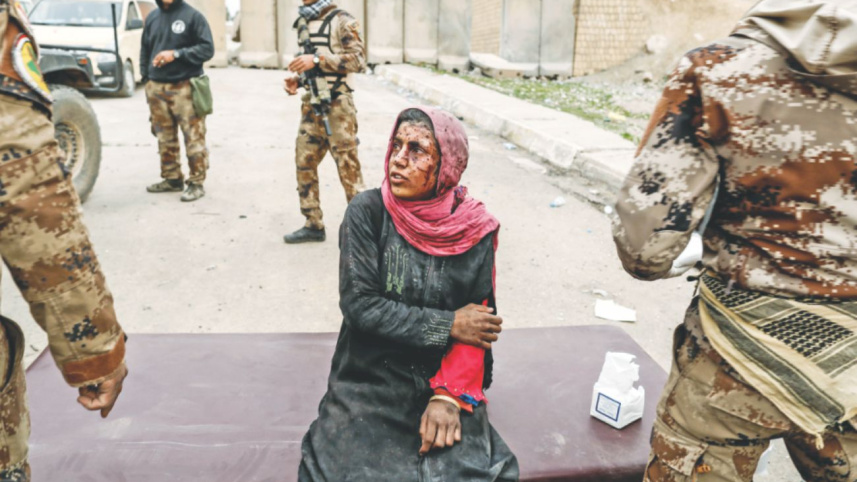
Iraq's elite Counter-Terrorism Service has faced "fierce" resistance from IS in southwest Mosul, and the jihadists have targeted fleeing civilians, according to senior commander Staff Lieutenant General Abdulghani al-Assadi.
He told AFP around 15 fleeing civilians had been killed by jihadists in the past 10 days, with more wounded.
Safana, who like many of those fleeing Mosul declined to give her family name, said civilians had been trapped in their homes during heavy clashes.
"Our neighbour's house was hit by a mortar round and the whole house collapsed on top of them."
"We managed to pull out two wounded people," her sister Shaimaa interjected.
"But all the rest were dead, and their bodies are still under the rubble."
Among those killed elsewhere in the area known as the Maamun Flats was 10-year-old Rusud Saddam, whose mother was inconsolable as she walked along a highway to reach transport to a camp for the displaced.
"My daughter was standing in the corridor in the house... the mortar round hit and she's gone," she wept from behind a black face veil.
"They broke my heart... I left her in the cemetery. I left her in the cemetery and I came."
Many of the displaced described surviving on a single meal a day.
"We had virtually no food and Daesh fighters came into our house and took what we had left," said Khaled Mohamed, 24, using an Arabic acronym for IS.
Samir said civilians were arriving hungry, thirsty and traumatised.
 For all latest news, follow The Daily Star's Google News channel.
 "They're suffering physically and psychologically, from what they've seen -- torture, executions, death."
Comments