


Iraq dumps books of violence
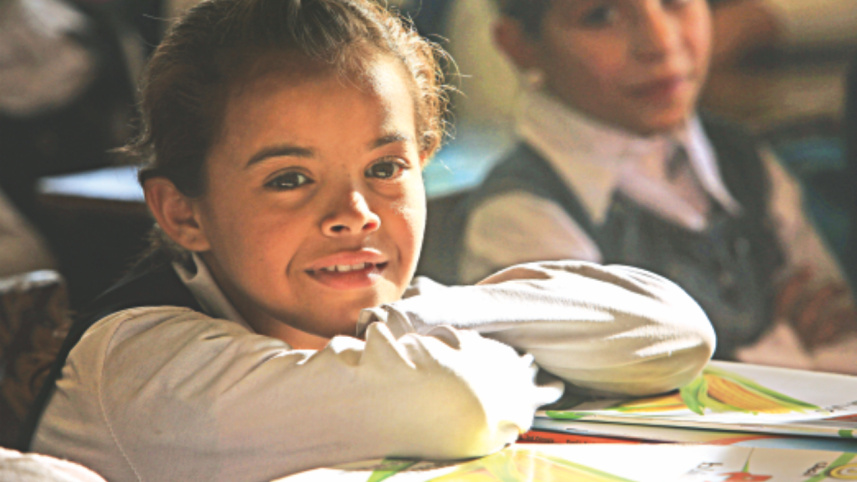
The school walls have a fresh coat of paint and classrooms are crammed, but it will take longer to undo the damage done to thousands of Iraqi children who lived under Islamic State for more than two years.
Although the school term began officially in September, only this week have pupils in the northern town of Qayyara been re-issued with standard Iraqi textbooks, which the militants replaced with their own in an attempt to brainwash a generation.

Islamic State was driven from the town three months ago in the early stages of a campaign to recapture the city of Mosul, which lies about 60 km (40 miles) to north and is now under assault by Iraqi security forces backed by a US-led coalition.
As Islamic State's self-proclaimed caliphate is eroded, a clearer picture is emerging of the group's project and the enduring mark left on those who lived through it.
When the militants overran the area in the summer of 2014, they allowed schools to run as normal, local people said. But later they banned subjects they considered un-Islamic such as geography, history and civic education, and used boys' schools as a recruiting ground.
The following school year, beginning in 2015, Islamic State imposed an entirely new curriculum to inculcate children with their ideology. Maths exercises were expressed in terms of weapons and ammunition: "one bullet plus two bullets equals how many bullets?".
At that point, most parents stopped sending their children to school, and many pupils who were old enough to make up their minds left voluntarily.
As a result, most children have been set back by two grades, and since some teachers have been displaced by the violence, there is only one teacher for roughly every 80 pupils at the girls' school in Qayyara.
"The biggest impact is on children," said a teacher named Mahjoub, whose school was hit by an airstrike several months ago. "Children are malleable; you can change their opinion and beliefs quickly."
Mahjoub said children behaved more aggressively than before, and that the games they play now are violent, estimating it would take no less than five years to reverse the damage, even if a plan to rehabilitate them was put into effect.
Mahjoub said around 10 of his own students had joined the militants.
 For all latest news, follow The Daily Star's Google News channel.
Comments