


ISIS' recipe to success
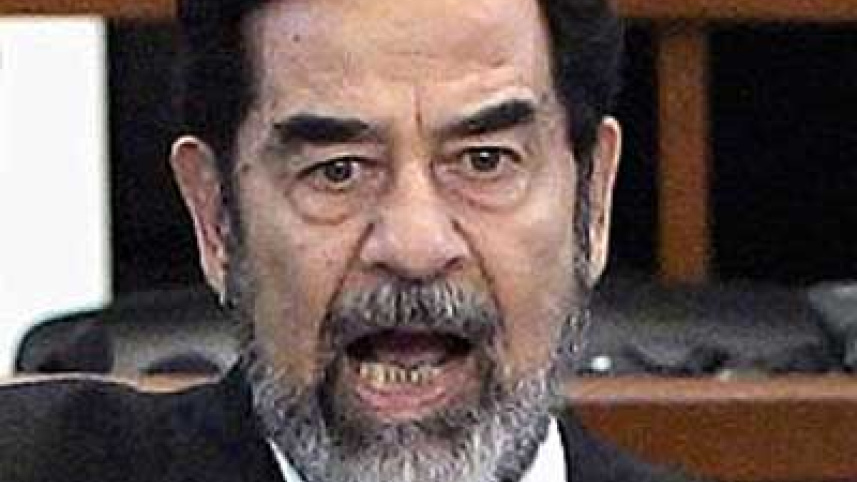
Once part of one of the most brutal dictator's army in the Middle East, over 100 former members of Saddam Hussein's military and intelligence officers are now part of ISIS.
Now they make up the complex network of ISIS's leadership, helping to build the military strategies which have led the brutal jihadi group to their military gains in Syria and Iraq.

The officers gave ISIS the organization and discipline it needed to weld together jihadi fighters drawn from across the globe, integrating terror tactics like suicide bombings with military operations.
Patrick Skinner, a former CIA case officer who has served in Iraq, said Saddam-era military and intelligence officers were a 'necessary ingredient' in the Islamic State group's stunning battlefield successes last year, accounting for its transformation from a 'terrorist organization to a proto-state.'
'Their military successes last year were not terrorist, they were military successes,' said Skinner, now director of special projects for The Soufan Group, a private strategic intelligence services firm.
In the run-up to the 2003 US-led invasion, Saddam publicly invited foreign mujahedeen to come to Iraq to resist the invaders.
Thousands came and Iraqi officials showed them off to the media as they were trained by Iraqi instructors. Many stayed, eventually joining the insurgency against American troops and their Iraqi allies.
After the collapse of the Saddam regime, hundreds of Iraqi army officers, infuriated by the US decision to disband the Iraqi army, found their calling in the Sunni insurgency. In its early stages, many insurgent groups were relatively secular.
But Islamic militants grew in prominence, particularly with the creation and increasing strength of al-Qaeda in Iraq. Some Sunnis were radicalized by bitterness against the Shiite majority, which rose to power after Saddam's fall and which the Sunnis accuse of discriminating against them.
Abu Bakr al-Baghdadi's first two deputies, who each played a major role in setting up what would become its sweep over Syria and Iraq, were both Saddam-era officers, according to those interviewed by the AP.
They were Sameer al-Khalifawy, an air force colonel killed in fighting in Syria in 2014, and Abdullah el-Bilawy, a former intelligence officer who was killed in Mosul by the Iraqi military in May 2014. The group's current second-in-command is also a former Saddam-era army major, Saud Mohsen Hassan, known by the pseudonyms Abu Mutazz and Abu Muslim al-Turkmani.
During the 2000s, Hassan was imprisoned in the notorious US-run Bucca prison camp, the main detention center for members of the Sunni insurgency, where al-Baghdadi also was held. The prison was a significant incubator for the Islamic State group, bringing militants like al-Baghdadi into contact with former Saddam officers, including members of special forces, the elite Republican Guard and the paramilitary force called Fedayeen. In Bucca's Ward 6, al-Baghdadi gave sermons and Hassan emerged as an effective organizer, leading strikes by the prisoners to gain concessions from their American jailers, the intelligence chief said. Former Bucca prisoners are now throughout the ISIS leadership.
Al-Baghdadi has drawn these trusted comrades even closer after he was wounded in an airstrike earlier this year, the intelligence chief said. He has appointed a number of them to the group's Military Council, believed to have seven to nine members - at least four of whom are former Saddam officers. He brought other former Bucca inmates into his inner circle and personal security.
Saddam-era veterans also serve as 'governors' for seven of the 12 'provinces' set up by the Islamic State group in the territory it holds in Iraq, the intelligence chief said. Many of the Saddam-era officers have close tribal links to or are the sons of tribal leaders in their regions, giving IS a vital support network as well as helping recruitment.
These tribal ties are thought to account, at least in part, for the stunning meltdown of Iraqi security forces when ISIS captured the Anbar capital of Ramadi in May.
 For all latest news, follow The Daily Star's Google News channel.
Comments