


New strategy or repeating history?
WHAT HAS TRUMP ANNOUNCED?
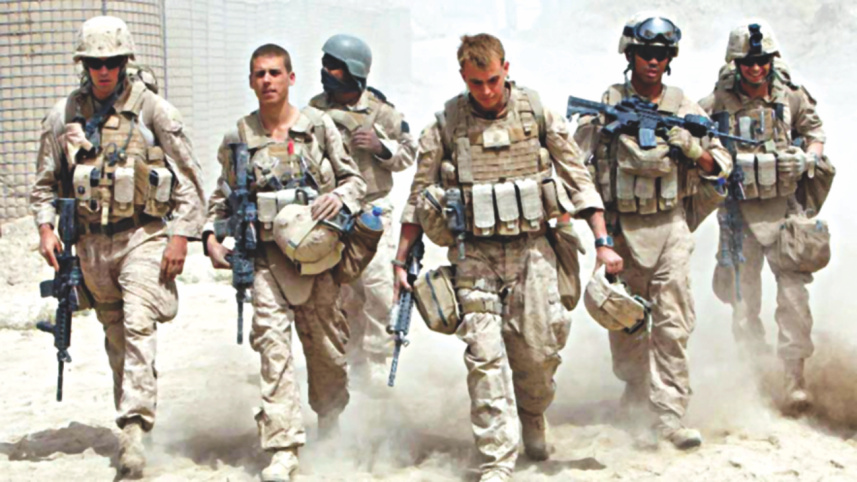
He refused to give figures or details. But the strategy appears to amount to around 4,000 new troops, largely freed from Obama-era restrictions and thus able to take on greater frontline combat roles to target "terrorist and criminal networks".

The 8,500 US personnel currently in-country are largely restricted to Nato's mission of training the Afghan Army and offering strategic support on certain missions, though some are already conducting frontline operations.
The other main plank of Trump's outline strategy was to pressure Pakistan, a move which has already been attempted repeatedly attempted by Washington.
HOW WILL THE TALIBAN REACT?
With predictable violence and from a position of relative strength, observers say.
They are likely to seek to send an early message, perhaps with a major urban attack -- the like of which they proved themselves capable with a massive truck bomb in Kabul's diplomatic quarter in May.
"The Taliban and other belligerents are likely to respond with a new wave of violence across the country," including in urban areas, said Javid Ahmad from West Point's Modern War Institute.
WILL THE PRESSURE ON PAKISTAN WORK?
Trump returned to the theme that has been a near-constant refrain from Washington since shortly after the 9/11 attacks: Pakistan must stop supporting extremists.
With its long, porous border and poorly policed tribal areas, Pakistan makes a near-perfect refuge for Taliban, out of the range of Afghanistan's under-performing army and its American protectors.
Despite being a signed-up ally in the US "War on Terror", Pakistan stands accused of fuelling the insurgency next door, in part as a bulwark against the influence of India -- a modern-day "Great Game" reminiscent of the imperial rivalry between Britain and Russia in the 19th century.
SOURCE: AFP
 For all latest news, follow The Daily Star's Google News channel.
Comments