


No US plane allowed to fly
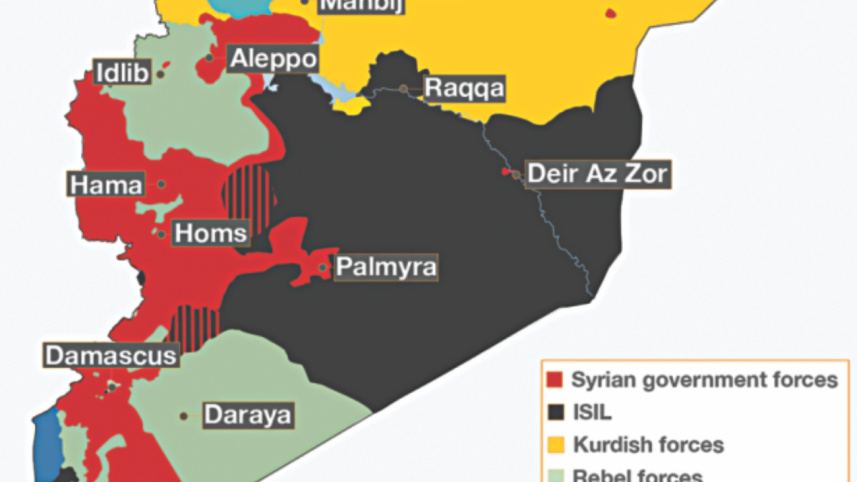
The safe zones that regional powers have agreed to create in Syria will be closed for military planes of the international US-led coalition, Russia's envoy to Syria talks said.
Turkey and Iran agreed on Thursday to Russia's proposal for "de-escalation zones", a move welcomed by the United Nations but met with scepticism from the United States and Syrian rebel groups.

Speaking from the Syria summit in the Kazakh capital, Astana, on Thursday, Russian envoy Alexander Lavrentyev said that Syrian government fighter jets are also not expected to fly over the "de-escalation" zones for six months.
Russian military aircraft will refrain from flying over such areas, he added, unless there are what he described as attempts to destabilise the situation.
The agreement will come into force from midnight tonight, but Russia's air force will continue striking Islamic State elsewhere in the country, Russian news agencies cited Russian Defence Ministry as saying on Friday.
The first and the largest safe zone in northern Syria will include the Idlib province and adjoining districts of Latakia, Aleppo and Hama with a total population of over 1 million, the ministry said.
The position of the United States allowed to create conditions for political settlement in Syria, the agencies quoted Russian Deputy Defence Minister Alexander Fomin as saying.
The fact that the de-escalation agreement was supported by the United Nations, the United States and Saudi Arabia guarantees its implementation, he said.
Military analysts estimated that the no-fly zone imposed over Iraq in 1991 helped save countless lives. It is unclear though who will be responsible for policing the air space and what the consequences would be for breaking the interdiction.
Neither the Syrian government, nor the opposition had signed the de-escalation zones agreement. Representatives of several rebel groups say they cannot accept Iran as a guarantor of the deal.
Syria's civil war, currently in its seventh year, has killed hundreds of thousands of people and has drawn in world powers on all sides.
The negotiations in Astana are viewed as complementary to broader United Nations-brokered talks in Geneva on a political settlement, but neither have yielded real progress as of yet.
 For all latest news, follow The Daily Star's Google News channel.
Comments