


Opium spreads as Afghan Taliban gain ground: UN
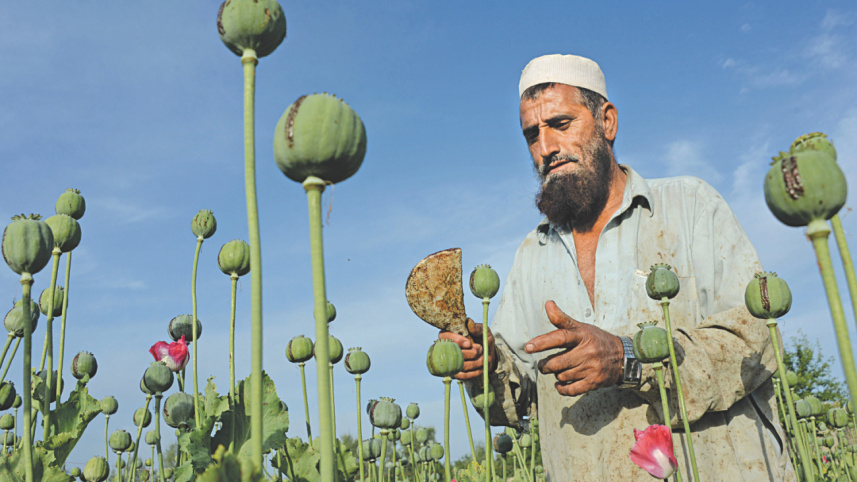
The cultivation of opium poppy in Afghanistan, the world's main source of heroin, has risen to its third-highest level in more than 20 years, the United Nations confirmed yesterday, as the Taliban insurgency gains ground.
In the key findings of its annual Afghanistan opium survey, the UN Office on Drugs and Crime (UNODC) said the total area of land devoted to poppy cultivation had risen 10 percent in 2016 to 201,000 hectares (497,000 acres).

"The survey shows a worrying reversal in efforts to combat the persistent problem of illicit drugs and their impact on development, health and security," UNODC Executive Director Yury Fedotov said in a statement.
The government's loosening grip on security in many areas contributed to a collapse in poppy eradication efforts, a method championed by the United States after it led an invasion of Afghanistan in 2001 when the country was under Taliban rule, reports Reuters.
"Eradication has dropped precipitously to 355 hectares - a fall of some 91 percent," Fedotov said. The report said cultivation was also spreading to new areas, as the number of poppy-free provinces fell to 13 from 14 out of a total of 34.
The report confirmed a statement by Fedotov earlier this month that the area under cultivation in 2016 had exceeded 200,000 hectares, putting it in the top three years since the UNODC began providing estimates in 1994.
Meanwhile, an Afghan Taliban delegation has arrived in Pakistan, militant sources said Saturday, raising speculation over efforts to revive peace negotiations days after reports of secret talks with Afghan officials in Qatar.
Hazrat Omar Zakhilwal, Afghanistan's ambassador to Islamabad, told AFP he was aware of the Taliban delegation's visit but gave no further details.
Taliban successes on the battlefield have exposed the defensive limits of Afghanistan's Nato-trained armed forces, which are supposed to number 350,000 personnel but which have been heavily depleted by casualties and desertion.
 For all latest news, follow The Daily Star's Google News channel.
Comments