


US-Iran to remain foes despite deal
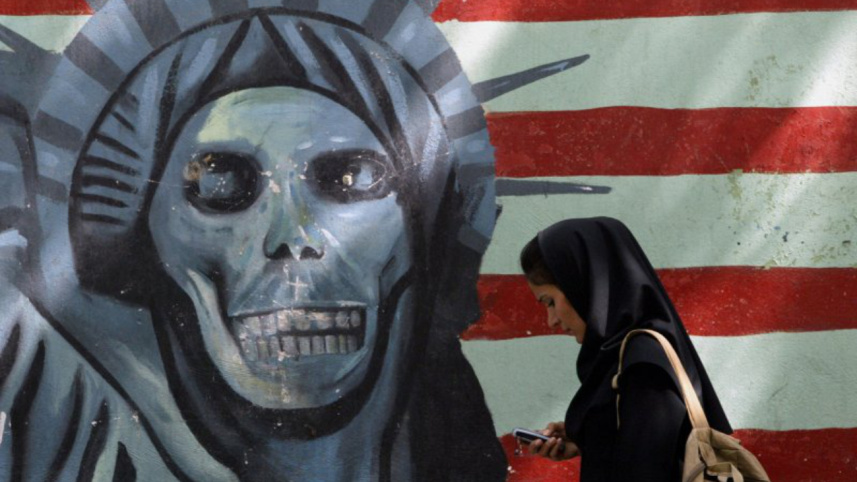
US President Barack Obama, eager to resolve at least one intractable conflict in his final two years in office, has his eye on a major prize: reconciliation with Iran.
Thursday's agreement on a road map for the final phase of negotiations on a nuclear accord could open a way to a broader realignment that would redraw the map of the Middle East.

But analysts warn that the long-time foes remain far from a rapprochement and any future cooperation would be limited.
"In Barack Obama's head, there's this fantasy of a grand bargain, an alliance with Iran, and of reconstructing the architecture of the region for a paradigm shift," said Joseph Bahout, a visiting scholar at the Carnegie Center.
"This is the fantasy of the Obama administration, but he knows it will never happen because Iran is a lot colder.
"They'll take the nuclear deal, but everything will remain business as usual," he added.
Relations between Tehran and Washington are haunted by the 1953 coup, orchestrated by the CIA, which overthrew Iranian prime minister Mohamed Mosssadegh and restored royal rule.
Shah Mohammad Reza Pahlavi was overthrown in turn in the 1979 revolution that brought Ayatollah Khomenei's Islamist and explicitly anti-American government to power.
The divide between the powers has been deepened by decades of hostile rhetoric.
The United States is regularly denounced as the "Great Satan" by Iranian leaders, and Washington has slammed Tehran as a "rogue state," part of an "axis of evil."
Obama hailed the "historic understanding" with Iran Thursday, and said he is willing to engage with Iran "on the basis of mutual interests and mutual respect."
But he sent Tehran a strong warning.
"This deal alone -- even if fully implemented -- will not end the deep divisions and mistrust between our two countries," he said.
"So make no mistake: We will remain vigilant in countering those actions and standing with our allies," Obama added, referring to what he called Iran's "sponsorship of terrorism."
Despite signs of outreach, restoring full diplomatic ties, severed some 35 years ago amid the 1979 storming of the US Embassy in Tehran and the painful 444-day hostage-taking, remains far off.
Alireza Nader, senior international policy analyst at the RAND Corporation, is skeptical about how close Washington and Tehran will be in the future.
"I do not believe that the establishment in Iran wants normal ties with the United States," he told AFP.
"Perhaps President Rohani and his government want diplomatic relations, but the Supreme Leader and his supporters view it as being against their interests."
"The two countries will continue to be competitors, especially if there are no major domestic changes in Iran," Nader added.
 For all latest news, follow The Daily Star's Google News channel.
Comments