


Shia militias join the fray
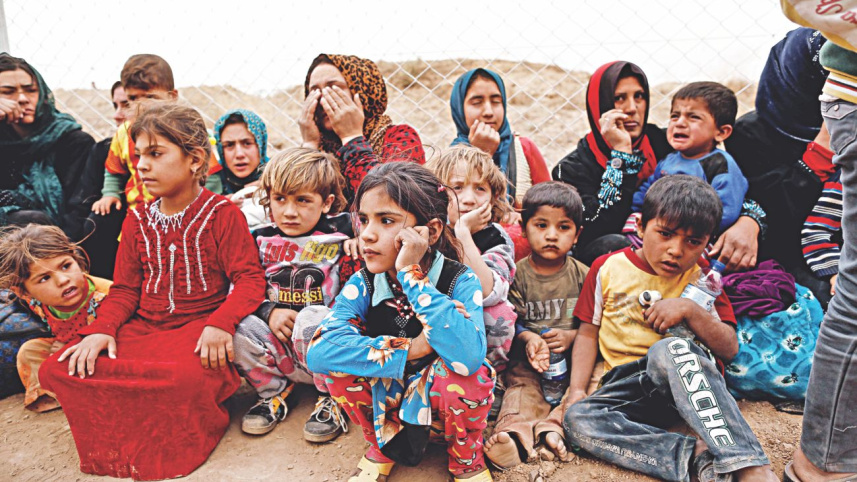
Iraqi Shia militias backed by Iran yesterday said they would soon join the fight against Islamic State on a new front west of Mosul, a move which could block any retreat by the jihadists into Syria but might alarm Turkey and the United States.
The Shia militias, with thousands of battle-hardened fighters trained by Iran, would bring important extra firepower to what is expected to be the biggest battle in Iraq since the US-led invasion in 2003.

But their arrival on the battlefield in one of the most diverse parts of Iraq also creates worry for Western countries backing the Iraqi government offensive, who fear that the Shia fighters could alienate residents in mainly Sunni areas.
A spokesman for the paramilitary groups said the advance towards the Islamic State-held town of Tal Afar, about 55 km (35 miles) west of Mosul, would start within "a few days or hours".
If successful, the offensive would leave Islamic State fighters - and the 1.5 million civilians still living in Mosul - encircled by an advancing coalition of forces which seeks to crush the hardline Sunni militants in their Iraq stronghold.
Iraqi and Western military sources say there has been debate about whether or not to close off the western route in and out of Mosul. Leaving it open would offer Islamic State fighters a chance to retreat, potentially sparing civilians inside the city who might otherwise be trapped in a bloody fight to the finish.
Turkey's Foreign Minister Mevlut Cavusoglu said this week his country, which has troops deployed north of Mosul inside Iraqi territory, will take measures if there is an attack on Tal Afar.
As many as 50,000 Iraqi soldiers, police and Kurdish peshmerga fighters, backed by US-led air strikes and support on the ground, have advanced on Mosul for nearly two weeks from the south, north and east.
They have already recaptured scores of villages on the flat plains east of Mosul and along the Tigris river to the south of the city, Islamic State's last big bastion in Iraq.
Rights groups have called on Baghdad to keep the Shia militias away from the battlefield, accusing them of carrying out revenge killings and kidnappings in other areas freed from Islamic State. The militias and the Baghdad government say any such abuses were isolated incidents and not widespread.
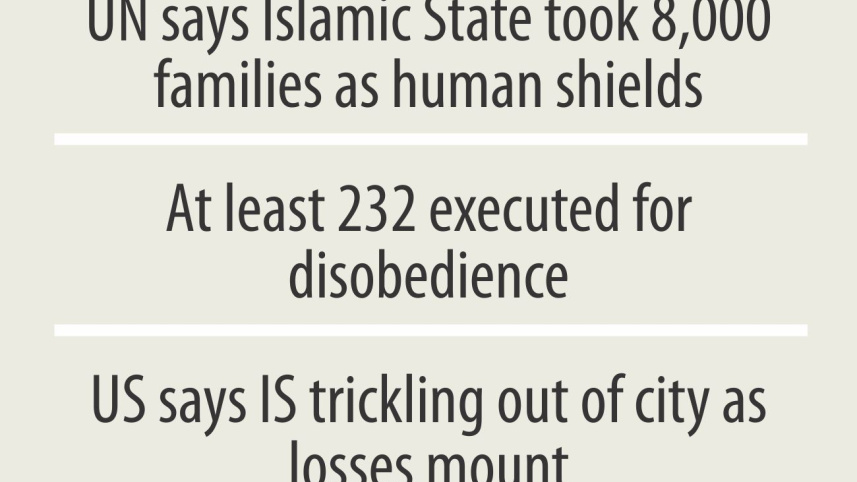
The United Nations yesterday said Islamic State had abducted 8,000 families from around Mosul to use as human shields, and had killed 232 people near the city on Wednesday who refused to comply with orders.
Mosul and Raqqa, IS's main bastion in Syria, form the two symbolic capitals of a cross-border "caliphate" declared by the group's leader Abu Bakr al-Baghdadi from the pulpit of a Mosul mosque in August 2014.
 For all latest news, follow The Daily Star's Google News channel.
Comments