


Syria co-op deal soon
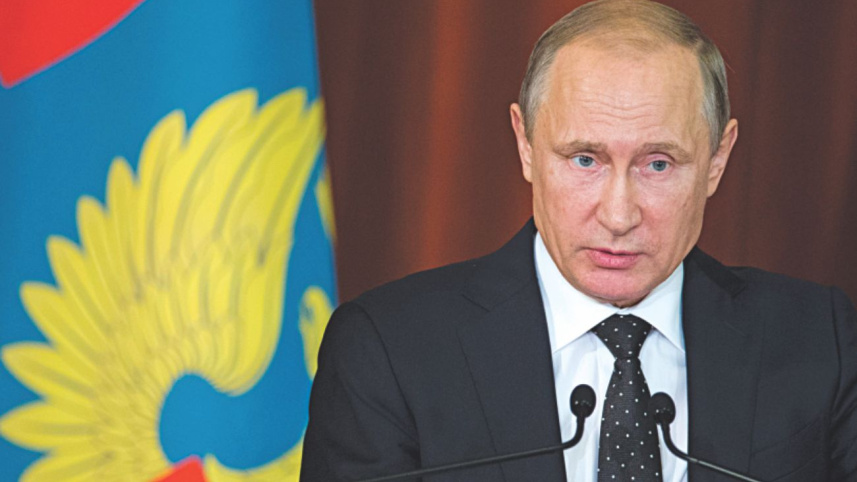
Russian President Vladimir Putin yesterday said in an interview aired that Moscow and Washington could soon reach a cooperation deal on Syria.
"In my opinion we're gradually heading in the right direction and I don't exclude that we'll be able to agree on something in the near future and present our agreements to the international community," Putin said in an interview with Bloomberg News.

Russian and American officials are holding negotiations in Geneva aimed at reestablishing a ceasefire in Syria and cooperating militarily against the Islamic State and other jihadist groups in the country.
"The talks are very difficult," Putin said.
"One of the key problems is that we insist, and our American partners do not object to this, that the so-called healthy part of the opposition should be separated from the radical groups and terrorist organisations such as Jabhat Al-Nusra."
Russia and US are on opposing sides of the Syria conflict with Moscow flying a bombing campaign in support of Syrian leader Bashar al-Assad and Washington demanding he go.
Any military cooperation between the two sides in Syria could prove a game-changer but many in the US -- which is leading a separate coalition against IS -- are sceptical that Moscow can be trusted.
Meanwhile, Turkey wants to normalise relations with Syria, the prime minister said yesterday, confirming a policy shift after years of supporting rebels opposed to Assad.
"We have normalised our relations with Russia and Israel," Binali Yildirim said in a televised speech.
"Now, God willing, Turkey has taken a serious initiative to normalise relations with Egypt and Syria."
Turkey yesterday renewed air strikes on Islamic State sites in Syria yesterday, extending operations along a 90-km (56-mile) corridor near the Turkish border which Ankara says it is clearing of jihadists and protecting from Kurdish militia expansion.
Turkey's 10-day-old offensive, its first major incursion into Syria since the war started five years ago, has alarmed the West.
The United States has voiced concerns about Turkish strikes on Kurdish-aligned groups that Washington has backed in its battle against Islamic State. Germany said it did not want to see a lasting Turkish presence in an already tangled conflict.
Turkey has said it has no plans to stay in Syria and simply aims to protect its frontier from Islamic State and the Kurdish YPG militia, which it sees as an extension of the outlawed Kurdish PKK group fighting an insurgency on Turkish soil.
 For all latest news, follow The Daily Star's Google News channel.
Comments