


Tunisia extends curfew
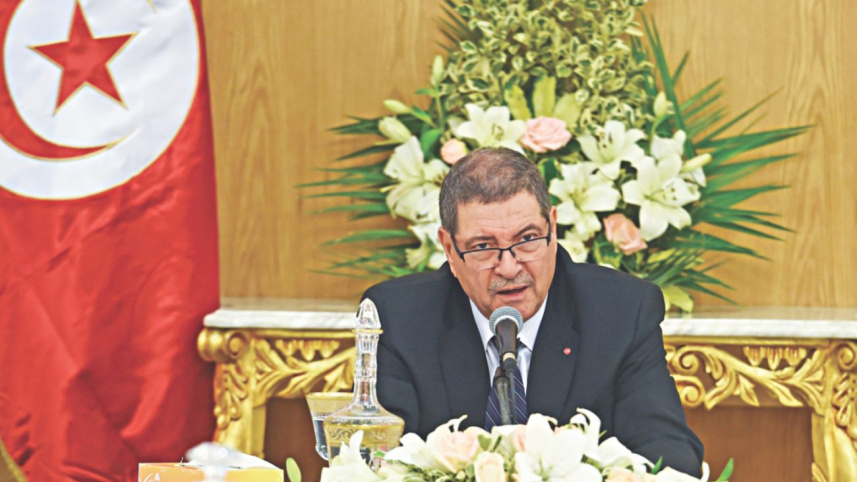
Tunisian Prime Minister Habib Essid yesterday pleaded for people to be "patient" after a wave of protests against poverty and unemployment in the worst social unrest since the 2011 revolution.
He spoke after chairing an emergency cabinet meeting as authorities said a nighttime nationwide curfew would be indefinite.

The measure was imposed Friday after the spread of unrest from the central town of Kasserine, where an unemployed man died of electrocution during a protest, to the rest of the country.
Anger at the January 16 death of Ridha Yahyaoui after he climbed a power pole also hit the capital where shops were burnt and looted in one suburb.
It was the worst social unrest since the revolution five years ago that ousted longtime dictator Zine El Abidine Ben Ali.
Tunisia "is in danger despite the positive things which we have accomplished, particularly the transition toward democracy", said Essid, urging people to "understand that there are difficulties".
"Solutions exist but some patience and optimism are needed," said Essid.
The premier, who met the defence and interior ministers before the cabinet meeting, did not announce any firm measures to tackle unemployment and corruption which have plagued the country.
On Friday he said he had "no magic wand" to solve unemployment which is more than 15 percent nationwide and 32 percent among university graduates.
Calm returned to Kasserine on Saturday morning after a day of clashes, but in the nearby town of Sidi Bouzid -- the cradle of the revolution -- teenagers set tyres alight, AFP journalists said.
There have been 261 arrests over the unrest and 84 for curfew violations on Friday, the interior ministry said.
The unrest echoed the public anger that erupted after the death of young fruit seller Mohammed Bouazizi in December 2011 in protest at unemployment and police harassment.Bouazizi set himself on fire in Sidi Bouzid, sparking the uprising that toppled Ben Ali -- whose rule was tainted by graft accusations -- and inspired the Arab Spring revolts.
While Tunisia is considered a rare Arab Spring success story, the authorities have failed to resolve the problems of social exclusion and regional inequalities.
 For all latest news, follow The Daily Star's Google News channel.
Comments