


The youth and traditional songs in the face of change
Traditional music, undoubtedly, stands as a flag bearer of our heritage. Primarily born from poignant emotions, it was nurtured by the twists and turns of our long and complex history. Through the centuries, it flowed from the mysticism of folk and baul songs: Lalon Shah's hypnotic search for spirituality or Hason Raja's unfiltered, lovestruck yearning. Later, it underwent an artistic revolution through the reconfiguration by Rabindranath's sophisticated spontaneity, alongside the fierce intensity of Kazi Nazrul Islam's raga-based songs, ghazals, khyals, thumris, with a tinge of influence from classical music, and modern songs that fused seasons, nature, and rebellion.
These songs are rich in literary genius, laden with imagery and sensory details, and importantly, open to meaning, waiting for each listener to find their own reflection within them.

But today’s youth, with the attention span of a goldfish, may find it difficult to indulge in the layered cadences of traditional songs. Social media might have paved the way for broader accessibility, but exposure doesn’t equate to connection.
Our judgment of a “good song” is now filtered through an “aesthetic” lens that overshadows our will to connect beyond the relevance of modernity. This favours cross-cultural experimentation; reformulation (which is good to a certain extent); and an automatic sense of youngsters associating traditional songs with something merely out-of-date. With melodies being engineered to be up-to-trend with 15-second hooks on frantic doom-scrolling ventures, feeling the soul of our musical heritage with proper patience is a far cry from the modern spirit.
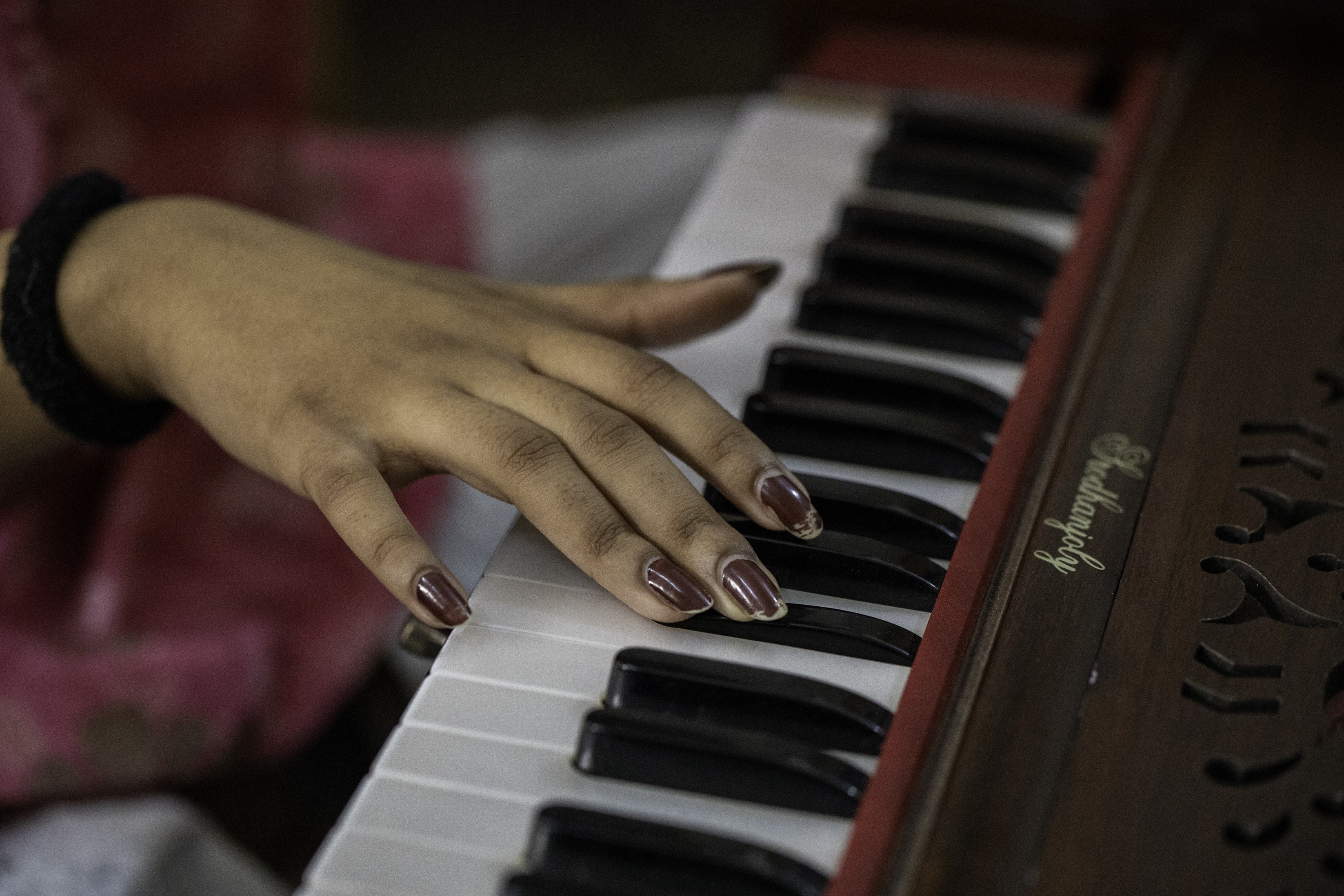
For a generation fed on instant gratification, music closely linked to our roots is now distant from today’s youth’s preferences.
Even so, what draws a fraction of Bangalee youth to still be in touch with their roots?
When I was eight years old, despite all my defiance, my mother forcefully appointed a music tutor at home. At that time, singing combinations of sargam notes (solfège) seemed like a wearisome nightmare to me. My Fridays would pass in honing my classical repertoire, and month-ends with musical performances. But as I grew up somewhat observing traditional music, in my teen self and my transforming young-adult phase, despite consuming songs from various genres (jazz, rock ‘n’ roll, contemporary bands, and whatnot), there now remains a deep reverence for my Bangalee identity that cannot be erased, all thanks to these traditional songs deeply embedded in my heart.
In a conversation with some young artists, Anjona Das, a Bangladesh Betar-enlisted folk artist, chronicled how folk music transformed her internally. She states, “When I listen to and sing folk songs, it creates this beautiful awareness that I am tied to countless unseen lives, people who lived in different eras yet felt the same joys and sorrows as mine.”
She then explained how a person can become a softer and more empathetic self by noticing the simplicity of existence amid the noise of modern life through the lyrics of folk songs.
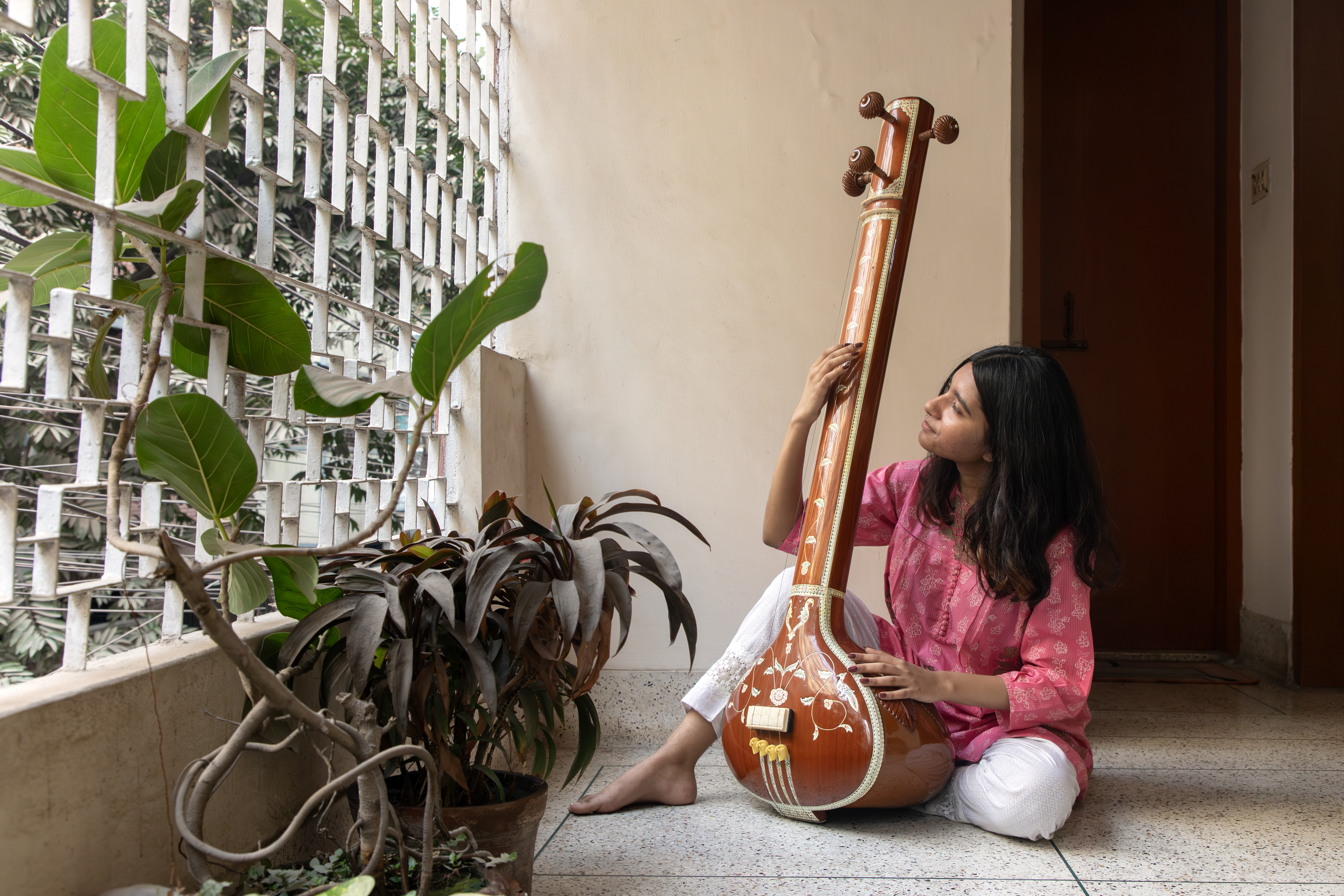
Johin Akter Jyoti, a Dean’s Award recipient from Jahangirnagar University’s Department of Drama and Dramatics, shared a glimpse of her bond with traditional music. Her love for music originated at a young age, seeing her mother practising traditional music and one of her ancestors being an ostad in Nazrulgeeti. This childhood liaison later empowered her to delve into all forms of music stemming from the prehistoric Bengal region in Shilpakala Academy, later specialising in Nazrulgeeti in Chhayanaut.
Hritama Sarma Prithee, a graduate from Dhaka University’s Music Department, expresses her perspective on the relevance of traditional songs in the modern age: “Traditional songs came from diverse areas where people used to describe their ways of living or share their values about life. Our generation has grown up in urban societies, and it’s obvious we don’t have enough patience to hear and understand what these songs actually try to convey.”
She reminisced about her Saturday afternoons in the hallways of Chhayanaut, invoking a deep reverence for Nazrulgeeti by pointing out that learning about Nazrul’s musical journey and his compositions taught her that humanity was the only religion which helped individuals stay connected with each other.
But how should traditional music be presented to truly resonate with our youth?
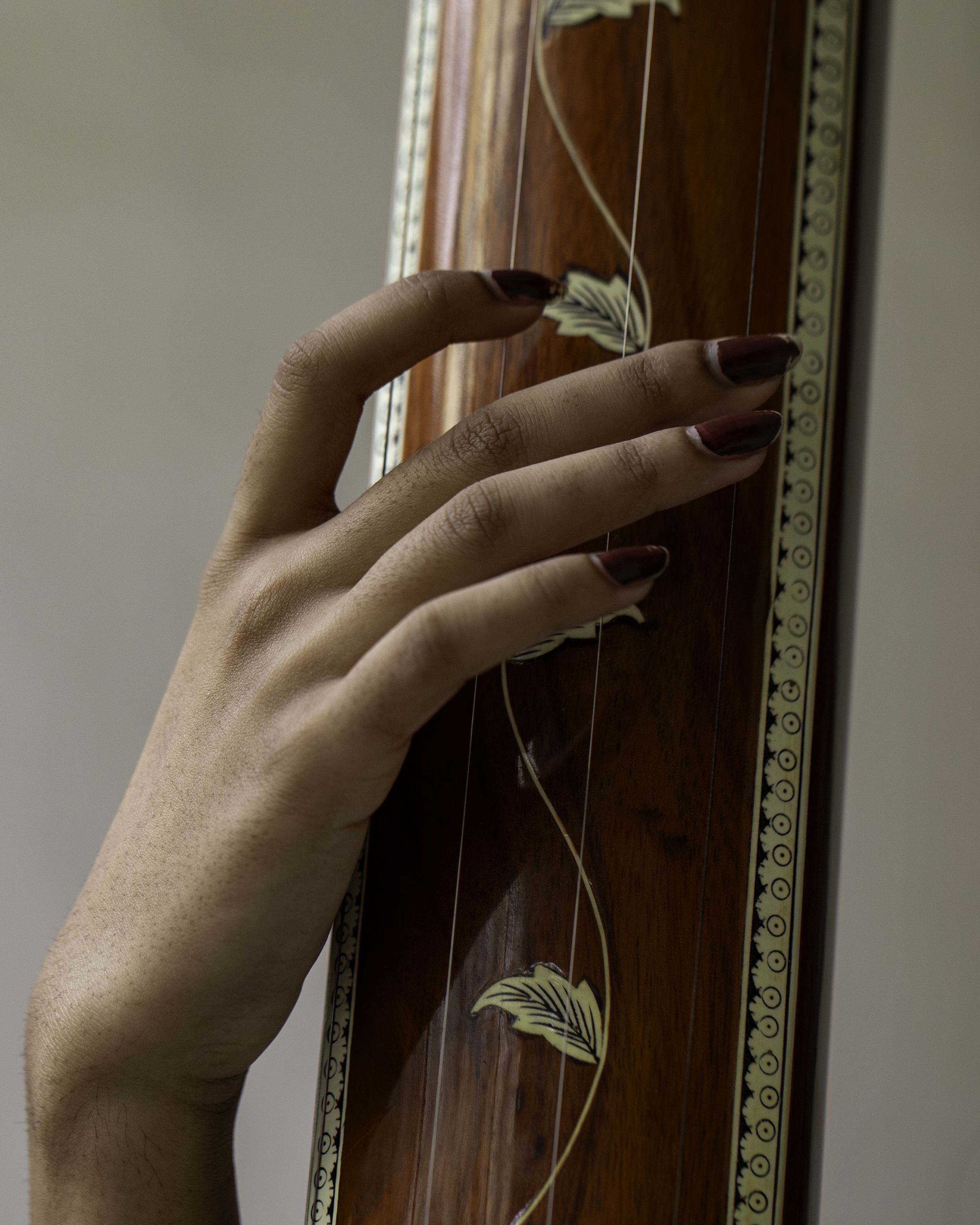
Shantonu Talukder, a 12th grader from Notre Dame College, who also happens to be in his final year in Chhayanaut’s Nazrulgeeti specialisation, sheds hope: “If we make the effort, we can guide our generation to a space where they become more receptive to listening to traditional songs.”
So even though traditional lyrics and tunes may seem out of reach at first listening, a real connection can be formed.
In Jyoti’s words, “In our generation, if there is to be a remake of old songs, the audience must be kept in mind. The songs should be elevated in such a way that they'll attract the taste of the youth, broadening their expressive reach. If we represent the old songs in the old way, they’re bound to feel irrelevant. Creative adaptations can be shown in the musical compositions, including modern instrumental experiments. But proper credits must be given to the original artists, keeping ethical considerations intact.”
To further clarify the dilemma about ethical scrutiny, Shantonu believes that if modernisation makes music more accessible, then it is certainly a positive development. Shantonu goes on saying, “Traditional music itself cannot change. However, various elements can be incorporated to enhance its appeal. As times are changing and new generations will emerge, it is essential to create an environment that resonates with them. Fusion can be an effective way to attract younger audiences, but it should never compromise the inherent beauty and essence of traditional music.”
Which begs the question, how can today’s youth themselves connect to traditional songs?
 For all latest news, follow The Daily Star's Google News channel.
 Anjona talked about the necessity of the youth’s voluntary wonderment in the preservation of folk songs: “Folk music, at its core, is a legacy preserving our nation’s history. If it vanishes, a part of our cultural identity fades with it.”
According to Anjona, staying connected to folk music means understanding where one comes from, anchoring us in history and a sense of belonging.
Prithee advises her generation: “Try listening to such songs when you’re relaxed. Listen with the intention of building curiosity. Try to understand the meaning slowly and relate it to your feelings.”
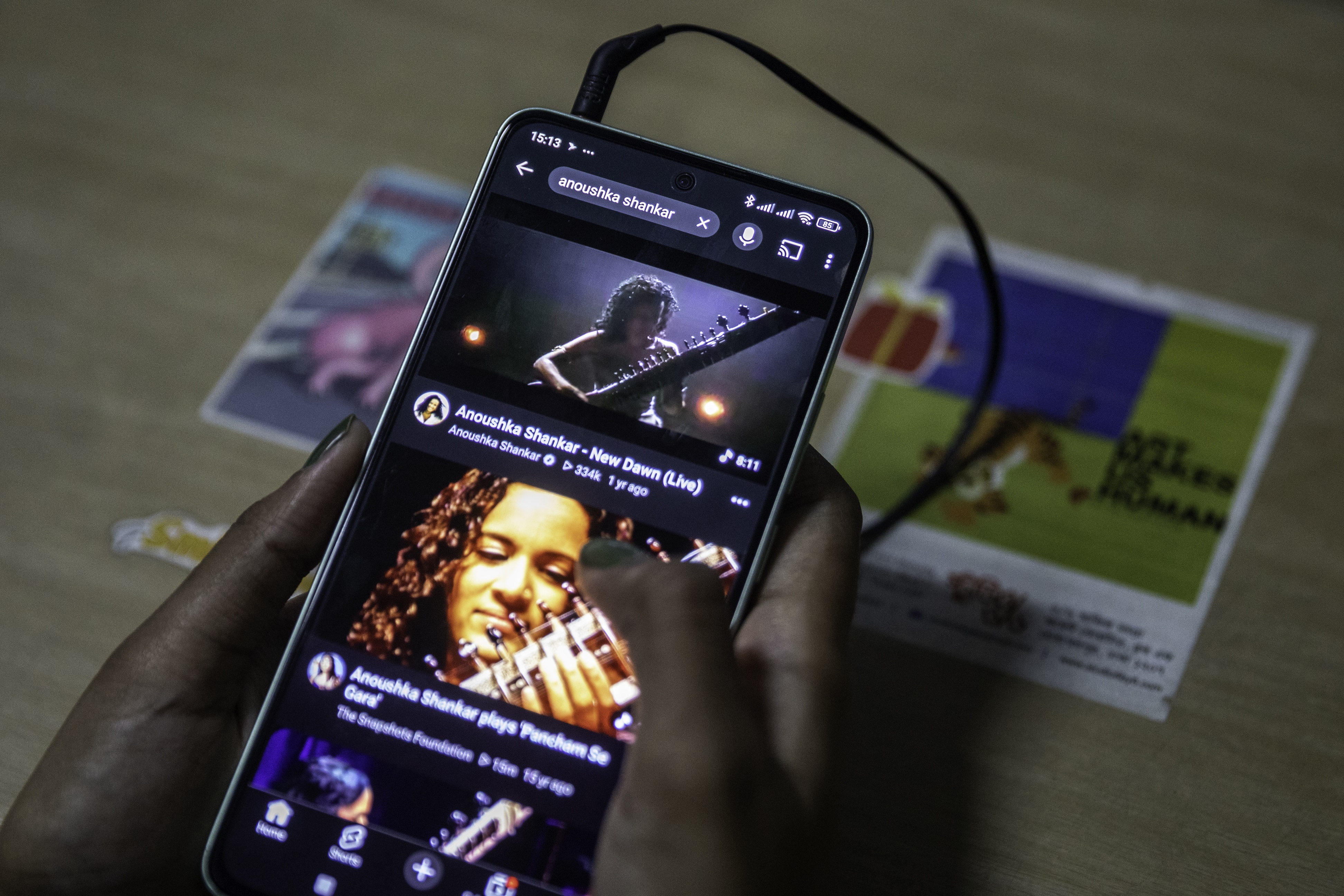
Jyoti shares similar sentiments to Prithee. She says, “The youth should consume songs from different genres and different cultures. Then listen to the songs that specifically originated in our region. Learn the delicacy of the distinguished lyrics; let your memory capture the melody. If a curiosity fuels in you to uphold the tune within, then you should enrol at a cultural institute for formal training.”
To reframe traditional motifs without surrendering their souls, modern production should be but a recontextualisation, not a replacement. Rather than stripping heavy melodies for catchy hooks, modern synths can be used to create a “third space”, where heritage and innovation can coexist. Early recordings can be integrated into contemporary tracks or samples to create a connection between past and present. Thus, digital sampling could work as a cultural archive.
Multimedia narrative integration, including young artists who are currently trying their heart and soul to protect musical heritage, can help audiences feel the depth that they might otherwise overlook in audio format. To quote Jyoti, “The youth who practise traditional music hold the leading role of keeping these songs alive. They must perform live in media and engage in active content creation to promote, while also connecting with the new audience. However, traditional songs are not just for performance to please; they have a historical context behind each one. So, conversations should awaken some sort of emotion in people.”
This is where the attachment to our root develops.
Cultural identity is not a seasonal trend to be discarded. Although personal taste is subjective, the onus is on us to reclaim the time and space to honour our traditional musical culture. Amidst the relentless blast of curated playlists, we must not lose the silence necessary to hear songs that bear history. In our haste for the new, we must not completely abandon the heritage that defines our roots.
Ramisa Rubaba Rashed is a daydreaming ghost, stuck in the humanly disguise of a wannabe biologist. Send her your poetry recs at raemsi.ruby@gmail.com