


The reality of taking a gap year
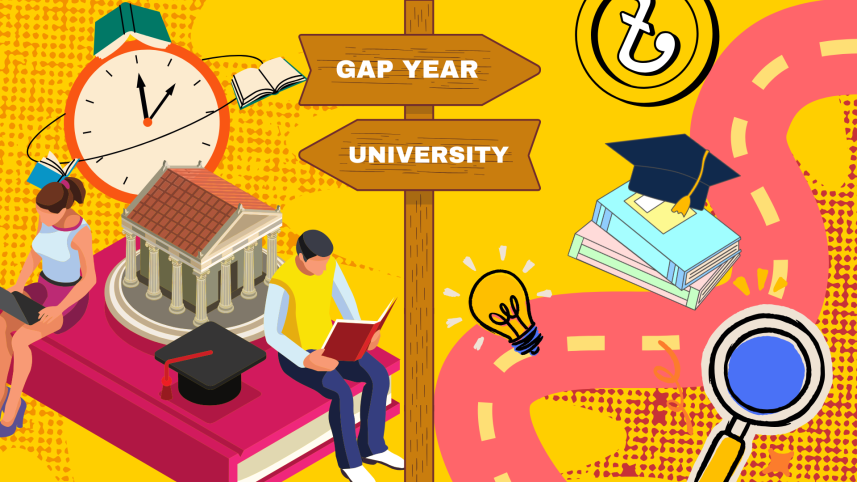
Hollywood used to portray gap years as taking backpacking trips to exotic countries or child prodigies working on ambitious projects, which puts the infinite hours I’ve spent doomscrolling and my short-lived obsession with baking bread to shame. Truthfully, I wasn’t aware that it would end up becoming a gap year; it was more of a trial-and-error process rather than a grand journey to self-discovery. The feeling of “having an itch” when it comes to life decisions is far more daunting when you have no idea how to scratch it.
During senior year, watching my friends have mental breakdowns over university applications and transcripts repelled me from having to do the same. The bickering with counsellors over recommendation letters was the last thing I wanted to do between classes. Something about the entire process of having to decide where to go after graduation resembled less of a choice and more of a verdict: one wrong move in matters such as picking a major, and you’re stuck jobless in whatever state the economy is in.

It doesn’t just end there; you also have to take into account whether your future occupation would be replaceable by artificial intelligence, as though you’re bracing for an apocalypse caused by a robot purge. And so, I had swept the headache of having to worry about my future under the rug with the excuse of focusing on exams. Like all things we tend to push off, it caught up eventually.
It wasn’t until a relative asked where I would be attending university that I realised that my usual answer of “I’m keeping my options open”, followed by an abrupt change of topic, was starting to appear almost shameful. For the kind of student who used to have a five-year plan at 17, realising you're behind in the race of applications and admissions can send you into an immediate panic. Some begin preparing for admission exams a year or two in advance, while others carefully plan ahead for pursuing degrees abroad.
On the other side, however, having a blueprint for what comes after does not necessarily make the transition out of school any smoother. Even students who invest ample time preparing can find themselves facing unexpected setbacks and periods of uncertainty:
"My first attempt at the medical admission test didn’t have the outcome I wanted, even though I had prepared ahead. Afterwards, I had to wait months before sitting for other admission exams, which came with its own challenges,” shares Sarah Adiba, a second-year pharmacy student at North South University.
She continues, “Dealing with the pressure of my plan A not working out came with its own weight, and the prolonged waiting period felt like an endless tunnel. Instead of being a moment to relax, the pause was mentally draining until I was able to decide what to do next.”
The unfortunate thing about plans is that life rarely feels obligated to follow them. Many students enter their final year of school with an intricate mapped-out future, only to find themselves reconsidering everything after a rejected application, a disappointing exam result, or a change of heart. Not to mention, the feeling of falling behind, despite your potential, is perhaps the most overwhelming aspect of this time.
With the existence of social media, comparison is quick to become the thief of joy. Once graduation photos have been posted and the airport goodbyes are over, you watch your friends move ahead on paths that appear worlds away from yours. Shared photos of campus life, new friend groups, and late-night study sessions evoke an inexplicable emotion.
I remember a friend complaining about an assignment during my academic break, which made me secretly wish that I also had something worthwhile to fuss about. The most trivial observations became uncomfortable reminders of what I still hadn’t become a part of. It's easy to fall under the misconception that things come easier for others when you're still struggling to find your footing. There's something oddly isolating about opening social media and realising that everyone else’s lives seem to have picked up speed while yours is still waiting at the station.
The pressure isn't necessarily rooted in jealousy, but rather in the fear that life is moving forward without you.
On a broader level, these are also reminders of what waits for you. The experiences that seem so distant now will eventually arrive. However, when you're in the middle of a gap year and measuring your progress against your social media feed, that perspective can be difficult to hold on to.
Aside from pausing due to indecision, there are also situations that leave one with no choice. With the increasing costs of private institutions, many end up taking a gap solely because of affordability. Sajid*, a recent school graduate, candidly shared the reality of budget breakdowns with parents. He states, “My parents were very direct about what they could and couldn’t afford, and it was important to have that transparency before I set unrealistic goals. I saved up a tonne of money through side jobs and tutoring in my gap year and was able to ease some of the financial burden on my parents.”
While gap years are often associated with being "stuck", many students end up using the time in unexpected ways. Some take up part-time jobs, others prepare for admission tests, build portfolios, volunteer, or leisurely use the break to recover from years of academic burnout. Unlike school, where every milestone is clearly laid out, this stage offers a level of freedom that can be exciting, intimidating, and necessary.

Without the former routine of 8 AM classes, the rush of coaching, and the company of friends, the slow stretch of time can lead to unexpected discoveries. The concept of sitting alone in a cafe is not as humiliating as I previously imagined. In a way, it feels liberating, dare I say, empowering even. I had the luxury of thorough research before picking a major; I learnt a lot about universities and long-distance friendships, and I know an awful lot about artisanal bread.
Before embarking on this limbo, it helps to know what you’re hoping to get out of it. The truth is, not every moment seems productive, and some choices will probably feel like they’ve taken you right back to where you started. It’s not a smooth or linear process, and clarity doesn’t exactly show up on demand. As much as “hang in there” sounds like something people say when they’ve run out of advice, it sometimes ends up being the only thing to hold on to, at least until the “itch” starts to quiet down into something that feels like your calling.
*Name has been changed upon request for privacy
Zara Zubayer is a half-pianist, occasional grandma (she knits), and a collector of instruments she never learns. Suggest a new hobby she won’t commit to at @zarazubayer1@gmail.com
 For all latest news, follow The Daily Star's Google News channel.
Comments