


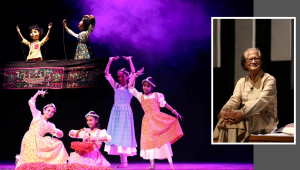
A night in honour of the incomparable ‘Shilpi Bhai’
2 September 2026
The quiet reminiscence of old friends and admirers channeled the spirit of one of Bangladesh’s most beloved figures, “Shilpi Bhai”. They were gathered to celebrate the 91st birth anniversary of the late artist and master puppeteer, Mustafa Monwar.
2 September 2026
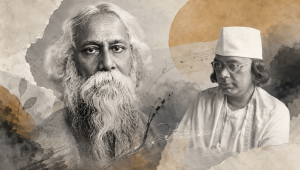
Tagore and Nazrul: The complex bond between two literary titans
27 August 2026
From Santiniketan and Bidrohi to prison, praise and estrangement, their relationship was shaped by admiration, disagreement and enduring reverence
27 August 2026
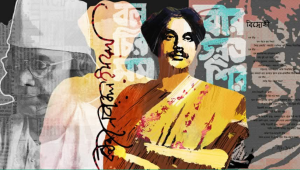
The politics of refusal: Nazrul, nation and the grammar of dissent
27 August 2026
From the beginning, Nazrul’s idea of the country was never territorial alone but is ethical. A nation, in his thinking, is not validated by borders but by whether it dismantles hierarchy—of class, of religion, of division and of inherited authority.
27 August 2026
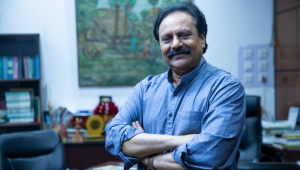
Rezauddin Stalin’s Shilpakala and its unfinished reform
13 August 2026
Nearly a year into his tenure, Stalin says much of the disorder has been addressed through tolerance, discipline and greater engagement. But his account of a functioning and increasingly accessible institution raises a larger question: has Shilpakala’s internal culture actually changed, or has its structural dependence on political and bureaucratic authority simply acquired a different face?
13 August 2026
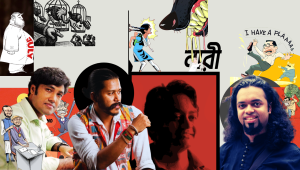
The changing climate of political satire
5 August 2026
Censorship, political labelling and organised backlash have shadowed the profession for decades. The latest example came when one of the country's most prominent political satirists, Mehedi Haque, found himself at the centre of coordinated criticism for doing what political cartoonists are expected to do: draw satire in response to the national conscience.
5 August 2026
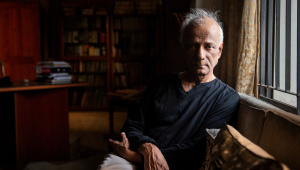
‘The scarcity of actors forced me back on stage’
4 August 2026
There is a particular irony in watching Syed Jamil Ahmed return to the stage after more than four decades as an actor. One of Bangladesh’s most influential theatre directors, who has spent much of his career shaping actors from the other side of the performance, is suddenly subject to the same conditions he has long asked performers to navigate.
4 August 2026
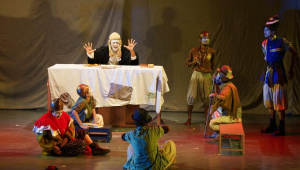
Golmatha Ar Chokhamatha / The heads we are taught to hate: A poignant adaptation fit for our political climate
27 July 2026
Staged from July 23 to 25 at the Nilima Ibrahim Auditorium of Bangladesh Mohila Samity, "Golmatha Ar Chokhamatha" felt particularly relevant to Bangladesh's present political moment.
27 July 2026
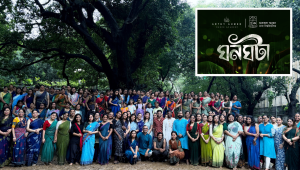
Reclaiming the cultural meaning of monsoon
16 July 2026
Alongside celebrating the monsoon through dance, the organisers will raise funds for people affected by the recent floods in the Chattogram Hill Tracts through a donation campaign in partnership with the JAAGO Foundation.
16 July 2026
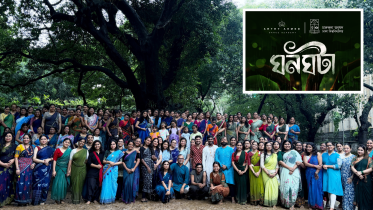
300 dancers, aged from 3 to 70, to enthrall Charukala tomorrow
Alongside celebrating the monsoon through dance, the organisers will raise funds for people affected by the recent floods in the Chattogram Hill Tracts through a donation campaign in partnership with the JAAGO Foundation.
16 July 2026
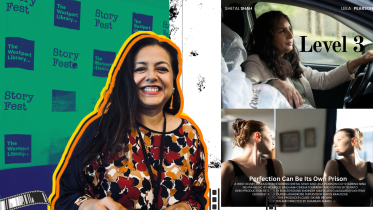
The stories we choose not to see
Bangladeshi-American storyteller, novelist, and screenwriter Sharbari Ahmed has little interest in familiar, formulaic narratives. Instead, she is drawn to stories that exist at the margins—stories that reveal themselves quietly, carrying all the complexity and contradictions of real life.
10 July 2026

‘He who fought for the country with guns and guitar’
Ekushey Padak-winning musician Azam Khan is regarded as the pioneer of Bangla pop music. He was not only the first pop superstar of Bangladesh, but he was also a freedom fighter who valiantly fought for the independence of the country. Today, on his 15th death anniversary, this article chronicles this maestro's life, tracing his journey from the Liberation War until his death on June 5, 2011.
5 June 2026
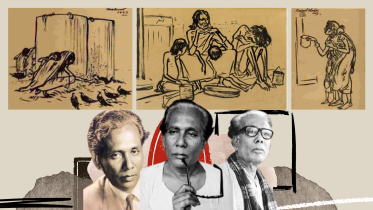
The artist who documented collapse and endurance
Fifty years after he died in 1976, Zainul Abedin no longer exists as a living presence. What remains is a body of work that has hardened into history, layer by layer: famine sketches, rural labour scenes, scrolls of catastrophe, and figures that still appear to look back at us with unsettling calm.
28 May 2026
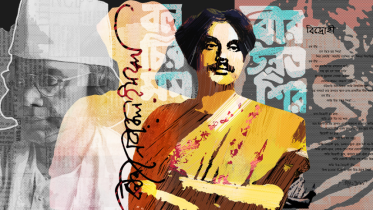
Nazrul cannot be contained within a singular frame
Nazrul’s “Rebel Poet” identity is too constrained to limit him within a single frame. Nazrul’s poetry moves, shifts beyond even its historical significance. They take rebirth, vertebrate, enter speech, then public conscience, and Nazrul returns as chant—becoming the primary language of people’s struggle for rights, carrying an unyielding spirit in every movement when people most need him.
25 May 2026
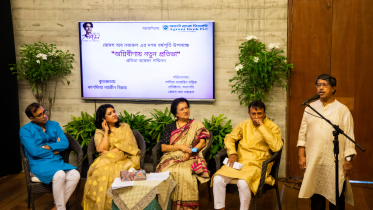
Gems of Nazrul launches nationwide talent hunt
Organisers described the programme as the country’s first nationwide reality-show-style competition dedicated exclusively to Nazrul Sangeet.
19 May 2026

A deeper absence: Beyond the rituals of Rabindranath
It is easier to preserve the grand aesthetics of Tagore than to confront the difficult ones. Rabindra Sangeet survives in carefully rehearsed cadence, quotations circulate endlessly online, and institutions commemorate him with ritual precision.
8 May 2026
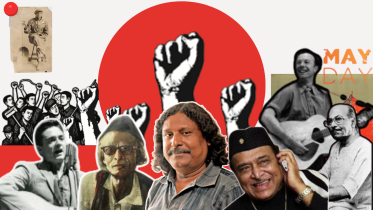
When music remembers the worker
In Bangladesh, labour history is often narrated as chronology—laws, uprisings, collapses, reforms. From the 1881 Factories Act to Swadeshi in 1905, through 1971 and beyond, the working class appears in political history. But rarely does it appear as a cultural system that sustains its own memory.
1 May 2026
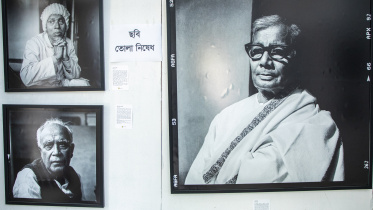
Nasir Ali Mamun’s stellar portrait exhibition closes at Bangla Academy
The exhibition, which opened on April 14 at the Nazrul Stage and continued at Bardhaman House, featured more than a hundred portraits of prominent Bangladeshi poets, writers, essayists, and intellectuals. It also included rare photographs of National Poet Kazi Nazrul Islam.
30 April 2026

From The Red Jumpsuit Apparatus to The Jonas Brothers: Nadeem collabs internationally
Nadeem A Salam still remembers the first time he stood on stage with The Red Jumpsuit Apparatus—not as a manager, but as a performer. He had already spent years behind the scenes—moving gear, fixing schedules, dealing with travel delays, keeping tours running—but standing there felt different.
26 April 2026
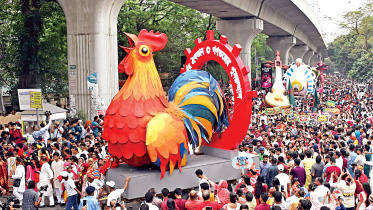
Baishakh celebrations regain fervour
As dawn broke over Ramna Batamul yesterday, Chhayanaut’s chorus of 200 performers lifted “Jago alok‑logone” into the morning air, opening the celebration of Pahela Baishakh 1433.
15 April 2026

Not just child’s play: Bengal’s rhymes as cultural memory
Folklorists have long recognised multiple categories within Bengali folk literature—songs, proverbs, riddles, and rhymes. Rhymes are not homogeneous; they appear in distinct functional types: nursery rhymes, social or satirical rhymes, occupational rhymes, ritual rhymes, and those associated with games. That diversity signals not triviality, but embeddedness. In their rhythmic repetition are folded patterns of labour, hierarchy, crisis and adaptation.
13 April 2026
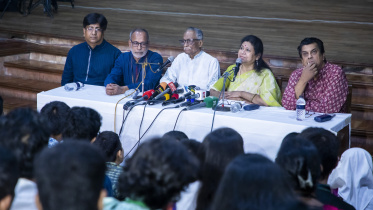
Chhayanaut vows to sing without fear this Pahela Baishakh
The press conference closed with “Baishakh Mashe Aiso Bondhu,” returning to the language of invitation.
12 April 2026
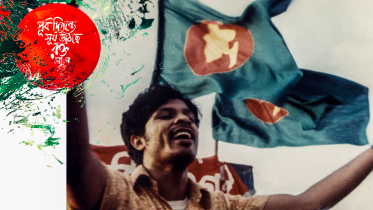
To save a flower: Bangladesh’s birth from lyrics and bullets
Bulletins told listeners what was happening; songs suggested why it mattered, sometimes signalling the freedom fighters on safer roads, and information that would be crucial to win the Liberation War.
26 March 2026
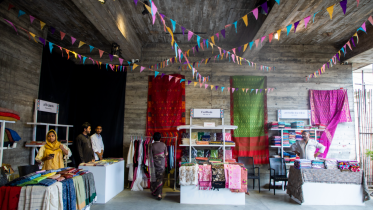
Threads that refuse to fade
The exhibition, titled The Handloom Tradition of Bangladesh, opened on March 8 at Bengal Shilpalay in Dhanmondi. Organised by the Bangladesh Handloom Board with support from the Bengal Foundation, the nine-day programme combines a curated exhibition with a small fair celebrating the country’s weaving heritage.
9 March 2026

Inside Dana Wyse’s pharmacy of desire
Dana’s arrival in Bangladesh carried the strange familiarity of a travelling salesperson, except that nothing she sells intends to cure anything at all.
28 February 2026
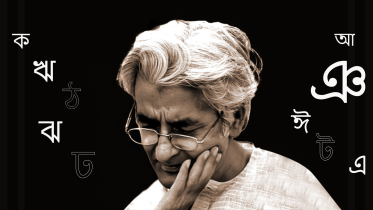
Pratul Mukhopadhyay, a personification of Ekushey February’s spirit
Mukhopadhyay lived through the fractures of partition, the uncertainties of migration, and the routines of middle-class survival. Politics was inherited consciousness, not a slogan. Songwriting became a ledger of conscience: a daily reckoning with history, place, and identity. His voice quivered at the edges, not from lack of technique, but from the weight of feeling itself. Being Bengali was not taught; it had to be experienced.
20 February 2026

‘Marka’ : The symbols mapping decades of political legacy
Electoral symbols in Bangladesh are semiotic anchors, mapping decades of political life into objects instantly recognised by voters. Embedded in the textures of daily life, their meanings are layered, historically rooted, and culturally resonant. They also function as tools that can shape perception and nudge voter psychology.
11 February 2026

Ashes of archives, songs of resilience: Chhayanaut and Udichi still undeterred
When cultural institutions crumble, archives burn, and instruments shatter, it is not merely walls that vanish—it is memory, identity, and moral courage. Culture cannot be revised; it is what history has written. Every assault upon it shakes the quiet foundations of a nation’s conscience.
23 December 2025

‘Ekhane Rajnoitik Alaap Joruri’: Sunny’s bold political statement
For Sunny, the film is not “urgent” — a word he resists — but it offers a revision of political history told through lived experience rather than rhetoric. “We’ve been mistreated by the British, by India, by Pakistan, by our own governments. These layers flow through the film. If it does anything, it helps us see where we stand politically, socially, and economically. And honestly, no one needs to watch a film. Sometimes not watching is the best choice.”
12 December 2025