


Rezauddin Stalin’s Shilpakala and its unfinished reform

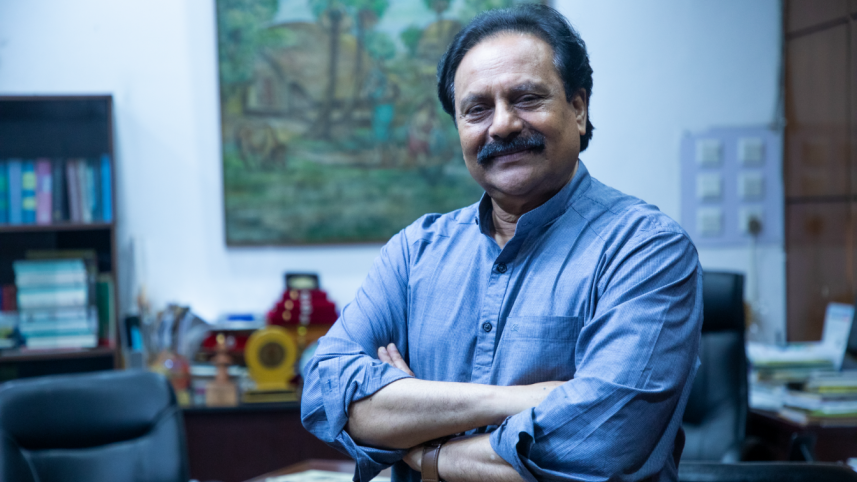
When Rezauddin Stalin took charge as Director General (DG) of Bangladesh Shilpakala Academy last September, he inherited an institution he describes as “disorderly and chaotic”, marked by political divisions, corruption and deep disillusionment among artists and employees.
He was taking over an institution already struggling with the consequences of a turbulent political transition. Liaquat Ali Lucky, who had led the Academy for more than a decade, resigned in August 2024 after the fall of the Awami League government. Theatre personality Syed Jamil Ahmed took charge soon after, raising considerable hope among cultural practitioners, but resigned barely six months later. After a brief period under temporary leadership, Stalin took over.
Nearly a year into his tenure, Stalin says much of the disorder has been addressed through tolerance, discipline and greater engagement. But his account of a functioning and increasingly accessible institution raises a larger question: has Shilpakala’s internal culture actually changed, or has its structural dependence on political and bureaucratic authority simply acquired a different face?
Stalin says his first priority was to restore order without turning the Academy into an instrument of partisan retribution.
“I did not look at the officials and employees from the standpoint of any political party or partisan interest,” he says. “I looked at who was involved in corruption, who had committed wrongdoing, and who was working outside the rules.”

He says some officials involved in wrongdoing were transferred and departmental cases filed against others. At the same time, he sought to address long-standing grievances over promotions, time scales and grades, which he says had contributed to employee demotivation.
His assessment of the Academy’s past problems is striking. “I have found that the corruption here has been more political than financial,” he says.
But a former senior Shilpakala official and another former head of a department, speaking on condition of anonymity, both strongly dispute this assessment.
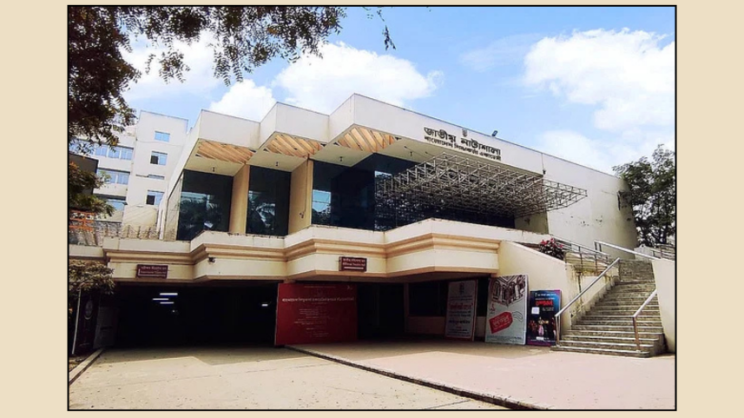
“The Academy is still running according to partisan politics. Favoured personnel of the ministry, the government and political parties now occupy key positions, and many of them belong to the same political or ideological spectrum. The people sitting in those positions have changed, but the corrupt internal mechanism is still operating under a similar but differently coloured umbrella.”
The former official also questions whether Stalin’s stated principle of not punishing people simply because of political association has been consistently applied.
“If that is true, then why have so many of us been transferred or left without positions, while a few have risen to power in our places after July, who haven’t worked at the Academy before the July uprising?”
That contradiction matters because Stalin’s approach is deliberately different from a wholesale political purge. Employees appointed during the previous government, he argues, should not automatically become victims of a political transition.
“If that person has done nothing wrong, removing them from their job would only make them a victim. Their families depend on those jobs.” “I try to look at everything from a human perspective,” says Stalin. “I did not want anyone who was innocent to suffer.”
The question, then, is whether such decisions are being made according to transparent and consistently applied criteria. Faiz Zahir of Aranyak Natyadal, who recently headed the Academy’s Drama and Film Department, sees the problem at a deeper institutional level. For him, changing personnel will not be enough if the structures governing Shilpakala remain vulnerable to political influence.
“Shilpakala’s autonomy cannot remain merely on paper,” Zahir says. He argues that the Academy’s Parishad should be insulated from partisan politics, while the DG’s role should be clearly defined within an accountable structure that gives cultural practitioners a meaningful role in decision-making.
That question becomes particularly important when the law itself is examined.
Under the Bangladesh Shilpakala Academy Act, 1989, the general direction and administration of the Academy vest in a Parishad. The governing body is headed by the minister in charge of cultural affairs and includes senior government officials alongside representatives and nominees from the cultural sector. The structure therefore places Shilpakala’s cultural mandate within a governance framework with a significant state presence—raising the question of how much institutional autonomy the Academy can exercise in practice.
Stalin does not deny the ministry’s role. He embraces it. “I represent Shilpakala Academy, and I will continue to do that,” he says. “At the same time, I recognise the ministry’s oversight and its role as our guardian because it provides the funds.”

For Stalin, this does not undermine autonomy. “Autonomy does not mean working in isolation. The director general has to know how to negotiate with the ministry and secure what the institution needs.”
“Shilpakala cannot become an event-management arm of the ministry,” says Faiz Zahir, arguing that the Academy must be driven by cultural policy rather than ministerial priorities and an expanding event calendar.
Under Stalin, the Academy has organised programmes spanning religious and cultural communities, alongside festivals, exhibitions and training initiatives. But Zahir argues that activity alone cannot constitute reform.

“The Academy’s budget should be planned around its cultural mandate, not around individual events,” he says. “A predictable allocation would allow Shilpakala to build long-term programmes instead of depending on event-based funding and ministerial priorities.”
He also calls for a permanent policy and planning mechanism involving cultural practitioners. “Without a proper policy-making structure, we will continue to see programmes being organised one after another without a coherent long-term cultural vision.”
Shilpakala was created to do more than host events. The question is whether its institutional machinery can fulfil that mandate beyond the programme calendar.
Stalin says structural reforms to the governing board and legal framework are underway. He also says the bureaucracy has been cooperative. “No one can accomplish anything alone. Every initiative is ultimately a collective effort.”
He says the distance between the Academy and artists has narrowed, with people now able to bring their complaints directly to him. But access to one DG cannot substitute for institutional participation and accountability.
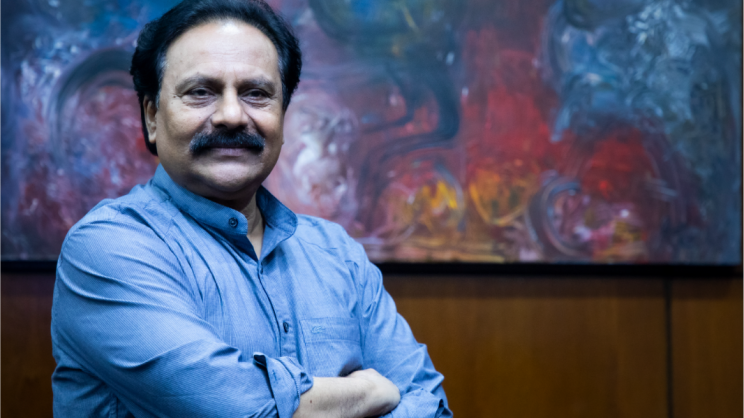
The harder question is whether artists, employees and cultural practitioners have a permanent voice in how Shilpakala is governed, funded and shaped.For Stalin, reform means accountability, dialogue and negotiation with the state. For his critics, those measures cannot be enough if the underlying structure remains vulnerable to political patronage, ministerial priorities and bureaucratic control.
The real test of post-July Shilpakala is whether the institution can become bigger than the person occupying its highest office—and independent enough to outlive the politics surrounding it.
For an institution created to be the country’s cultural spearhead, events can demonstrate activity. Institutional reform has to demonstrate permanence.
 For all latest news, follow The Daily Star's Google News channel.
Comments