


How schoolteacher turned a hillside in Moulvibazar into a fruit paradise

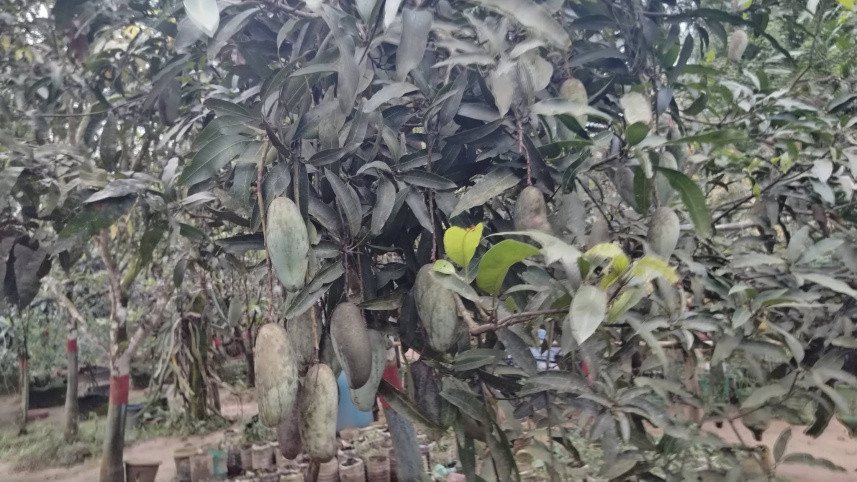
In the village of Sariya, Barlekha upazila in Moulvibazar, a private school teacher has quietly built what could rival a professional botanical collection -- a living repository of more than 100 domestic and foreign fruit varieties on a two-acre hillside plot.
In 2017, Rezaul Karim Khandaker began with just a handful of mango saplings. When they bore fruit successfully, he expanded his experiment.

Grapes came first, followed by citrus varieties. Within a few years, he began sourcing rare cultivars from nurseries across Bangladesh and importing foreign varieties at a personal investment of around Tk 2.5 lakh.
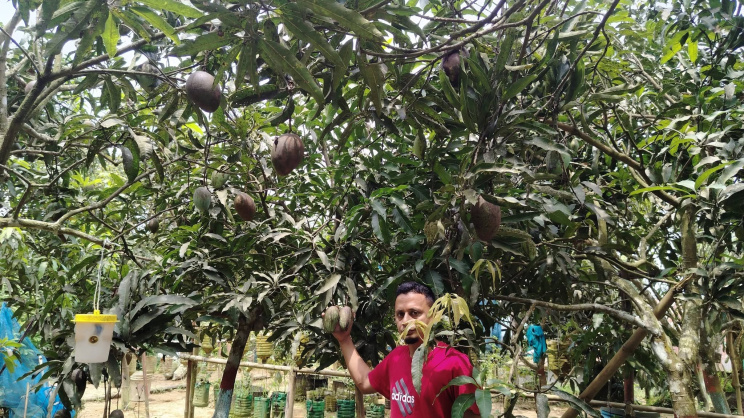
Today, the collection reads like a geographic catalogue.
Around 50 mango varieties alone grow there, which include Alphonso, American Kent, Himsagar, Thai Kachamitha, Nam Dokmai Moon and Amrapali. Ten varieties of orange and malta, including Kara Kara, Washington Navel, South African Hallum and Sylhet Orange, are also cultivated.
Other fruits include pomegranate, persimmon, apple, rambutan, blackberry, jamrul, Turkish mulberry, cashew and jujube, along with kitchen-garden crops such as black tomato, red radish, cherry tomato and several chilli varieties.
Two varieties have drawn particular attention -- Honey Cupboard and Chupachopa, both sourced from Indonesia. They are still uncommon in Bangladesh. Honey Cupboard resembles lychee but becomes jelly-like when fully ripe, while Chupachopa is known for its intense sweetness.
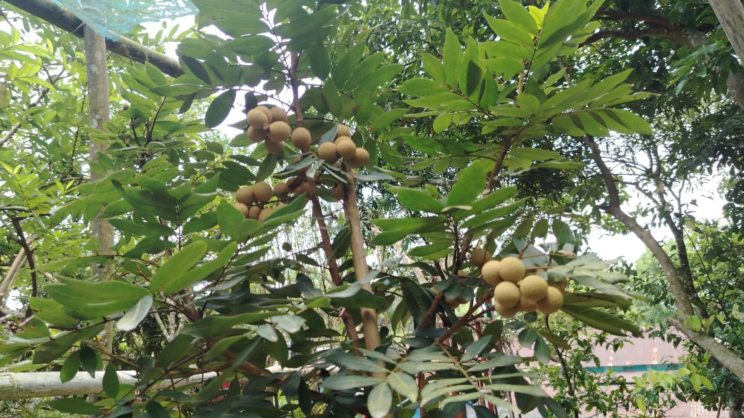
Rezaul carefully documents each plant, with name tags placed on branches throughout the garden.
He describes his work as experimental rather than commercial, aiming to access which foreign fruit varieties can thrive in Moulvibazar’s soil and climate before considering large-scale cultivation.
“It requires a lot of care,” he said. “I am experimentally cultivating foreign fruits in Bangladeshi soil. If the yield is good, I will consider commercial cultivation later.”
Barlekha Upazila Agriculture Officer Md Monowar Hossain acknowledged the significance of the initiative.
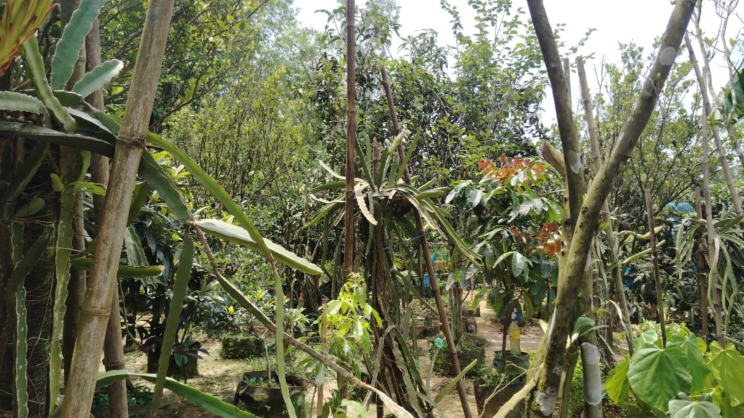
“He collects different varieties of foreign trees and takes care of them very well,” he said. “Some mango varieties have performed strongly, others less so -- but he has sourced seedlings from across Bangladesh and several foreign countries.”
Visitors now regularly tour the garden. But for Rezaul, it remains what it has always been: a source of joy rooted in a lifelong love of plants that he says has always been a part of him.
 For all latest news, follow The Daily Star's Google News channel.
Comments