


Govt weaves plan to revive silk industry
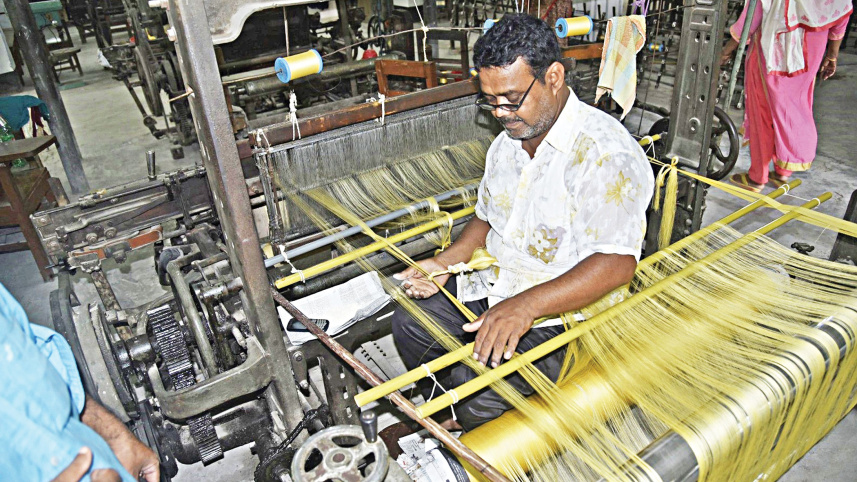
Bangladesh will strengthen research, technology and knowledge-sharing cooperation with China to modernise the traditional silk industry to increase productivity and sustainability, Md Shariful Alam, state minister for textiles and jute, said yesterday.
He made the remarks while speaking as the chief guest at a conference on sericulture research and development in the context of strategic cooperation between China and Bangladesh, held in Rajshahi.

The state minister said the government had taken initiatives to reopen state-owned closed industries in line with its election manifesto.
Alongside reopening the factories, the government plans to expand markets and attract both domestic and foreign investment, Shariful said.
Organised by the China-Bangladesh Silk Research Centre (CBSRC), with support from the Bangladesh Sericulture Development Board, the conference was a joint initiative of the board and China’s Zhejiang Sci-Tech University.
The minister said the government aims to modernise the entire silk value chain, from mulberry cultivation, silkworm rearing and cocoon production to silk yarn manufacturing, weaving, product development, branding and marketing.
“Research and technological cooperation are extremely important to achieve this goal,” he said, adding that China’s experience in silk research, technological innovation and industrial development could play an important role in advancing Bangladesh’s silk sector.
Bangladesh would strengthen cooperation between Chinese research institutions and universities, the Bangladesh Sericulture Development Board, and other relevant research organisations.
The cooperation could cover the development of high-yielding and climate-resilient mulberry varieties, improved silkworm breeds, disease and pest management, modern silk yarn production, quality testing and value-added silk products, he said.
Shariful also said the government plans to establish stronger links among researchers, farmers, entrepreneurs and industrial establishments so that research findings can be applied at the field level and translated into commercial opportunities.
“Modern technology, skills development and investment” would also be used to strengthen the industry.
Highlighting Rajshahi’s historical importance in the sector, the minister said the city was known as the “Silk City” and that the industry could contribute significantly to rural employment, higher farm incomes, women’s empowerment and overall economic development.
He said Rajshahi Silk had already received geographical indication (GI) recognition and that initiatives would be taken to further strengthen its quality, product diversity, branding and position in international markets.
He stressed the need to make the silk industry more environmentally sustainable while improving productivity and competitiveness. Abu Sayeed Chand, a member of parliament from the Rajshahi-3 constituency; Sharaf Uddin Ahmed Chowdhury, secretary to the textiles and jute ministry; Md Toufiq Al Mahmud, director general of the Bangladesh Sericulture Development Board; and Prof Nusrat Jahan Nipa, chief coordinator of CBSRC, along with academics, researchers, businessmen and senior ministry officials, also attended the conference.
 For all latest news, follow The Daily Star's Google News channel.
Comments