


Khulna’s shrimp factories fall silent as supply shrinks

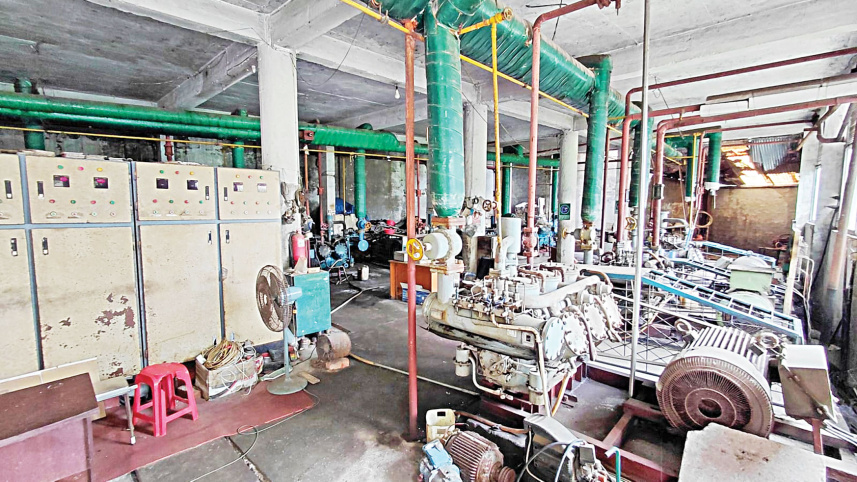
The sprawling shrimp-processing factories along the Rupsha River once symbolised Khulna’s emergence as a major export-oriented industrial hub.
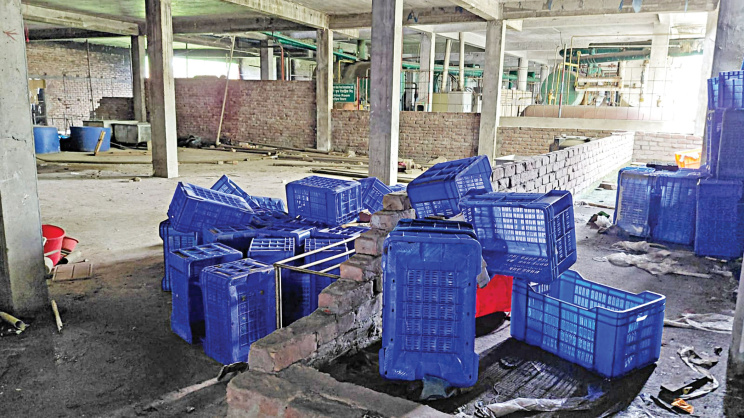
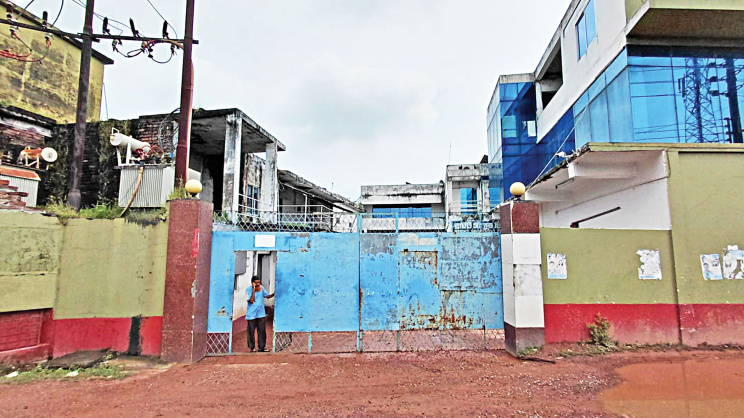
Today, many stand silent, with padlocked gates and abandoned processing floors, sorting areas, packaging rooms and offices.

The Daily Star reported the sector’s problems in August. A fresh visit to more than 20 processing facilities in September shows how deeply the crisis has penetrated the industrial base.
At least 70,000 people associated with shrimp processing and related businesses in the Khulna region have become unemployed as factories and shrimp depots have closed or drastically reduced operations, according to industry insiders.
The decline has been driven by shrinking shrimp production, farmers moving away from brackish-water farming, disease outbreaks, poor-quality fry, competition from cheaper vannamei shrimp, declining foreign orders and, in some cases, financial mismanagement and misuse of bank loans.
FACTORIES, DEPOTS DWINDLED
A visit to 22-25 shrimp-processing factories in Rupsha and other parts of Khulna in the second week of September revealed the extent of the decline.
Around 15-16 shrimp-processing factories line both sides of Bir Shreshtha Ruhul Amin Road in Rupsha upazila. Only three or four are currently operating.
Factories including Modern Sea Food, Bionic Sea Food, Bright, Priyam, Unique, New Food, Lockpur, Saint Martin, Chobi, Jahanabad and Rupali were found closed.
At Bright Sea Food, around 1,000 men and women once worked in three shifts, an official said. The workforce gradually declined, and the ice plant, processing floor, sorting area, treatment facilities, offices and packaging rooms now lie unused.
S Humayun Kabir, chairman and managing director of Amam Sea Food Ind Ltd and former vice president (Khulna) of the Bangladesh Frozen Foods Exporters Association (BFFEA), said around 90,000-95,000 people were employed in the sector around 2005-06.
Bangladesh’s shrimp export earnings peaked at
around $550 million in fiscal 2013-14 before falling
to $285 million in FY26. The decline has continued
into the current fiscal year, dropping 20 percent
year-on-year in July-August, according to Export Promotion Bureau data.
“More than 70,000 of them have since become unemployed, and about 90 percent of those who lost their jobs are no longer working in the sector because there are simply no jobs available for them,” he said.
Khulna’s shrimp industry once produced nationally recognised exporters. In 2007, seven frozen-food exporters, including Modern Sea Food Industries Managing Director Md Rezaul Haque, were selected as Commercially Important Persons (CIPs).
Abdul Jabbar, a former director of the Khulna Chamber of Commerce and Industry, said around 120 shrimp and fish processing plants registered with the BFFEA once operated in the region. While 35-40 were running a few years ago, only eight to 10 are now operational and exporting, he said.
Factory closures have also hit shrimp depots. Molla Riazul Islam, general secretary of the Rupsha Shrimp Traders Association, said around two-thirds of the area’s 405 depots have closed.
More than 5,000 women once worked at factories and depots in the area, he said, adding that around 95 percent of them are now unemployed.
FARMERS LEAVE SHRIMP FARMING
Gouranga Nandy, a Khulna-based author and researcher who wrote “Shrimp Profit For Whom”, said farmers in large parts of coastal Khulna have been returning to agriculture after repeated losses from disease, rising salinity and unstable returns.
In Dacope alone, around 30,000 farmers have gradually quit brackish-water shrimp farming, he said. A similar trend can be seen in parts of Paikgachha, where many farmers have returned to crop cultivation.
 For all latest news, follow The Daily Star's Google News channel.
 The industry’s decline has also raised questions over financial management.
Nandy alleged that some investors took bank loans and diverted the funds instead of investing in the industry.
A factory owner who spoke on condition of anonymity said he entered the shrimp-processing business in 1998 and exported processed shrimp to at least 13 countries. He said he is now facing losses of around Tk 86 crore, including money owed to banks, local depot owners and three private lenders.
Bangladesh’s shrimp exports are dominated by black tiger shrimp, while India, Ecuador, Vietnam and Thailand have expanded production of whiteleg shrimp, commonly known as vannamei.
Vannamei is generally cheaper to produce and can be farmed intensively, putting Bangladesh’s relatively expensive black tiger shrimp under pressure.
Bangladesh’s shrimp export earnings peaked at around $550 million in fiscal 2013-14 before declining sharply, falling to $285 million in FY26. The decline has continued into the current fiscal year, with shrimp export earnings dropping 20 per cent year-on-year in July-August, according to Export Promotion Bureau (EPB) data.
A DIFFICULT ROAD AHEAD
Despite the bleak picture, Tariqul Islam Jahir, owner of Achia Sea Food, says shrimp processing can still be revived if the sector is treated as a complete value chain rather than simply an export business.
“The priority should be quality shrimp production, disease-resistant and quality-controlled post-larvae, improved farm management, better traceability and strict action against adulteration,” he added.
“Shrimp is an important source of foreign exchange for the country. Selling it in the local market undermines its economic value. We need to stop the sale of shrimp in the local market and ensure that it is exported,” he also added.
“Besides, banks must also strengthen monitoring of loans to ensure that funds provided for shrimp processing are actually invested in the sector. At the same time, processors need to upgrade technology, improve energy efficiency and diversify markets and products,” said Tariqul Islam Jahir.
Comments