


New panel formed to address tea industry woes
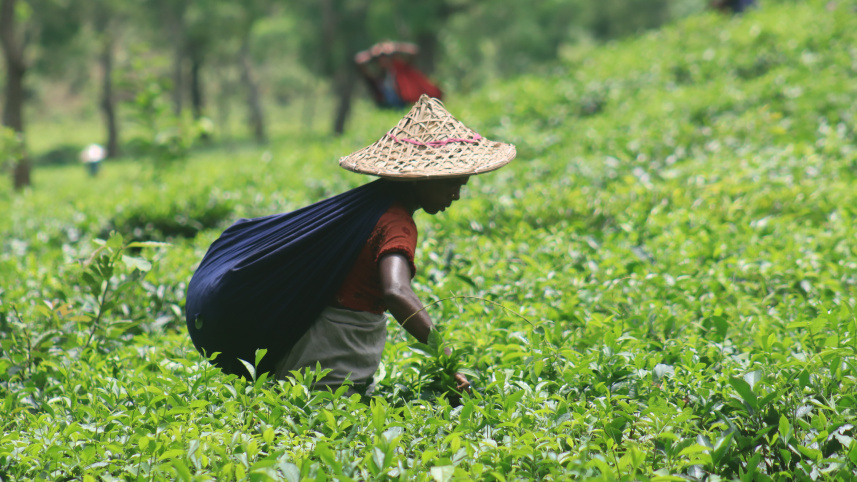
The government has formed a 12-member committee to oversee the development of Bangladesh’s tea industry, which is facing financial strain from years of losses, high borrowing costs, falling exports, rising production expenses and low productivity.
The Prime Minister’s Office issued a notification yesterday forming the Monitoring and Advisory Committee, with the commerce minister as its chairman.

The committee’s terms of reference cover three main areas.
As per the notification, first, it will make recommendations on rescheduling classified loans held by tea garden owners and extending fresh loans to ease repayment of their existing debts.
Second, it will provide its opinion on establishing a revolving fund for the tea sector at a 6 percent interest rate.
Third, it will examine the possibility of officially declaring tea an agricultural product and commercially installing solar panels on unused tea garden land, and submit a report with its recommendations within the next 30 days.
The committee’s members include the principal secretary to the prime minister, the governor of Bangladesh Bank, the land secretary, the finance secretary, the agriculture secretary, the chairman of the National Board of Revenue, the chairman of the Bangladesh Tea Board, and the chairman of the Bangladesh Tea Association.
In addition, M Wahidul Haque, former chairman of the Bangladesh Tea Association, and the chairman of the Tea Brokers Association of Bangladesh have also been included as members. The commerce secretary will serve as the member secretary of the committee.
In early June this year, a government taskforce was formed to recommend sweeping reforms in the industry.
It identified problems across eight priority areas, made 59 recommendations and laid out an implementation roadmap covering cheaper credit, tax cuts, debt restructuring, replanting, exports and investment.
The taskforce, headed by Mamun Rashid, chairman of publicly traded National Tea Company Limited, submitted its report to the commerce ministry on July 12.
One key problem identified by the taskforce is the classification of tea estates as an industry rather than agriculture, forcing owners to borrow at more than double the rate available to farmers.
Bangladesh is the world’s eighth-largest tea producer, with 172 estates producing 9.49 crore kg of tea in 2025, according to Bangladesh Tea Association data cited in the report. The sector directly employs 102,000 permanent and 40,000 temporary workers, while around 5 lakh people live within estate boundaries.
Yet tea gardens have been selling tea below production costs every year since 2019, as per the Tea Association data. In 2024, production costs stood at Tk 260 per kg against an average auction price of Tk 208.88, leaving a gap of Tk 51.12 per kg.
Exports have fallen 79 percent since 2002, while production costs have risen 78.31 percent over the past decade, with auction prices failing to keep pace.
The committee comprises representatives from government bodies, regulatory agencies and tea sector stakeholders.
 For all latest news, follow The Daily Star's Google News channel.
Comments