Navigating the US-China rivalry: Bangladesh cannot outsource its AI sovereignty

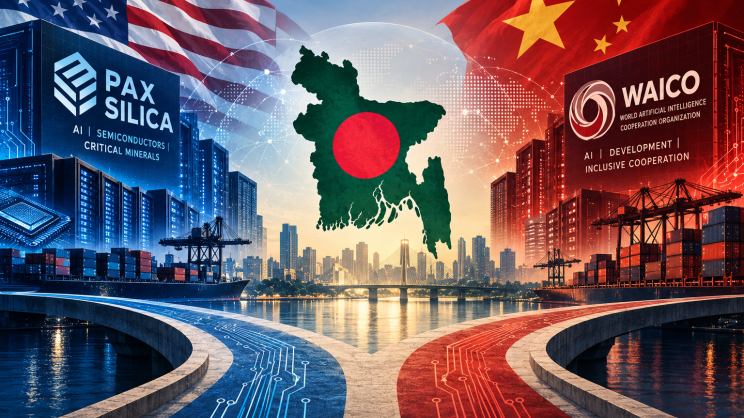
On the morning of August 1, the United States (US) Special Envoy for South and Central Asia, Sergio Gor, met Prime Minister Tarique Rahman in Dhaka and suggested that Bangladesh join Pax Silica, the State Department's coalition for artificial intelligence (AI), semiconductor and critical mineral supply chains. Later that day, the Ministry of Foreign Affairs announced that Bangladesh would join the Shanghai-based World Artificial Intelligence Cooperation Organization (WAICO), initially as an observer. Dhaka faces a diplomatic balancing act, even if it has made few concrete commitments so far.
The two blocs offer different things. Pax Silica, launched in Washington in December 2025, began with seven signatories, including Japan, Singapore and the United Kingdom, and had grown to twenty-five by August, according to the Information Technology and Innovation Foundation. It is widely seen as an effort to reduce reliance on China. WAICO, founded in Shanghai on July 16 by twenty-nine countries, including Russia and Pakistan, presents itself as a development-focused and more inclusive alternative. Its pitch is aimed at developing countries that regard Western technology controls as a barrier.

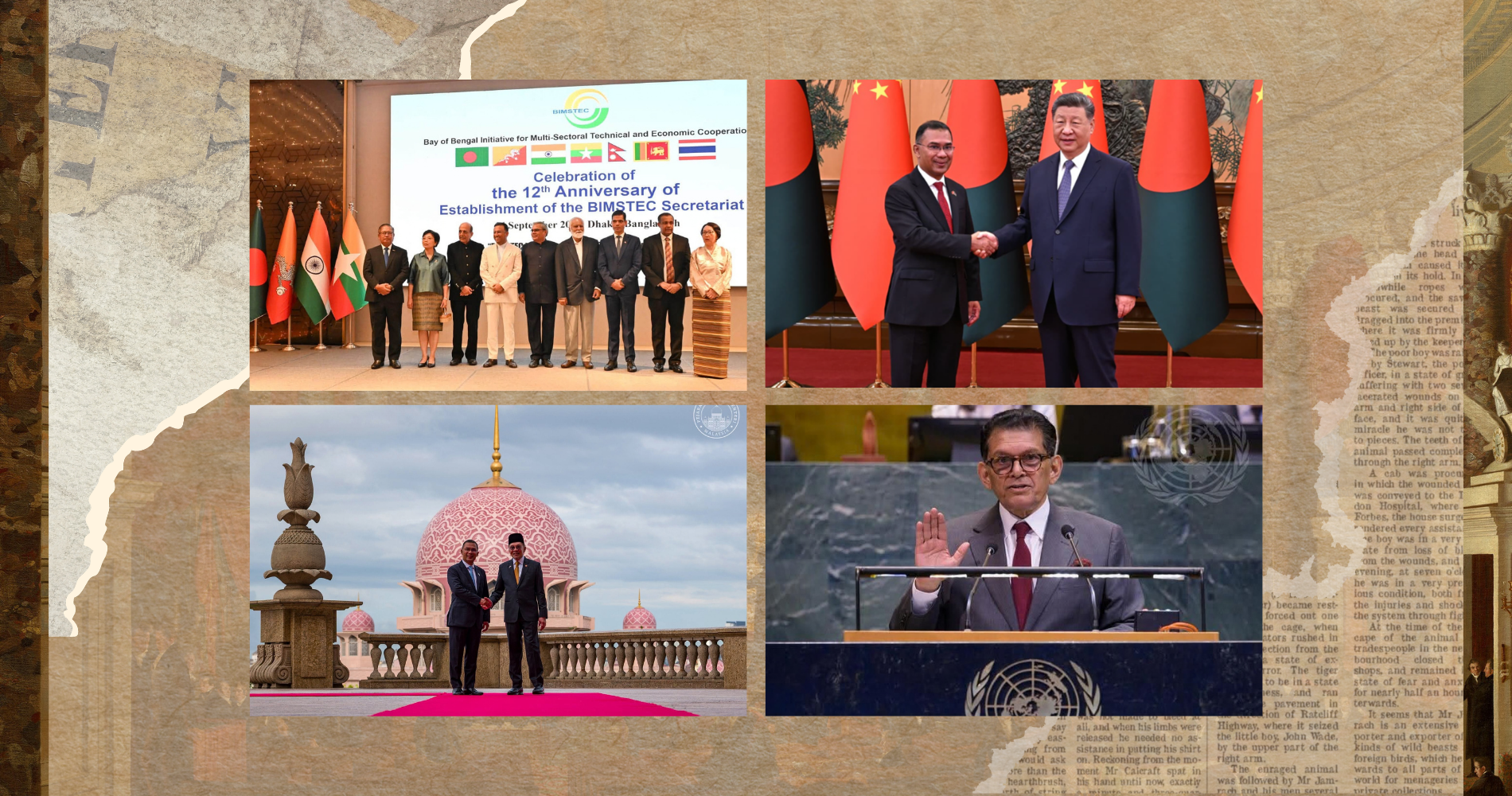
Dhaka has reasons to maintain close ties with both. China supplied between 28% and 30% of Bangladesh’s monthly imports in the last quarter of 2024, making it the country’s largest source of imports. The US, for its part, is the largest single destination for Bangladeshi goods. Beyond Washington's existing ties with Dhaka, Gor saw considerable potential in information technology, and the two sides discussed American investment in warehousing and agriculture, as well as financing through the US International Development Finance Corporation. Those talks point to a partnership that is broadening beyond exports, much as China’s role already extends across trade, industrial zones and river management, as demonstrated by the 13 memorandums signed during the Prime Minister’s visit in June.
For now, Dhaka can maintain ties with both blocs because it has made no binding commitment to either. That could change once each bloc establishes rules governing which vendors and data it trusts. A country whose systems can operate under either set of rules can negotiate over the terms, while one tied to a single supplier must accept the conditions set by that supplier’s bloc.
The draft National AI Policy for 2026 to 2030 shows what sovereignty requires. It promises a national computing strategy with phased upgrades to high-performance computing infrastructure at the National Data Centre, and it requires sensitive datasets, including health, biometric, financial and national security data, to be stored and processed in Bangladesh or in jurisdictions designated as trusted. The policy has yet to be approved by the current government, but its proposed guidelines are sound. However, we must remember that computing depends on electricity, and a national data centre will compete for a power supply that must already serve homes, industries and hospitals. The energy crisis we faced this year made it particularly apparent that we need better planning and a more reliable electricity supply. A facility that cannot rely on the grid cannot host a state's most sensitive systems, so the final policy should link the computing strategy to an agreed electricity plan.
The hardware question leads back to geopolitics. Bangladesh does not manufacture advanced chips, so every processor in a national data centre will have to be imported through supply chains that one bloc or the other controls. The policy's reference to 'trusted' jurisdictions raises the obvious question of who determines which jurisdictions can be trusted, and Washington and Beijing will answer it differently.
The Philippines offers a warning about moving too quickly. Its planned economic security zone at New Clark City, covering 4,000 acres, could require up to three gigawatts of electricity at full development, according to estimates by the agency in charge. The mayor of Capas in Tarlac province has said that the plan was not formally presented to his local government, the Daily Tribune reported. Joining a coalition does not eliminate the need for the power supply, local consent and legal groundwork that a project of that size requires.
In the AI era, strategic autonomy is as much a matter of system design as it is of diplomacy. A government that can move its workloads between cloud providers and replace one AI model with another without rebuilding its services keeps its options open. A government whose public services depend on a single company's technology has effectively chosen a side. The draft policy already recognises this, requiring public-sector AI systems to use open standards, interoperable data formats and portable models specifically to prevent vendor lock-in. The task now is to incorporate those requirements into every contract before the first large-scale systems are built, since retrofitting them later would cost far more.
In the AI era, strategic autonomy is as much a matter of system design as it is of diplomacy. A government that can move its workloads between cloud providers and replace one AI model with another without rebuilding its services keeps its options open. A government whose public services depend on a single company's technology has effectively chosen a side.
The choice of AI model is where this matters most. Open-weight models, which can be downloaded, hosted domestically and adapted using Bangla-language data, offer one of the most practical routes to developing systems that the state can control. However, open models also have national affiliations. Meta's Llama and Alibaba's Qwen are both freely available, yet a ministry that standardises on either one ties its developers and their tools to an ecosystem anchored in either Washington or Beijing. Dhaka should test competing models against the same Bangla-language benchmarks and ensure that its systems remain capable of running more than one model. The choice of model should be treated as a procurement decision that can be reversed when a better or safer alternative becomes available.
The second test of sovereignty is people. AI capability cannot be bought once and for all, because models are regularly replaced and the threats they address continue to evolve. A ministry that relies on foreign advisers and vendors to operate its systems holds a service contract, while the knowledge remains with the supplier. Without that knowledge at home, Bangladesh risks becoming a low-cost site for other countries' systems, with the valuable design work and profits remaining abroad, regardless of which bloc supplies the technology.

These issues matter most in national security. AI has made it cheaper to conduct disinformation campaigns and harder to verify what is real, and security agencies are likely to be among the government's earliest and most demanding users of the technology. They are also among the most likely to purchase complete systems from abroad, even though dependence on a foreign supplier in this sector carries particularly high costs.
The measure of progress should be how quickly Bangladeshi officials take over the work, and the vendor certification framework proposed in the draft policy is the natural place to make this a requirement. Every significant AI contract should set deadlines by which local staff must take responsibility for operating the systems and making technical decisions, with suppliers' payments tied partly to the success of that handover. Bangladesh has around 700 chip designers and produces more than 20,000 computer science and electrical engineering graduates each year, providing a potential talent pool for developing domestic AI capabilities. The state's challenge is recruiting and retaining enough of them by offering salaries that can compete with those in the private sector.

Over the next two years, both blocs are likely to move from broad declarations to specific conditions, attaching rules governing vendors, data and computing access to their offers of investment and technology. Bangladesh should retain its observer status in WAICO and continue discussions about Pax Silica, while refraining from fully joining either until it can offer capabilities that its partners need. In the meantime, the final policy should ensure a reliable power supply for national computing facilities and establish a technically skilled cadre within the government capable of operating and evaluating AI systems, supported by enforceable portability requirements in every public-sector technology contract.
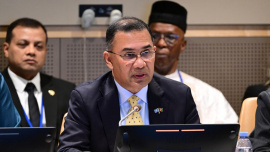
At the UN General Assembly on September 24, Prime Minister Tarique Rahman said Bangladesh did not want today's digital divide to become tomorrow's AI divide. Closing that gap will depend less on which bloc Dhaka eventually joins than on whether it develops systems it can operate, modify and manage on its own terms. A country with that capacity can work with Washington and Beijing simultaneously and negotiate with both, while a country without it will find that its suppliers have effectively made the choice on its behalf.
Ayesha Tariq, CFA, is the CEO and co-founder of MacroVisor, an independent macro research firm.
Send your articles for Slow Reads to slowreads@thedailystar.net. Check out our submission guidelines for details.

After America leaves, what next for Iraq?

Three years after October 7: When a date became an alibi for genocide

Can Bangladesh capitalise on the Bay of Bengal’s strategic rise?
Who pays for Israel’s nuclear dominance?

How much higher can oil prices go?

Beyond the ‘end of history’ and the ‘clash of civilisations’ / What kind of world order is emerging?
The South Korea opportunity Bangladesh is overlooking
Geopolitical ghosts and the United Nations
BRICS is bigger, but can it deliver?