


Sylhet tea gardens reel from power crisis
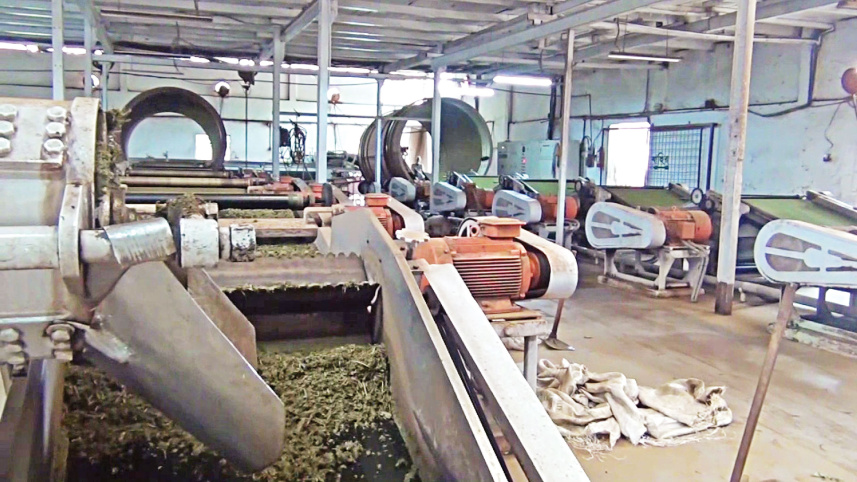
At the height of the tea-plucking season, frequent power cuts are disrupting Sylhet’s tea factories, delaying the processing of freshly plucked leaves and threatening tea quality and the industry’s production target for the year.
With factories forced to rely on costly generators, growers say the prolonged power crisis is raising production costs and putting expensive machinery at risk.

According to the Bangladesh Tea Board, the country has set a target of producing 104 million kilogrammes of tea in 2026. Between January and June, however, production stood at 36.31 million kg.
In Sylhet, one of the country’s major tea-producing divisions, garden authorities say the power crisis is making it increasingly difficult to keep factories running during the peak tea-plucking season.
Tea worker Laxman Ghatual said workers toil in the gardens through the heat, only to see their hard work put at risk when power cuts halt factory operations.
“We work in the garden throughout the day in the heat, but the factory cannot operate properly because of power outages. Even when we manage to pluck the leaves, there is a risk of them being damaged if electricity is unavailable.”

A visit to various tea gardens in Rajnagar, Srimangal and Kamalganj upazilas revealed that raw tea leaves had been kept in trough houses for extended periods because of load-shedding, leading to spoilage.
“We are suffering every day due to load-shedding. The leaves are being spoiled because raw tea leaves are kept in trough houses for long periods without electricity,” National Tea Company DGM Md Rafiqul Islam said.
Md Jamal Uddin, the chief factory clerk of the same tea garden, said thousands of kilogrammes of leaves were being wasted every day.
“There is no choice but to throw them away,” he said.
He added that frequent power outages were also damaging equipment.
“There is no electricity for 8 to 9 hours every day. During this time, 100 to 200 litres of diesel have to be used to keep the factory running. Without uninterrupted power supply, the factory becomes immobile.”
GM Shibli, chairman of the Sylhet branch of Bangladeshiyo Cha Sangsad (Tea Association of Bangladesh) and a senior tea planter, said production was continuing, but the quality of tea was suffering due to the lack of uninterrupted electricity.
“After the leaves are plucked, every stage -- from drying at a specific temperature to rolling and oxidation -- requires uninterrupted electricity. The quality of tea is declining because the leaves cannot be processed at the right time,” he said.
Shamim Ahmed Chowdhury, a tea expert and manager of Sirajnagar Tea Garden, said maintaining tea quality had become difficult because of continuous load-shedding.
There was a specific time window within which the processes from CTC (Crush, Tear and Curl) to drying must be completed, he said, and any delay could affect tea quality.
Running factories on generators during power cuts was also increasing production costs, he added.
“If electricity goes out while the motors are running, the machines stop, and it can take another 10 to 15 minutes to start the generators. When grid power returns, overvoltage can also damage the expensive machinery used in tea factories,” he said.
“If this continues during the peak season, those involved in the tea industry could face significant losses.”
Sujit Kumar Biswas, general manager of Moulvibazar Palli Bidyut Samity, said load-shedding was occurring because the available electricity supply was insufficient to meet demand amid the intense heat.
 For all latest news, follow The Daily Star's Google News channel.
 “There is disruption in power supply at the consumer level because of the gap between demand and supply. However, we expect the problem to be resolved very soon,” he said.
Hossain Mohammad Sabbir, executive engineer of the Bangladesh Power Development Board (BPDB) in Moulvibazar, said the power supply situation had been relatively normal until about one and a half months ago, but the problem had increased in recent days.
“We are receiving around 60 percent of the required power supply. However, the supply often fluctuates, sometimes increasing and sometimes decreasing. We hope the situation will return to normal within a few days,” he said.
Indrajit Debnath, superintendent engineer of the Operation and Maintenance Division of the Moulvibazar Bangladesh Power Development Board, agreed that power outages were causing losses to tea production.
“The government is working to resolve the problem. The situation will improve soon, and the power crisis is expected to end within a few days,” he said.
Comments