


Taka strengthens against dollar after 5.5 years: BB
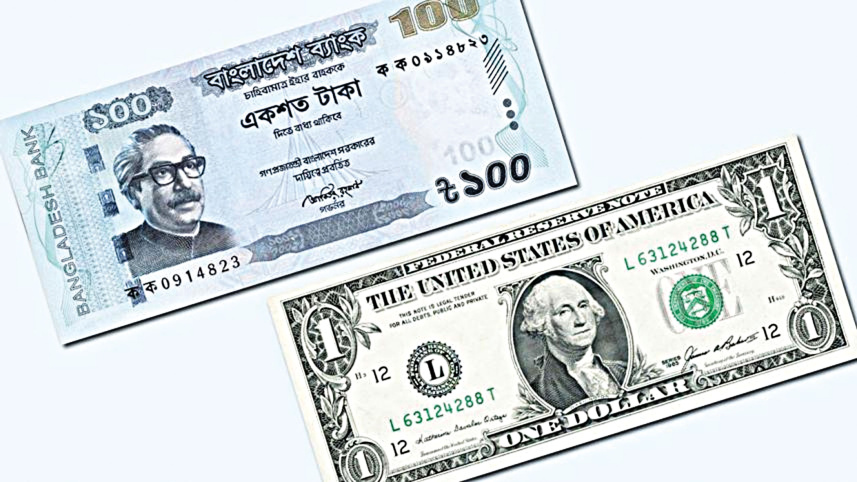
Ending a continuous depreciation trend spanning five and a half years, the Bangladeshi taka (BDT) has shown signs of appreciation against the US dollar, according to a Bangladesh Bank (BB) report released yesterday.
On a point-to-point basis from June last year to June this year, the value of the taka appreciated by 0.06 percent. Furthermore, between August 30 and September 17, the local currency strengthened by 0.77 percent against the greenback.

Central bank data show that the taka experienced an unbroken streak of depreciation against the US dollar from 2021 until September 17 this year. During this period, the exchange rate surged from Tk 85.80 per dollar to a record high of Tk123.95 -- reflecting a devaluation of Tk38.20, or 45.05 percent.
However, the trend began reversing in the second half of this year. After peaking at Tk 123.95 on August 30, the dollar rate dropped by 95 paisa to Tk 123.00 on September 17, resulting in a 0.77 percent gain for the taka over those three weeks.
The Bangladesh Bank report also compared regional currency movements from June last year to June this year. The Indian rupee depreciated by nearly 9.5 percent, the Sri Lankan rupee lost over 10 percent, and the Indonesian rupiah declined by around 9 percent.
The Malaysian ringgit and Chinese yuan both gained nearly 4 percent, while the Pakistani rupee appreciated by around 2 percent.
The central bank noted that after a prolonged period of weakening, the Bangladeshi taka has shifted to a relatively stronger position.
A depreciating taka directly elevates import costs for fuel, industrial raw materials and food items, passing price increases on to consumers, driving inflation and dampening real purchasing power -- especially for low- and middle-income households. It also increases the domestic currency burden of servicing foreign debt.
Conversely, a strengthening taka relieves pressure on import expenditures and lowers the local currency cost of foreign debt servicing, though the broader impact will depend on future trends in imports, exports, remittances, foreign exchange reserves and international market conditions.
 For all latest news, follow The Daily Star's Google News channel.
Comments