


A Bangladesh lesson that made a Japanese billionaire

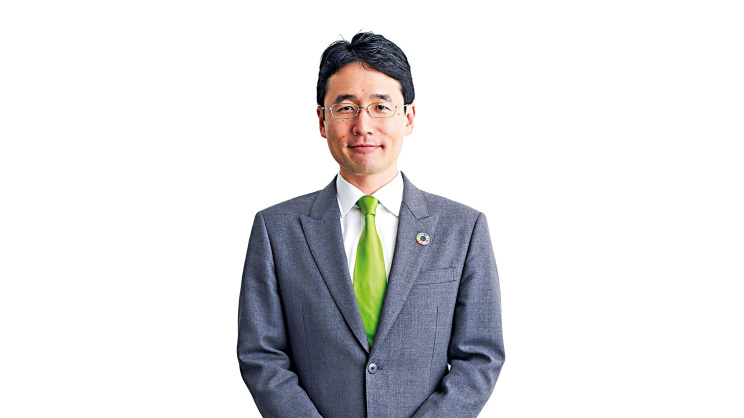
Mitsuru Izumo was 18 when he first came to Bangladesh in 1998. A biology student at the University of Tokyo, he chose this country for an internship because he wanted to see poverty and nutrition problems for himself.
What he saw, particularly the difficulty many children faced in getting enough nutritious food, stayed with him after he returned to Japan.

Now the president and CEO of Japanese company Euglena Co Ltd, Mitsuru spoke to The Daily Star about how that experience shaped his career, why he kept coming back to Bangladesh and his plans to put Euglena-fortified food on the plates of Bangladeshi factory workers and schoolchildren.
During his internship, Mitsuru found that many children could not afford fresh fruit, vegetables, eggs and other nutritious food.
We have business mainly in Singapore and Malaysia, and we are trying to export to Taiwan and Korea
“I was shocked by the real poverty issue in developing countries,” he said.
After returning to Japan, he continued to think about what he had seen in Bangladesh. He studied agriculture at the same university and learned more about euglena, a tiny organism that contains protein, vitamins, dietary fibre and unsaturated fatty acids.
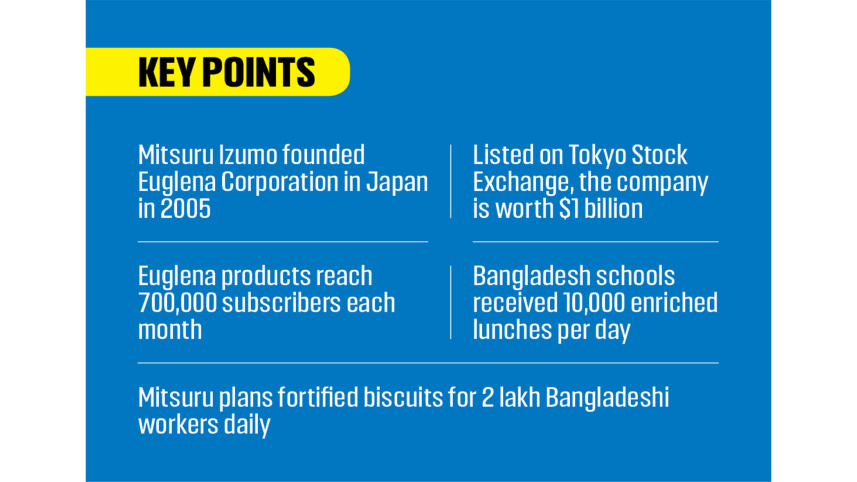
In 2005, he founded Euglena Corporation in Japan to research the organism and develop food and other products from it.
Euglena is a microscopic organism that can make its own food like a plant but can also move like an animal. It contains a range of nutrients, including protein, vitamins and dietary fibre.
The company’s main factory is on Ishigaki Island in Okinawa, in southern Japan. It sells Euglena drinks, green smoothies, cookies, tablets, supplements, shampoo, cosmetics, bio-gasoline and biofuel.
Mitsuru said about 7 lakh customers subscribe to its products every month.
He said people who take four Euglena tablets a day can improve their sleep quality at night, reduce stress during the day and eventually improve their immune system.
“We have been listed on the Tokyo Stock Exchange since December 2014. Our market capitalisation has reached around $1 billion.”
Mitsuru has also spent several million dollars in Bangladesh since 2014, working mainly with companies and schools on a voluntary basis.
The Euglena local office has provided fortified food to around 87 schools, mainly in slum areas of Dhaka. Mitsuru said the programme provided around 10,000 school lunches a day.
The food was given free to primary school pupils, as well as some children at playgroups and kindergartens.
The company’s own impact assessment, conducted among 400 children, found that those who ate Euglena biscuits had fewer skin problems and better bowel conditions than those who did not eat the products.
“Since 2014, we have distributed a total of around 20 million packs over 11 years,” Mitsuru said.
Now he wants to take the idea to textile and garment workers.
The Japanese biotechnology company is now working with two local biscuit manufacturers to produce fortified biscuits and cookies. Factories would buy the products for their workers and provide them alongside meals.
 For all latest news, follow The Daily Star's Google News channel.
 Mitsuru said textile factories are an obvious market because one factory can have about 11,000 workers, while some employ as many as 50,000.
The company plans to start by selling Tk 30 crore worth of Euglena biscuits in Bangladesh, he said. It also plans to supply the products to hospitals and private schools, while continuing to work with children in slum areas.
Mitsuru said he wants to reach 1 lakh to 2 lakh workers a day through the factory programme.
“Four tablets a day. It is not medicine. It is a supplement. We have business mainly in Singapore and Malaysia, and we are trying to export our products to Taiwan and Korea,” he said.
The company currently brings Euglena dry powder from Okinawa to Bangladesh to make biscuits and cookies.
Mitsuru said any further investment in Bangladesh, including a factory of its own, would depend on how the wellness sector develops in the country.
Comments