Bangladesh and the United States: Beyond the tariff bargain

The Bangladesh government lost much sleep following an announcement by the US government last spring. On April 2, 2025, US President Donald Trump introduced a 37 percent “reciprocal” tariff on Bangladeshi products. A single announcement put the country’s largest export destination at risk. The 10 months that followed saw intense negotiations: the rate moved from 37 percent to 35 percent, then to 20 percent in August, and finally, under the Agreement on Reciprocal Trade (ART), signed on 9 February 2026, to 19 percent. Those tariff changes are not simply a matter of arithmetic. They reflect both the growing sophistication and the fragility of Bangladesh’s trade diplomacy.
Even the 19 percent rate did not represent a final figure that could be relied upon in practice. On 20 February, the US Supreme Court found that the International Emergency Economic Powers Act (IEEPA) did not provide the administration with sufficient authority to implement such a wide-ranging set of reciprocal tariffs. Instead, the administration introduced a temporary 10 percent surcharge under Section 122, and when that expired in July, the US Trade Representative implemented a 10 percent Section 301 duty on nearly all Bangladeshi goods pursuant to ongoing investigations into whether those goods had been produced using forced labour. Although the agreement survived the introduction of this new legal mechanism, exporters found that access to the US market had become far more dependent on contingency, politics and negotiations than before.
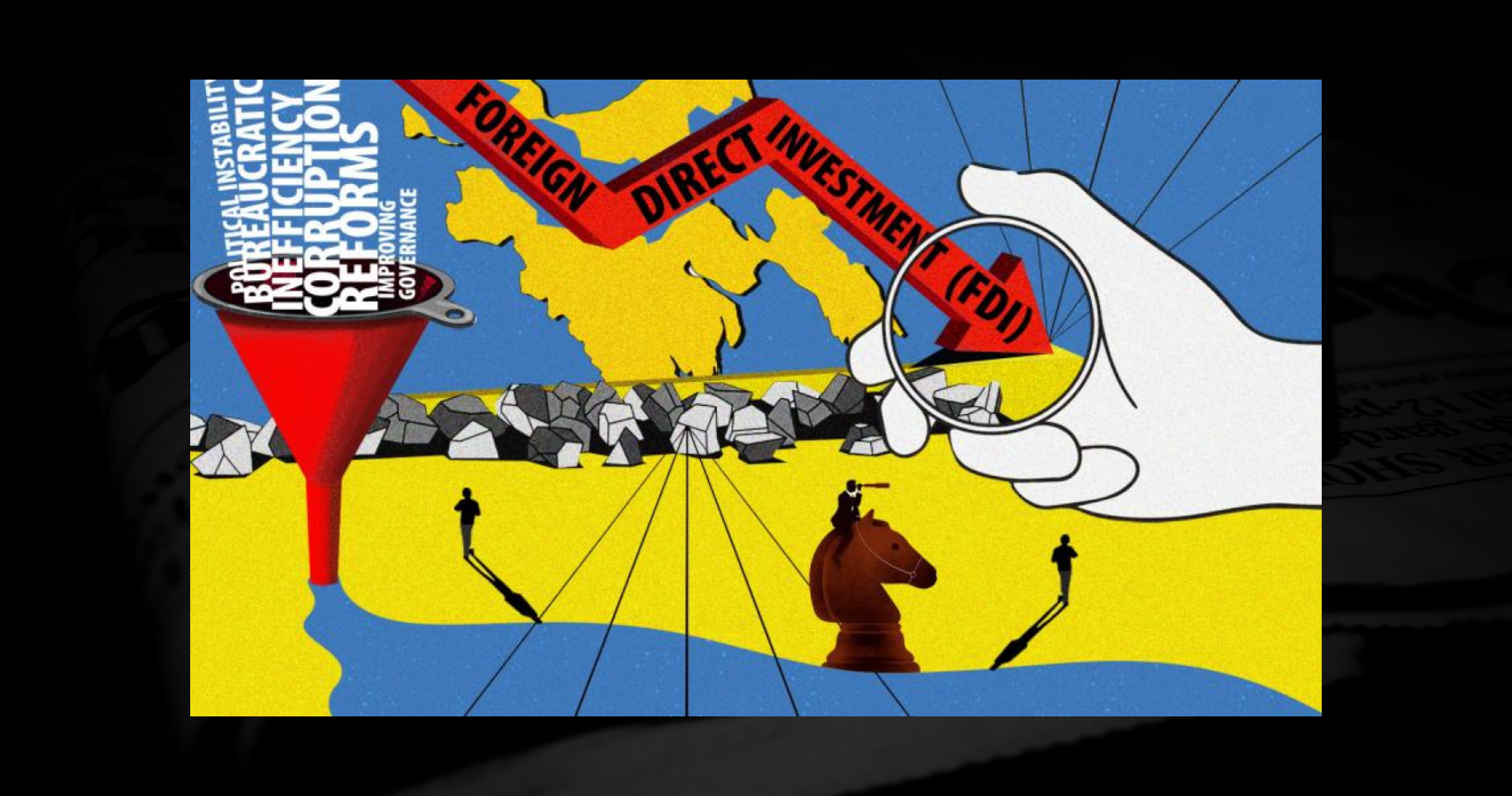
To treat the events described above as unique to Bangladesh would also be incorrect. The reciprocal tariff regime adopted globally by the US in 2025 represents a major shift away from the post-Second World War multilateral trading system established through the WTO. More specifically, it signals a move away from the principle of most-favoured-nation treatment towards a bilateral, transaction-based model of bargaining. This new way of conducting international trade has created a new level of vulnerability for small, export-reliant countries. Treating market access as a stable and predictable legal environment is therefore becoming increasingly unrealistic. Bangladesh’s agreement should not, therefore, be viewed simply as a bilateral trade instrument. Rather, it is a test case for how well a developing economy can survive and adapt to this altered global order.
What the numbers reveal
Trade data illustrate the risks. For example, in 2025, US-Bangladesh trade totalled $11.8 billion, with Bangladesh exporting $9.5 billion worth of products to the US and the US exporting $2.3 billion worth of goods to Bangladesh, resulting in an estimated US trade deficit of $7.1 billion with Bangladesh. This deficit grew by approximately 18 percent in just one year. The growing deficit is fuelling additional calls for Bangladesh to open more of its markets to US products, meaning that Bangladesh would buy more American goods.
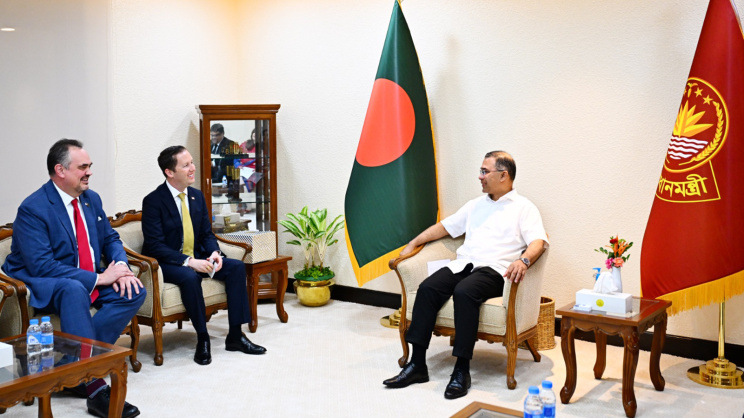
Apart from a few other sectors, almost all of Bangladesh’s competitive strength in the US market comes from a single sector: ready-made garments. Bangladeshi apparel exports to the US rose to $8.2 billion in 2025, increasing Bangladesh’s share of the US apparel market from 9.26 percent to 10.53 percent. Bangladesh’s ability to increase its market share even amid tariff uncertainty suggests that there is still considerable potential for growth in this sector. However, the first six months of 2026 suggest that resilience in one year should not be mistaken for long-term protection or stability. Apparel shipments to the United States fell by 5.75 percent year on year, to about $4.01 billion, while Vietnam, Cambodia and Indonesia performed better. Resilience in one year is not immunity in the next.
When looking at the competition facing Bangladesh in the US apparel market, it becomes increasingly apparent that the country remains vulnerable because of the lack of diversification in its export base. Washington’s evolving tariff structure has affected all the major competitors differently. Any tariff-related advantage, however, could result in only a marginal shift in orders, particularly in simple garments where buyers are highly price-sensitive. As such, because our export basket continues to be concentrated in low-value-added goods, our negotiating leverage remains very limited; we are not price-makers but rather price-takers. These structural vulnerabilities cannot be addressed merely by signing a bilateral agreement.
The asymmetry within the deal
Celebrations of the February agreement as a diplomatic triumph have been overshadowed by its complexities. This is evident in a comparison of the frequency with which the word “shall”, a term generally used to denote obligation, appears in relation to each party in the signed agreement. The phrase “Bangladesh shall” appears 127 times, whereas “the United States shall” appears merely five times. While this disparity may seem unimportant at first glance, it speaks volumes about the relative negotiating leverage of these two vastly different economies.
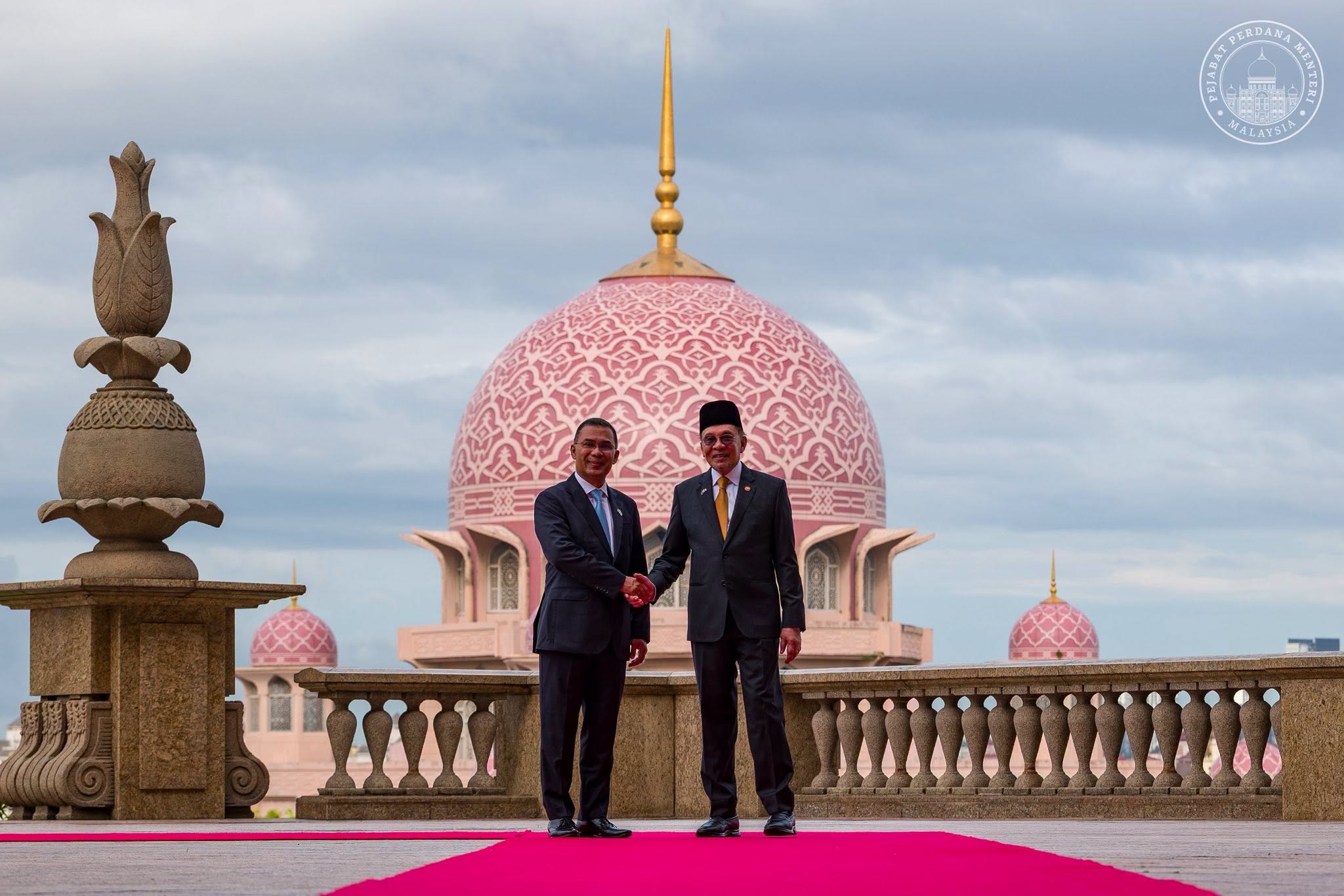
Some of the obligations placed on Bangladesh include prohibiting all imports made using forced labour, enhancing workers’ rights to associate freely and engage in collective bargaining, including in export processing zones, establishing a minimum-wage review process, and strengthening the enforcement of labour laws. Additionally, Bangladesh has committed to removing restrictions on US industrial and agricultural exports. The commercial commitments associated with the agreement include approximately $3.5 billion in purchases of US agricultural products by Bangladesh, as well as an estimated $15 billion in LNG purchases from the US over a period of 15 years.
It is not inherently negative for Bangladesh to purchase cotton, wheat, soy or LNG. Our garment industry requires cotton, while our energy system relies on dependable sources of fuel. The problem arises when these purchases are tied to concessions that Bangladesh makes in order to secure greater market access. Tariff-rate quotas established under the Section 301 tariffs will allow limited quantities of Bangladeshi textiles and apparel to enter duty-free if Bangladesh agrees to meet its purchasing requirements for US textile inputs and cotton.
The agreement goes far beyond tariffs. It covers digital trade, investment, labour standards, environmental policies and economic security. What is perhaps most striking about this agreed-upon document is that it states that Bangladesh will seek to expand its purchases of US defence products while limiting its purchases of defence products from a number of other countries. In doing so, the agreement links trade with national security in a way that represents a significant new development in the bilateral relationship.
From trade bargaining to strategic courtship
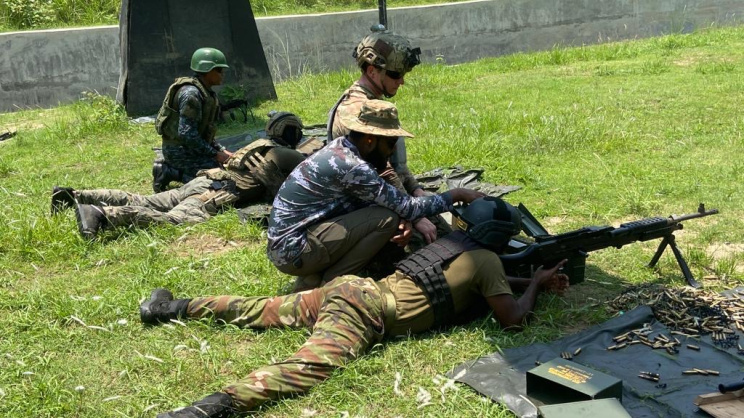
The military calendar reinforces that conclusion. In January, senior officials held land-forces talks on deepening army-to-army cooperation. From 19 to 29 July, soldiers from US Army Pacific and the Oregon National Guard trained alongside Bangladesh’s 1st Para Commando Battalion during Exercise Tiger Lightning 2026, focusing on jungle operations, counterterrorism, readiness and interoperability.
Then came diplomacy at a higher political level. US Special Presidential Envoy for South and Central Asia Sergio Gor arrived in Dhaka on 30 July for a three-day visit. Gor met Prime Minister Tarique Rahman and senior officials to discuss trade, investment, the Rohingya crisis, pharmaceuticals, technology, possible engagement by the Development Finance Corporation, and Bangladesh’s potential future participation in the US-led PAX Silica economic-security initiative.
Only days later, from 4 to 6 August, Admiral Steve Koehler, commander of the US Pacific Fleet, visited Dhaka. He met the prime minister, the defence adviser and Bangladesh’s navy chief. The agenda included maritime security, humanitarian assistance, disaster response and expanded naval cooperation. The two countries also discussed progress towards, and mutual understanding of, a General Security of Military Information Agreement, or GSOMIA. Koehler invited the Bangladesh Navy to participate in RIMPAC 2028 and pointed to the next CARAT naval exercise in Bangladesh in November.
Is Washington dealing with Bangladesh independently?
The answer is yes institutionally, but only partly strategically.
Evidence suggests that Washington has established direct channels of communication with Dhaka. The US concluded a bilateral Agreement on Reciprocal Trade (ART) with Bangladesh. In fact, senior US officials are making direct trips to Dhaka to discuss trade, security and politics. Military cooperation has also become more direct and continues to develop. This represents a significant shift in how Bangladesh relates to the US, as the bilateral relationship was previously often viewed through the lens of New Delhi.
However, this development cannot be seen in isolation. For example, during the visit to Bangladesh by Sergio Gor, the US Special Envoy for South and Central Asia and Ambassador to India, he also met the Indian High Commissioner. Moreover, when asked whether Washington was concerned about China’s increasing presence in South Asia, US Ambassador to Bangladesh Brent Christensen stated in February that Washington would provide defence equipment from both the United States and its allies as a counter to China’s growing influence, and that Washington wanted Bangladesh to maintain a good relationship with India in order to promote stability within the region.
Therefore, we can draw a more accurate conclusion than either of the options presented above. Bangladesh is viewed as a country of growing strategic significance because of its large population, rapidly developing economy, geographic location on the Bay of Bengal, large-scale manufacturing capabilities, and involvement in the Rohingya crisis. However, Washington’s view of Bangladesh remains primarily regional, encompassing India, China, Myanmar and the broader Indo-Pacific. Bangladesh is no longer simply a “sub-file” of US policy towards India, nor is it treated as a completely separate compartment.
This perspective is advantageous for Dhaka. Strategically autonomous countries do not need to maintain the same distance from all powers. They need to cooperate with different countries without allowing others to use those relationships as instruments of competition. Therefore, Bangladesh can welcome direct American engagement while rejecting the assumption that improving relations with Washington will necessarily worsen relations with Beijing, New Delhi or other partners.
The LDC question has also changed
It is important to assess this trade agreement in light of Bangladesh’s impending graduation from Least Developed Country (LDC) status. Bangladesh is scheduled to graduate on 24 November 2026; however, it recently requested a three-year extension of its preparatory period until 2029. If Bangladesh makes sufficient progress towards implementing the necessary internal reform measures outlined in the recommendations of the UN Committee for Development Policy, an extension could be warranted. In July, ECOSOC referred the matter to the General Assembly for consideration before the anticipated graduation date. Regardless of the General Assembly’s decision, the economic pressures behind this request are very real. With its economic success built on garment exports that depend on preference-based markets and a relatively narrow product range, Bangladesh’s economic development relies heavily on the continued availability of favourable trade terms.
The EU has announced that Bangladesh may benefit from the “Everything But Arms” preference programme for at least three additional years beyond its graduation date – that is, through the end of 2029 under the new GSP. However, as Bangladesh has never benefited from US GSP duty-free treatment for its garment products, the issue with the US is less related to LDC graduation per se than to negotiated tariffs and conditional market access.
Opportunity behind the risk
It is important to begin with the premise that viewing this new Bangladesh-US relationship simply as a matter of US “pressure” on Bangladesh would be one-sided. Many legal and political factors could lead US investors to view Bangladesh as a more reliable investment destination. With an estimated 180 million consumers and large-scale manufacturing capabilities, Bangladesh has tremendous potential to attract significant investment in areas such as energy, technology, healthcare, logistics, agribusiness and high-value-added manufacturing. Similarly, enforcing stronger labour standards could allow Bangladesh to compete more effectively in markets in Europe and elsewhere.
The way forward
Diversifying exports and markets must go beyond being a decorative element in strategy documents. Areas such as leather, pharmaceuticals, information technology (IT) services, light engineering, agro-processing and higher-value garment production require the necessary infrastructure, financing and regulatory support that the RMG sector has received over several decades.
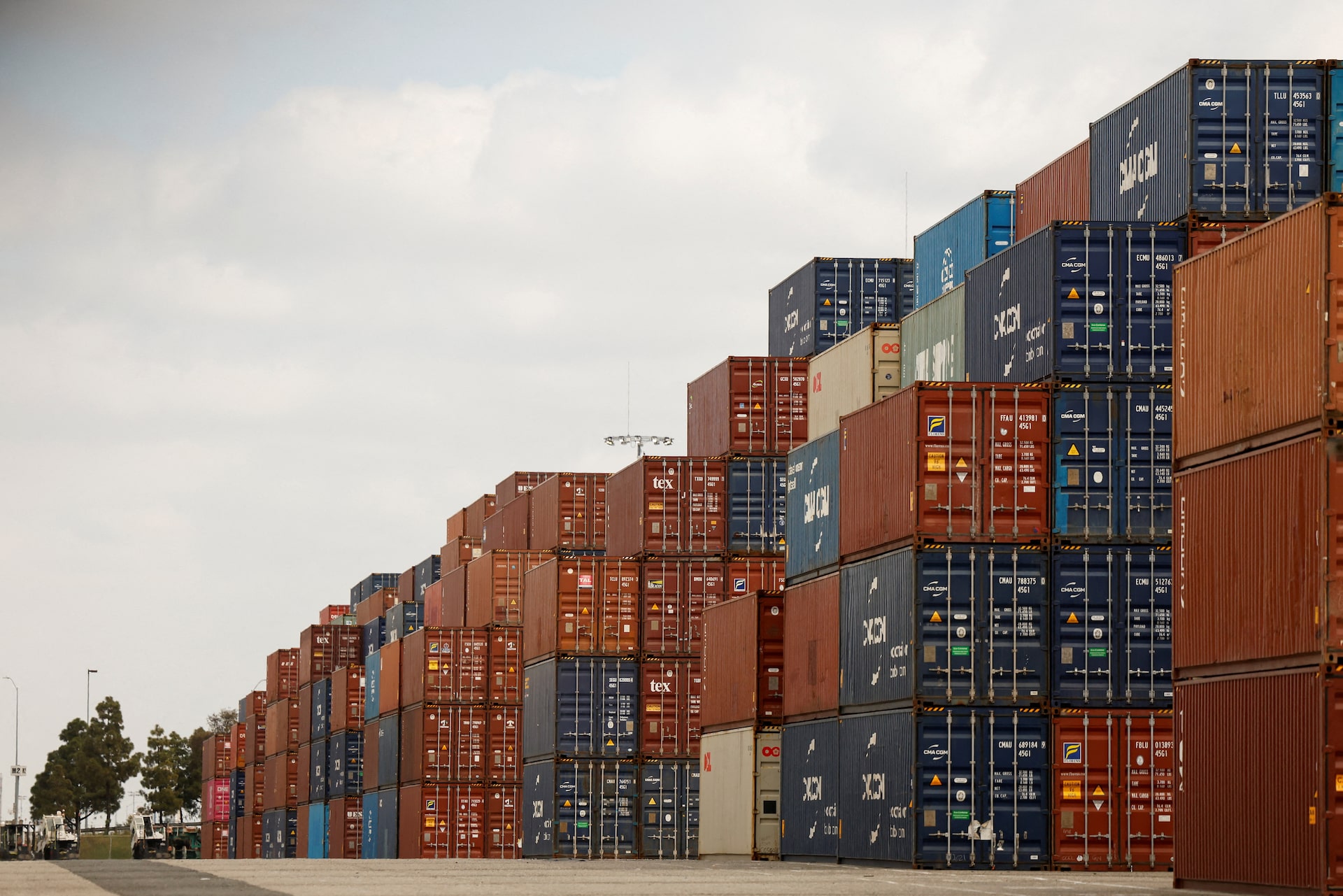
Improving port efficiency, modernising customs, providing consistent and reliable energy supplies, and reducing trade costs are all as important as tariff diplomacy. Similarly, labour obligations must be pursued domestically rather than solely as a means of demonstrating compliance with Washington. Strengthening workers’ right to associate freely, improving workplace safety and developing credible mechanisms for setting wages would enhance productivity while also strengthening Bangladesh’s ability to access preferential tariffs in the European Union.
Trade diplomacy is most effective when both parties have mutually reinforcing interests in an agreement and when each party benefits from domestic economic improvements resulting from the agreement’s terms. To build a permanent, expert-led trade and negotiation capacity capable of addressing issues ranging from tariff schedules and data policies to labour laws, energy purchases and defence cooperation, Bangladesh must develop a strong and coordinated bureaucracy. Currently, Bangladesh is attempting to address these same types of issues through multiple parts of the bureaucracy. However, fragmented bureaucracies cannot successfully negotiate an increasingly integrated bilateral relationship.
Bangladesh-US relations are currently at a crossroads. One year ago, Dhaka was still grappling with a tariff shock; today, the two countries are engaged in discussions ranging from apparel purchase orders to LNG imports, from digital rules governing online content to naval cooperation and strategically sensitive technologies. While the engagement between Bangladesh and the United States is clearly asymmetric, the dialogue has become more direct and focused than ever before.
Ultimately, however, what will determine the success or failure of this process goes well beyond the negotiating table. Success will depend on how Bangladeshi factory owners capitalise on their newly gained comparative advantages; how efficiently Bangladeshi ports operate; and how courageous and willing Bangladeshi policymakers are to implement meaningful reforms. While negotiations may reduce a single tariff rate, creating sustainable comparative advantages requires the development of stronger internal competition. Similarly, while a country’s geographic location may confer a degree of strategic relevance, it must also develop strategic agency.
Therefore, over the next ten years, Bangladesh will derive the greatest benefit from its engagement with the United States not by choosing which of the world’s superpowers it prefers, but by developing itself into a nation whose market, institutions, products and international reputation create disincentives for either power to ignore it. Ultimately, the issue is no longer simply whether Bangladesh can obtain favourable tariff rates; it is whether Bangladesh can use the increased attention it is receiving to expand its options and strengthen its capacity to make independent decisions in pursuit of its national interests.
Dr M. Kabir Hassan is a professor of finance and the Moffett Chair in the Department of Economics and Finance at LSU-New Orleans, USA. He is a Senior Fulbright Scholar, a recipient of the 2016 IsDB Prize in Islamic Banking and Finance, a member of the AAOIFI Ethics and Governance Board, and Chairman of its Education Board.
Send your articles for Slow Reads to slowreads@thedailystar.net. Check out our submission guidelines for details.
From the Carter Doctrine to the Mecca Pact: A changing Gulf security order
More capability, less autonomy? Bangladesh’s emerging security dilemma
An anti-West network is emerging: How should Bangladesh respond?
The Mecca Pact: Deterrence, Israel, and the new Gulf security equation

What Nepal’s flood devastation means for Bangladesh, India and China
Five reasons why Bangladesh shouldn’t join the Mecca Pact
Why Gaza peace deals keep falling apart
Rohingya genocide: Will the ICJ verdict bring justice?
Should Bangladesh join the Mecca Pact?