


Iran faces oil glut as China opts for cheaper rivals
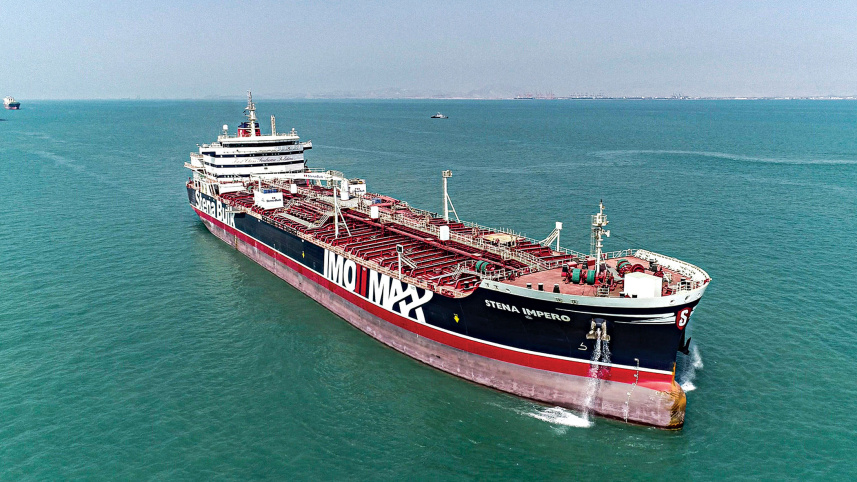
Iranian oil supplies at sea are rising after Tehran ramped up exports during the interim peace deal with the US. However, sales have been slow.
China’s independent refiners have turned to cheaper crude from Iraq, the UAE and Qatar. The return of US sanctions this week risks leaving Tehran with more cargoes searching for buyers just as shipments arrive in Asia.

Independent Chinese refiners based in the eastern oil hub of Shandong, known as teapots, bought 16 million to 20.5 million barrels of crude from Qatar, Iraq and the United Arab Emirates in recent weeks, traders said.
This marked their largest purchases of non-sanctioned Middle Eastern oil since the conflict began. Shandong teapots account for the bulk of China’s purchases of Iranian crude. State refiners have largely avoided direct imports since 2018.
Separately, privately owned refiner Shenghong Petrochemical bought 12 million barrels of Iraqi, Abu Dhabi and Saudi crude. The wave of non-Iranian cargoes displaced demand for Iranian barrels as rival Middle Eastern producers rushed to resume exports.
This followed the reopening of the Strait of Hormuz in late June. The rush of non-Iranian shipments was sold on a delivered basis by European traders such as Mercuria and Vitol.
State majors including PetroChina International and Zhenhua Oil, and Gulf producer Abu Dhabi National Oil Company also took part. The sales were done at discounts of $5 to $8 a barrel to ICE Brent.
These deliveries are scheduled for August to September. Discounts for Iranian Light crude, however, were little changed at $2 to $3 a barrel to ICE Brent, according to several traders active in dealing with teapots.
This prompted two traders to describe the sellers as slow and stubborn. Ironically, Iranian oil becomes the most expensive, a senior trader remarked.
Traders said the week of funeral events that ended in the burial of the slain Supreme Leader also slowed sales. Offices were closed during the mourning period.
Traffic through the vital waterway has slowed again this week after tit-for-tat attacks between the US and Iran. Between June 15 and July 6, about 30 million barrels of Iranian oil were loaded.
This volume is equivalent to 1.35 million barrels per day, according to tanker tracker Vortexa Analytics. Kpler recorded an estimated 34.5 million barrels of Iranian crude transiting the Strait of Hormuz on 21 tankers. This transit occurred from June 14 through July 10. An estimated 60.7 million barrels, averaging 2.17 million barrels per day, were exported in February 2026.
This was an increase of 20 percent from January 2026, according to analysis from US advocacy group United Against Nuclear Iran. That number dropped to 35.7 million barrels in March, averaging 1.136 million barrels per day.
Since the ceasefire deal announced June 14, 52 tankers have sailed with Iranian oil and petrochemicals products. They carried approximately 62 million barrels of Iranian crude oil and products, UANI analysis showed.
Of those vessels, 15 have reached the Singapore Strait. They are bound for the Eastern Outer Port Limits anchorage around Malaysia’s Johor area, according to UANI analysis.
Three Iranian-flagged very large crude carriers have already discharged their cargoes. Tehran shipped out no less than 10 million barrels of crude oil and fuel oil overnight, TankerTrackers.com said in a post.
They did this anticipating a possible imminent resumption of the US navy blockade. The US Central Command did not immediately respond to a request for comment.
Traders expect Iranian oil sales to pick up next week. Independent refiners are expecting $4 to $5 discounts for August to September arriving cargoes.
China’s Iranian oil imports so far this month came at 556,000 bpd, Kpler data showed. This marks the lowest level recorded since January 2023.
 For all latest news, follow The Daily Star's Google News channel.
Comments