


Quickly implement textile clause of Bangladesh-US trade deal: BTMA
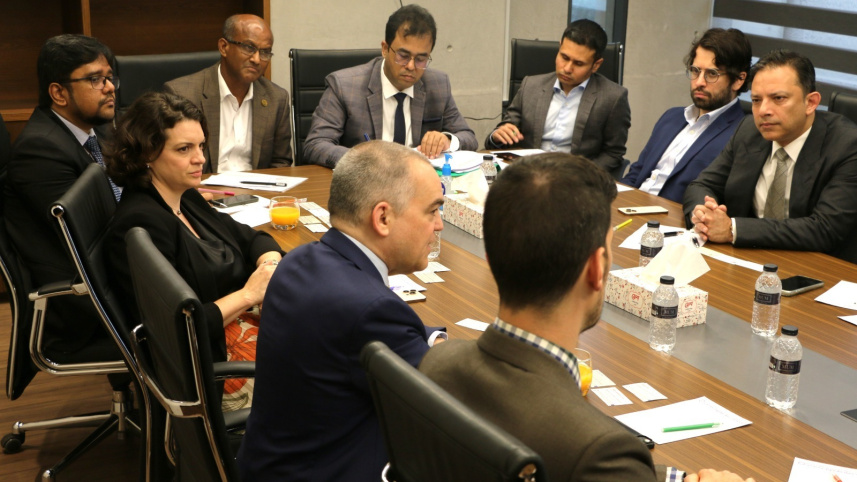
The country's primary textile millers have urged the Trump administration to quickly implement the textile clause of the Agreement on Reciprocal Trade (ART) signed between Bangladesh and the United States so that local garment exporters can benefit from exports to the American market.
Leaders of the Bangladesh Textile Mills Association (BTMA) made the demand today at a meeting with a delegation from the US embassy in Dhaka at the association's Gulshan office.

Under the ART, the United States committed to allowing duty-free market access for Bangladeshi garment products made from imported US cotton or man-made fibre and exported to the American market.
However, the United States has yet to explain how much Bangladesh would benefit from the clause or what the standard Rules of Origin (RoO) requirements would be for imported US cotton.
As a result, local garment exporters have not yet been able to enjoy duty-free market access to the United States under the textile clause.
BTMA President Showkat Aziz Russell highlighted the pivotal role of Bangladesh's primary textile sector in strengthening the country's export competitiveness, supporting sustainable industrial development and facilitating a smooth transition following Bangladesh's graduation from least-developed country status, according to a BTMA statement.
He also said that BTMA, as the apex body of the country's primary textile industry, continues to play a critical role in enhancing value addition, generating employment and strengthening export resilience.
The BTMA chief called for the expeditious finalisation of the relevant RoO and requested the continued support of the US authorities in ensuring the swift and effective implementation of the provision.
BTMA underscored that the timely operationalisation of the provision would create significant commercial benefits for both countries.
For Bangladesh, it would enhance the competitiveness of apparel exports in the US market and encourage greater investment in value-added textile manufacturing.
For the United States, it would stimulate increased exports of cotton and man-made fibres to Bangladesh, one of the world's largest apparel-producing nations, the BTMA said in the statement.
The US embassy delegation comprised Eric Geelan, political-economic counsellor; Erin Covert, agricultural attaché; and Charles Besnard, political-economic officer.
 For all latest news, follow The Daily Star's Google News channel.
Comments