


Anti-colonial resistance in Kazi Nazrul Islam’s essays

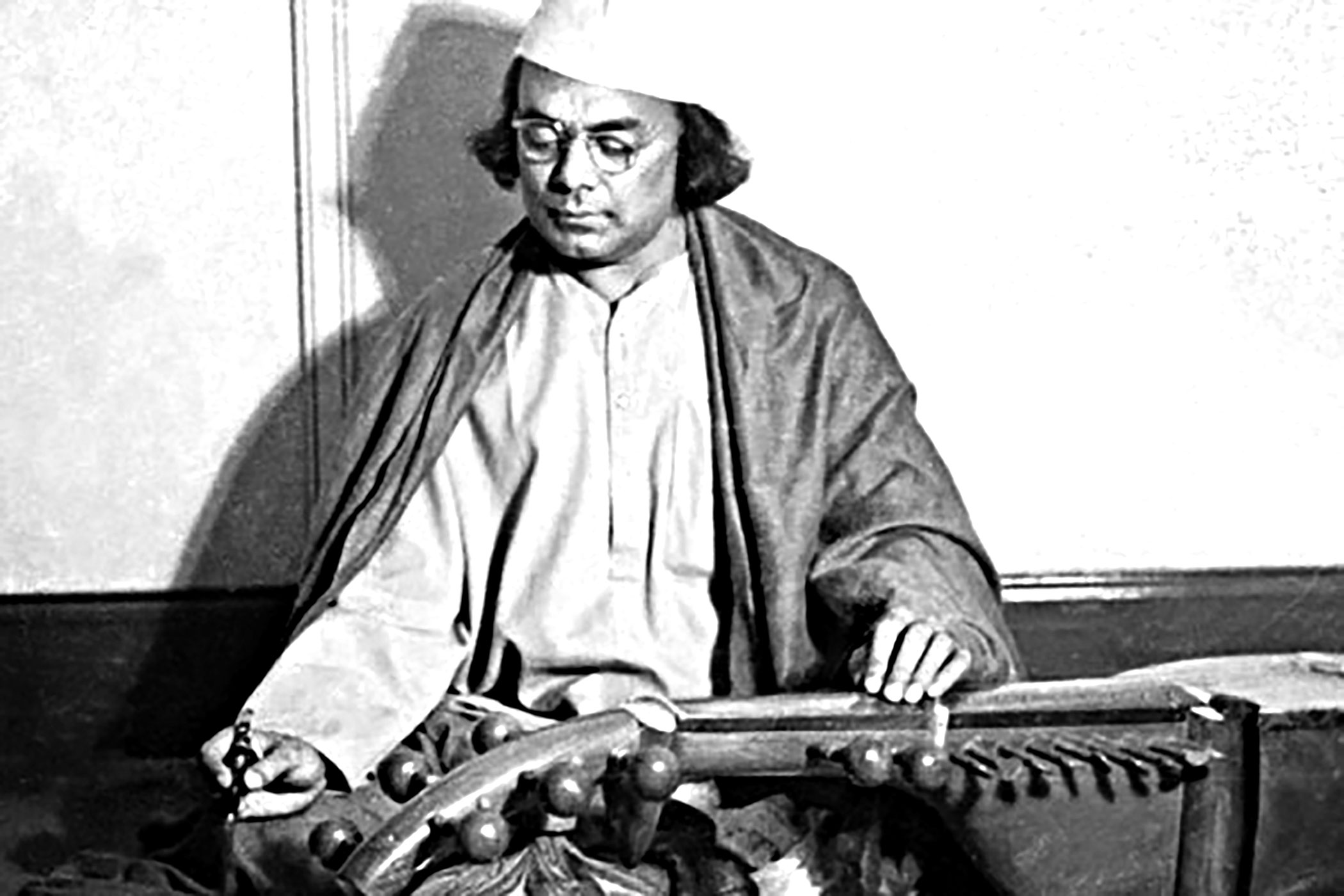
Famously known to Bengalis as the rebel poet, Kazi Nazrul Islam in most of his poems and verse-lyrics raised a strong voice against every form of oppression the British colonisers, representing the capitalist West, systematically unleashed on their subjects in India. Born and brought up in a colonial world, Nazrul shared an intimate bond with his soil; he and his compatriots were fully aware of the devastating impact of colonialism. In his signature poem “Bidrohi”, Nazrul celebrates “that eternal rebel hero”: “the whirlwind!/ … the plague, the terror of this world” who will rest only when “the oppressors’ swords cease to ring on the battlefield”, as stated in Niaz Zaman’s Kazi Nazrul Islam Selections-1 (Writer’s Ink, 2020). Already suspicious of his doings, British masters were enraged when Nazrul brought out the magazine Dhumketu in 1922, which published his poem “Anandamoyeer Agamone”, evoking the image of Goddess Durga’s advent “to demand complete freedom from British rule in India”.
It is within such a framework that Kazi Nazrul Islam’s essays should be read—not as isolated outbursts of patriotic fervour, but as deliberate interventions against the colonial project of silencing, othering, and subjugation. By directly challenging the coloniser’s narratives, Nazrul refuses the identities imposed by colonial authority and asserts an alternative vision of Bengali subjectivity grounded in dignity, defiance, and divine justice. Despite the absence of direct political victory during his lifetime, his words infused the national consciousness with a revolutionary spirit, demonstrating how literary and discursive interventions can contribute to long-term processes of decolonisation. So formidable was his anti-colonial spirit that it continued to shape and inspire the people of erstwhile East Pakistan, today’s Bangladesh, in its nationalistic struggles against West Pakistani quasi-colonial rule throughout the 1950s and 1960s, culminating in the armed Liberation War and ultimate victory following a nine-month-long bloody war in December 1971.

In this article I will, however, limit my discussion to two of Nazrul’s essays; namely, “Bengal of the Bengalis”, a translation of “Bengalir Bangla” (1942) by Ayesha Kabir and “Disposition of a Political Prisoner” which is a translation “Rajbandir Jaobanbandi” (1923) by Radha Chkaravarty. By analysing them through the postcolonial lenses of Frantz Fanon and Edward Said, I will try to show how they reveal Nazrul’s anti-colonial position as a synthesis of incisive self-critique, biting satire, prophetic defiance, and steadfast faith, and how in them Nazrul not only resists empire but also anticipates the critical frameworks through which colonialism is understood to this day.
Fanon’s understanding of violence as both a response to oppression and a force for reshaping consciousness, as presented in his theoretical paradigm in The Wretched of the Earth (1961), insists that violence is not incidental but essential to the process of decolonisation. He emphasises its political as well as psychological impact on the colonised, who are degraded and made to feel inferior because of it. For Fanon, revolutionary violence is inevitable, purging, and transformative as it destroys the colonial system, unites the oppressed, restores their dignity, and may give birth to a new nation. Nazrul channels this logic in his insistence that peace under an oppressive regime is itself a form of violence, a “violence of peace” that the colonised must reject through awakening, defiance, and ultimately, revolt.

Said’s Orientalism (1979) offers a complementary lens, revealing how the West invented the East as its necessary “Other” to glorify and assert its own superiority. The Orient, cast as weak, effeminate, and irrational, justified the so-called civilising mission that Conrad’s “Heart of Darkness” (1899) epitomises and that Kipling termed “The White Man’s Burden.” In this discursive framework, the colonised were not merely conquered but redefined; their identity was rewritten in ways that stripped them of agency. Nazrul’s essays are a direct response to such ideological violence. By mocking, satirising, and openly condemning the colonial project of othering, he resists and reclaims the authority to name reality.
This resistance crystallises in his essay “Bengal of the Bengalis,” where Nazrul turns from critiquing the colonial project at large to reimagining his homeland as sacred and sovereign. The very title asserts a sense of possession: Bengal should belong to Bengalis, despite the domination of foreign powers. In the opening passages, Nazrul imbues Bengalis with deific qualities: “The heart and brain of a Bengali are divine, but the body and mind are hard as stone”. These assertions, coupled with his lush natural imagery— “The sun of Bengal is not harsh. The moon of Bengal is soothing”—situate Bengal as a sacred inheritance, a paradise marred by foreign occupation. Nevertheless, Nazrul directs his sharpest critique inward, towards his own people. He accuses Bengalis of apathy, indolence, and cowardice, saying, “Not only do we fail to protest, we become their slaves, help them plunder us”. By doing so, Nazrul enforces rigorous self-accountability, insisting that the internal erosion of discipline and courage is as dangerous as colonial subjugation itself. Fanon emphasises that colonialism corrodes not only material conditions but also the psyche of the colonised, instilling inertia and self-contempt. Nazrul’s lament over Bengal’s “apathy” precisely reflects this internalised condition, a paralysis induced by domination. Simultaneously, his exaltation of Bengal and its people performs a counter-discursive intervention in Said’s sense, reclaiming the Bengali as dignified, resilient, and heroic, in direct opposition to colonial depiction of the East as weak or effeminate. By juxtaposing these two registers of trenchant self-criticism alongside visionary exaltation, Nazrul captures the duality of the colonial condition: the colonised are simultaneously constrained by internalised oppression and capable of reclaiming their agency.
In “Disposition of a Political Prisoner,” Nazrul assumes the dual role of defendant and prophet of resistance, articulating an anti-colonial ethos that merges political defiance with spiritual conviction. Presented as his statement before the colonial court, the essay suggests that his struggle is inseparable from the divine mandate: “I am mortal, yes, but my vidhata is immortal”. At once profound and poetic, the Bangla sentence, “ami mar, kintu amar vidhata amar” privileges the poet’s “amar” (immortal) God, his spirit—the eternal soul—which can neither be chained nor destroyed over his own “mar” (mortal) being. By grounding rebellion in the undying, Nazrul denies the court dominion over his life-force, affirming that while the state may control his body, it can never subjugate his music, his truth, or his conscience.
Nazrul’s critique sharply targets the colonial judiciary, dismantling its claim to impartiality: “A judge deployed by the state cannot be a judge of the truth”. The judge, far from being an arbiter of justice, is subordinated to the state, embodying the systemic corruption inherent in colonial governance. Said’s analysis of Orientalist discourse provides a useful parallel: just as colonial knowledge masquerades as objective while serving imperial ends, colonial law masquerades as justice while enforcing domination. Nazrul unmasks this duplicity with incisive clarity, revealing the structural violence embedded in the legal system. Irony in the essay intensifies into biting sarcasm when Nazrul observes: “But to describe slaves as slaves, or injustice as injustice, is taken as treason in this kingdom”. His sarcasm disarms the empire, turning accusations of treason into indictments of colonial tyranny itself.
The essay concludes with an invocation of divine companionship: “I have no fear, no sorrow, for the Lord is with me”. Repeated as a refrain, this statement functions as a mantra of resilience, situating freedom beyond temporal law and aligning resistance with eternal justice. His disposition operates as both a legal defence and a prophetic declaration, asserting that even under incarceration, the colonised retains agency, voice, and inviolable dignity.
These essays demonstrate Nazrul as an intellectual whose insights anticipated the central tenets of postcolonial theory. He rejects the legitimacy of colonial/state power, contrasting the king’s authority with the eternal authority of truth, justice, and dharma. Where Said demonstrated that the Orient was invented to uphold Western superiority, Nazrul inverted the colonial gaze by branding the sahibs as “idiots” and “beggars,” stripping them of the dignity they claimed. Rooted in the Bengal of British rule, Nazrul’s anti-colonial spirit thus travels beyond its immediate context, resonating with the broader experiences of colonised peoples across time and space.
This is a shortened version of the author’s chapter entitled “Kazi Nazrul Islam’s Anti-Colonial Resistance in His Essays” from the book Confluence of Words and Worlds: Essays in Honour of Professor Niaz Zaman edited by Fakrul Alam & M A Quayum. Read the rest of the essay on The Daily Star and Star Books and Literature websites.
Ahmed Ahsanuzzaman is professor of English and Director, Kazi Nazrul Islam and Abbasuddin Ahmed Research & Study Centre at Independent University, Bangladesh (IUB).
 For all latest news, follow The Daily Star's Google News channel.
Comments