


How Nana Patekar turned a monologue into a cultural memory

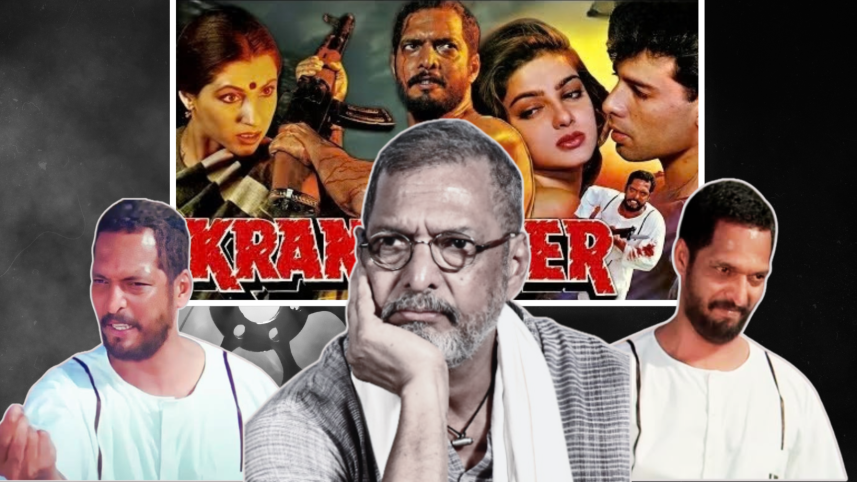
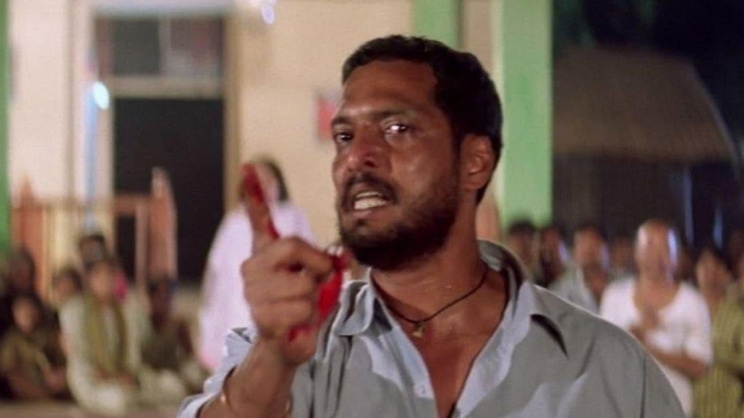
Nana Patekar is gone. At 75, an actor who spent five decades making Indian cinema sit up and listen has left behind a body of work that feels almost impossible to contain within a single tribute. Yet, if one scene can explain what made him singular, it is the climax of “Krantiveer”. The scene begins with a taunt: “Aa gaye meri maut ka tamasha dekhne?” (Have you come to watch the spectacle of my death?)
The words are simple. Their effect comes from the reversal. A man awaiting execution is supposed to be the object of the crowd’s gaze. Patekar turns the gaze around. The people who have come to watch his death suddenly become the subjects of his interrogation.
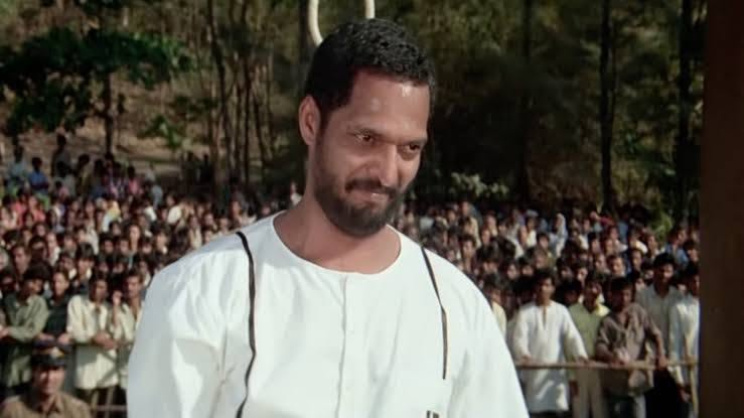
And then he changes the scale of the argument.
“Yeh Musalman ka khoon, yeh Hindu ka khoon…” (This is a Muslim’s blood, this is a Hindu’s blood…)
He holds up blood as the most elemental proof of human sameness and asks the question that follows: which blood belongs to which religion? The argument has the simplicity of a child’s question and the fury of someone who has watched that simplicity become inconvenient for an entire society. Religion, in his hands, becomes something stripped of slogans and reduced to flesh, blood and mortality. The scene keeps moving outwards. The condemned man begins talking about communal hatred, political manipulation and a society that has learnt to consume violence as spectacle. The execution becomes almost incidental. The real subject is the crowd itself.
That is what makes the monologue so much more than a famous dialogue. Patekar is constantly changing the relationship between himself and the people watching him. He begins with sarcasm. He moves into accusation. The blood imagery introduces shock. The questions turn philosophical. The fury becomes social commentary. By the end, Pratap Narayan Tilak has transformed from a man facing the gallows into a man putting society itself on trial.

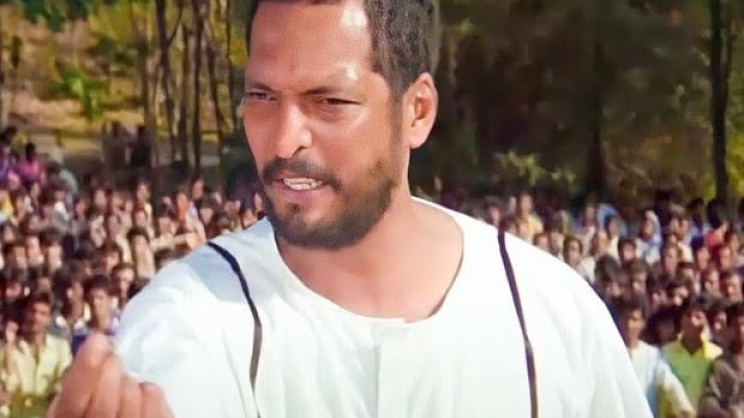
The remarkable part is that the speech was not sitting neatly on a page, waiting to be performed. Director Mehul Kumar has recalled that the climax was shot after Patekar had suffered a heart problem and been hospitalised. The production had already assembled the huge set and around 500 junior artists. Patekar asked if the climax could be shot in one stretch. Kumar arranged four cameras, and Patekar delivered the sequence. The director has said that the speech emerged spontaneously. Patekar later recalled that he could not remember a single line of what he had said.
That fact changes the way the scene can be watched. Listen to the pauses. Watch the way his voice moves from a question to a challenge. That was the theatre actor in him. Before Hindi cinema made him a star, Patekar belonged to Marathi theatre. Theatre gave him the ability to hold an audience through voice, stillness and physical presence. Cinema then gave him the close-up, allowing that theatrical command to become intimate. His voice could reach the last row, while his eyes could communicate something to the person sitting closest to the screen.
The “Krantiveer” climax is where those two forms of acting collide. The camera catches the subtle changes in his expression. The pauses become part of the dialogue. His anger appears to arrive in waves rather than according to a rehearsed rhythm. The speech feels like thought unfolding before us. That quality helped change the grammar of mainstream Hindi acting. Patekar entered the commercial mainstream without looking or behaving like the conventional Hindi film hero. He brought the roughness of theatre, the unpredictability of improvisation and an almost physical relationship with dialogue. “Krantiveer” turned that intensity into a mainstream phenomenon and earned him the National Film Award for Best Actor. His success mattered because it demonstrated that a theatre-trained actor could command popular cinema through performance alone.
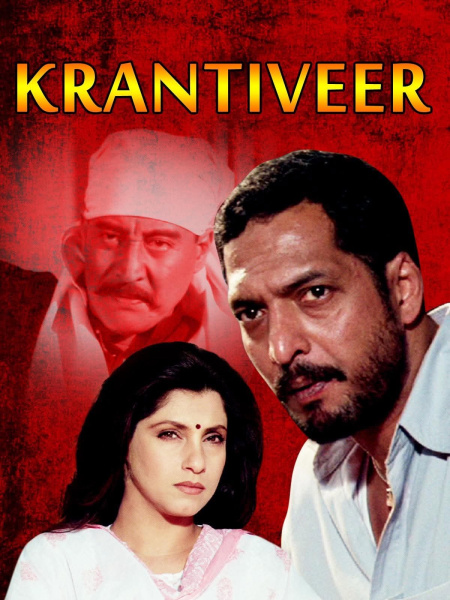
Patekar had already appeared in films such as “Gaman”, “Salaam Bombay!” and “Parinda”. “Krantiveer” gave him a mass audience. From there, he could move between genres with extraordinary ease. “Prahaar” carried his intensity into military drama. “Ab Tak Chhappan” turned his restraint into menace. “Natsamrat” allowed the theatre actor to return to the world that had shaped him. “Welcome” transformed his seriousness into comic gold through Uday Shetty. The same voice that once demanded an answer from a crowd at the gallows could later deliver “Control Uday, control” and make an entire generation laugh.
That range makes the “Krantiveer” monologue even more revealing. It shows the actor before the star machinery takes over. A voice, a face, a crowd and an idea. The speech also explains why Patekar’s performances have such a long afterlife. His dialogue delivery had rhythm. He could stretch a word, cut one short, pause before a sentence and then explode into it. He understood that the meaning of a line changes with the space around it.
The improvisation adds another layer. A scripted monologue usually carries the confidence of a writer who knows where the speech is going. Patekar’s performance carries the uncertainty of a man finding his next thought. That uncertainty creates tension. The audience waits because it feels as though the next sentence has yet to be born. Indian cinema has produced countless celebrated monologues. This one became something else. It became a cultural memory. Its words continue to circulate because the underlying question remains painfully simple: what separates one human life from another when everything comes down to blood, death and grief?
Patekar delivered that question from the gallows. Today, we remember him from the other side of the screen. There is an uncomfortable symmetry to that. In “Krantiveer”, a crowd gathers around a man’s impending death and turns it into a spectacle. Today, audiences across India are gathering around the news of Patekar’s death, replaying his scenes, quoting his lines and returning to the performances that made him unforgettable. The difference is that Patekar is no longer there to answer back.
But his voice remains. And perhaps that is the most fitting legacy for an actor who spent his career making words feel alive by giving them breath, hesitation, fury, humour and conscience. The “maut ka tamasha” (spectacle of death) line gave us the hook. The rest of the monologue gave us Nana Patekar.
 For all latest news, follow The Daily Star's Google News channel.
Comments