


Saad’s new ‘Mission’

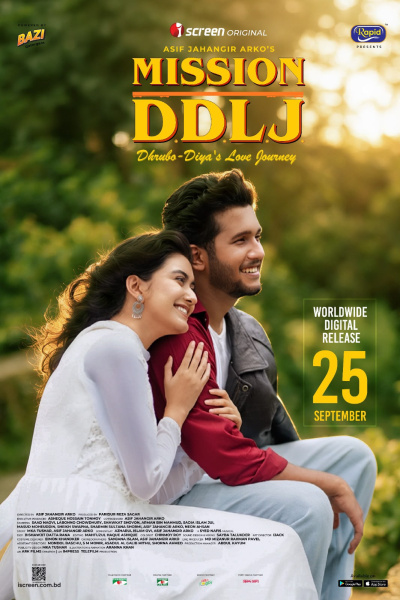
Aditya Chopra’s 1995 landmark film “Dilwale Dulhania Le Jayenge (DDLJ)”, starring Shah Rukh Khan and Kajol, fundamentally reshaped South Asian romantic cinema. For generations of moviegoers, it established a grand standard of cinematic love, timeless music, and iconic romantic tropes. The upcoming Bangladeshi OTT project “Mission DDLJ (Dhrubo-Diya’s Love Journey)” serves as a direct, affectionate tribute to Shah Rukh Khan, “DDLJ”, and the enduring nostalgia of 90s romance.
Rather than simply remaking the classic, the narrative explores a modern-day scenario in which a young woman’s obsession with “DDLJ” prompts a young man to adopt Raj’s classic romantic techniques in today's digital world.
Directed by Asif Jahangir Arko, the web film features Saad Salmi Naovi as Dhrubo and Labonno Chowdhury as Diya. The project is expected to release on September 25 on iScreen.
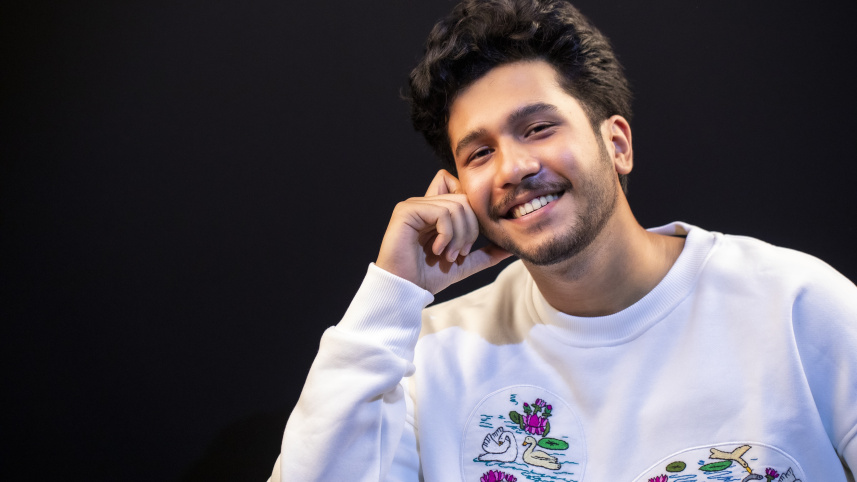
Saad, shares insights on playing Dhrubo, honouring SRK’s legacy, and exploring the charm and chaos of modern romance.
What was your primary motivation for joining ‘Mission DDLJ’, and how does the project connect to the original ‘DDLJ’?
“DDLJ” holds a special place in my core memories, and I am sure it does for all of us who grew up in that time. It was the first grand-scale romantic film I experienced, and it defined Shah Rukh Khan for me. When iScreen approached me with a character written specifically with me in mind, I jumped at the opportunity. I was looking for a rom-com where I had complete character freedom. The core driving force of Mission DDLJ is the movie itself—the female lead is deeply obsessed with SRK and DDLJ, prompting my character to adopt classic 90s methods to win her heart. It is an explicit homage to Shah Rukh Khan and the film's lasting influence.
Is ‘Mission DDLJ’ a direct rip-off or a 90s period drama?
That is the biggest misconception surrounding this project. It is neither a period piece set in the 90s nor a scene-for-scene rip-off. Instead, it takes inspiration from “DDLJ” and places those classic rules into 2025 in a satirical tone. We intentionally recreate specific frames and gestures, but the story explores what happens when a modern guy uses 90s tactics in today's era. While SRK succeeded in the movie, attempting those exact delusional moves today leads to hilarious real-world complications.
Tell us about your character, Dhrubo. How does he fit into the romantic hero archetype?
Dhrubo is a typical private university student—a cool, laid-back guy. But once he realises he is falling in love, his natural romantic instincts kick in. Instead of modern 2025 dating techniques, he chooses classic 90s dramatic gestures. Ultimately, all romantic heroes go to great lengths for love, and watching a modern boy navigate those basic, deep emotions is what makes the journey engaging.

Did stepping into a project tied to an iconic masterpiece create pressure?
Absolutely. Right after hearing the script, I told the director that this would either be the biggest flop of my career or the most cherished project. There is no middle ground—it is a complete gamble. But as an artiste, I gave my best and mentally prepared myself for both outcomes.
What do you think modern love has lost compared to 80s or 90s romance?
In the 90s, options were limited, connections were local, and people endured hardships to make relationships work. Today, social media and globalisation provide endless choices, which often creates a quick-to-give-up mindset. However, classic dramatic gestures remain timeless, which is exactly why our character reaches back to the 90s.
Many thought that the recent 80s nostalgia trend on social media inspired this project.
Yes, but we wrapped up shooting about two months before this 80s/90s nostalgia trend started blowing up on social media. When people see it now, they might think we jumped on a trending topic, but it was just a happy coincidence—or perhaps a good sign.
As a newcomer, which directors and co-artistes have guided your growth in the industry?
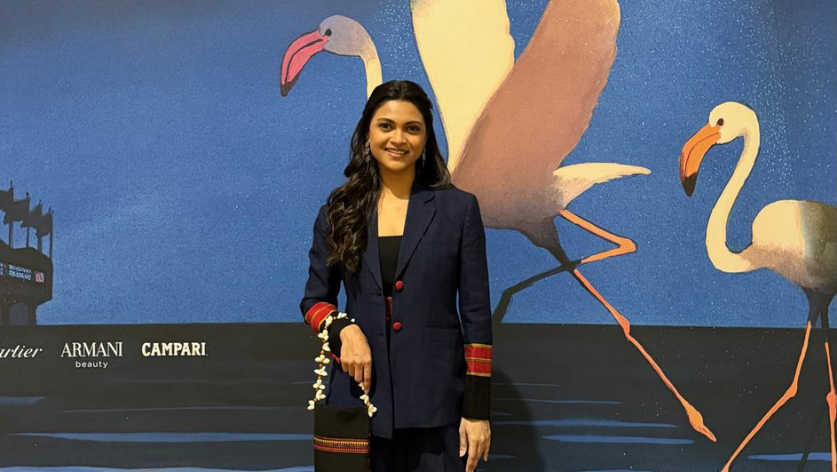
I’ve learned something unique from everyone. Adnan Al Rajeev silently groomed me during commercial shoots, while the B&G directors gave me my initial acting drive. Syed Ahmed Shawki taught me how to approach a character with sincerity when we worked on “Karagar”, and Raihan Rafi gave me insight into large-scale film dynamics on “Taandob”. Among co-artistes, working with Sarika Subah has been immensely insightful. Her industry experience taught me shooting decorum, scene breakdowns, and mood management on set. Audiences have loved our pairing, and we have four to five upcoming drama projects together.
After ‘Taandob’, what kind of film roles are you looking to explore next?
Currently, I treat my career like a training phase—focusing on self-development before taking on full-length feature films. As a newcomer, I’m sticking to romantic comedies because the audience enjoys seeing me in this genre. However, my long-term vision is to evolve every five years. I don't want to play rom-coms forever; I want to explore intense dramas, non-romantic roles, and diverse genres throughout my career.
 For all latest news, follow The Daily Star's Google News channel.
Comments