Everyday secularism and the Bangladesh we rarely talk about

“Did you try Ghosh er Misti while in Satkhira?”
For anyone visiting Satkhira, a district on the edge of the Sundarbans, this is an ordinary question—an expression of local pride and hospitality. Yet, in the Indian subcontinent, where food has become an increasingly charged political battleground, the question is anything but trivial. In neighbouring India, Hindutva nationalism has recast dietary habits and culinary traditions as markers of religious identity, purity and political allegiance. Against this backdrop, the casual enthusiasm with which Bangladeshis recommend a sweet bearing a distinctly Hindu surname speaks to something worth preserving. It reflects a form of everyday secularism woven into social life—one that finds expression not in grand political declarations but in the unremarkable acts, conversations and cultural exchanges that continue to bind communities together.
In recent years, discussions about secularism in Bangladesh have increasingly become trapped within prime-time television talk shows, Facebook timelines, policy seminars, debates on constitutional reform and urban ideological circles. There, secularism is often presented as a rigid doctrine—a cultural posture to be performed through carefully curated policies, language, symbols and social codes. But beyond these elite conversations exists another Bangladesh: quieter, older and far more resilient. A Bangladesh where pluralism was never theorised in textbooks because it was already woven into everyday life.
How? Let me begin with a few personal stories.
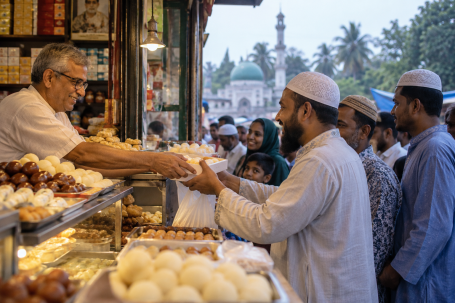
Last Ramadan, while visiting Shibganj upazila in northern Chapainawabganj district, I went out to buy iftar. Amid the rush of customers, one particular sight stayed with me. A renowned sweet shop owned by a Hindu family—Adi Chamcham, established in 1858 by Norendra Kumar Sarker—was bustling with Muslim customers queuing to buy their iftar. Nobody seemed to notice anything unusual about it. There was no performative celebration of “communal harmony”, no hashtags, no speeches about coexistence. It was simply ordinary life unfolding in a border district of rural Bengal.

More recently, during Eid-ul-Azha in my native village in Cox’s Bazar, I witnessed another familiar yet revealing scene. Members of indigenous communities joined their Muslim neighbours in processing sacrificial cattle—not as outsiders participating in someone else’s religious ritual, but as neighbours sharing in the rhythms and obligations of village life. The interaction was practical, unremarkable and entirely natural.
And perhaps that ordinariness is precisely the point.
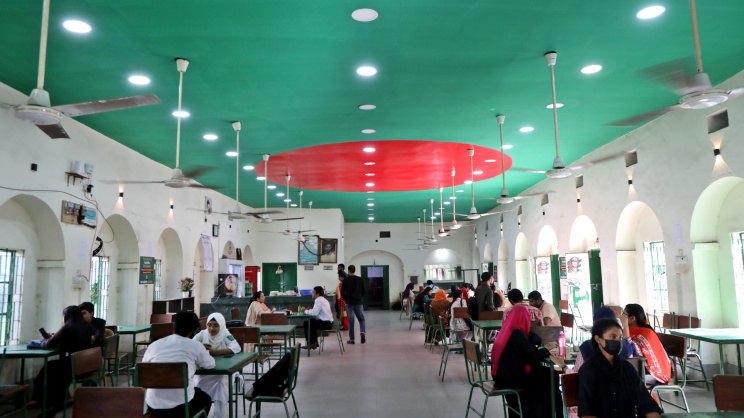
Across Bangladesh, Muslims routinely buy sweets for milad gatherings from Hindu confectioners; Hindu-owned barbershops become crowded before Eid as Muslim families line up for haircuts; and on university campuses, generations of students have shared meals prepared by Hindu caterers without ever considering religious identity a barrier to friendship or belonging. As a former student of Dhaka University, I can scarcely imagine a day on campus that did not include a visit to Modhur Canteen for a cup of tea and a singara. The institution was more than a cafeteria; it was a social commons where identity mattered far less than companionship.
Likewise, in Chittagong, the devotional culture surrounding the shrine of Mohsen Aulia was enriched by the songs of Shimul Sheel, a Hindu artist whose voice became inseparable from the region's spiritual soundscape. These examples are not exceptions to the Bangladeshi experience. They are expressions of a deeper social reality in which religious difference has long coexisted with shared spaces, shared livelihoods and shared cultural memories.
Much of the contemporary debate on secularism assumes that peaceful coexistence must be consciously engineered through ideological commitments or state interventions. Yet, for generations, millions of Bangladeshis have practised a quieter form of secularism without ever naming it as such. It manifests itself in shared marketplaces, neighbourhood relationships, economic interdependence, village festivals and everyday acts of cooperation. It is less a political doctrine than a social habit.
A Hindu sweet-maker serving Muslim customers during Ramadan, or indigenous neighbours assisting with Eid preparations, are not abandoning their identities. They are simply participating in a social world where communal boundaries do not prevent human cooperation.
This form of coexistence does not erase religious identities. On the contrary, it allows individuals and communities to remain deeply rooted in their own traditions while engaging with others through bonds of reciprocity, familiarity and mutual respect. A Hindu sweet-maker serving Muslim customers during Ramadan, or indigenous neighbours assisting with Eid preparations, are not abandoning their identities. They are simply participating in a social world where communal boundaries do not prevent human cooperation.
For generations, they have preserved a social fabric that neither ideological purists nor political opportunists could entirely unravel. These stories rarely enter our national political vocabulary. Yet they reveal something essential about Bangladesh: secularism here did not emerge merely from constitutional debates or elite ideological movements. It survived because ordinary people practised coexistence long before intellectuals attempted to define it.
The real custodians of pluralism in Bengal have often been the rural poor, the working classes, folk musicians, shrine-goers, fishermen, sweet-makers, artisans, farmers and market traders—people whose lives are tied together by economic interdependence, shared geography, folklore and custom. Their secularism is not abstract. It is lived.
This is why Bengal’s folk traditions have historically resisted rigid communal boundaries. The songs of Sefali Ghosh and Shyamsundar Baishnab became part of everyday life in Muslim households in Chittagong. Baul traditions blurred distinctions between Hindu Vaishnavism and Sufi mysticism. Village fairs, shrine festivals, harvest celebrations and local musical traditions evolved through constant cultural borrowing. Rural Bangladesh never viewed identity as a sealed category. It viewed identity as porous, relational and deeply human.

Ironically, the confrontation secularism faces today often comes not from ordinary people but from competing elite projects seeking to impose singular definitions of culture and belonging. One side seeks to monopolise religion; another attempts to monopolise secularism. Both demand conformity. Both insist on prescribing the “correct” rituals, aesthetics, language and symbols through which people must express themselves.
But Bengalis, by temperament and history, have always resisted rigid structures imposed from above. The Bengali social imagination has historically thrived through accommodation rather than uniformity. Rural society developed its own ethics of coexistence not because people read political theory, but because survival itself required cooperation. Shared rivers, markets, storms, harvests and poverty created a social compact stronger than ideological divisions.
This is especially important to remember today, when, across South Asia, religion and identity are increasingly weaponised for political mobilisation. Relations between India and Bangladesh are now frequently filtered through communal anxieties and nationalist rhetoric. Social media amplifies outrage faster than empathy. Historical grievances are constantly resurrected, while everyday examples of coexistence are ignored because they appear too mundane to be politically useful.
Yet the truth is that the subcontinent has survived not because of its politicians, but because of ordinary people who have repeatedly refused to let hatred define their relationships.
The farmer sharing tea with a neighbour of another faith, the Muslim family buying sweets from a Hindu shop during Ramadan, the Hindu musician singing at a Muslim shrine, the indigenous worker helping during qurbani—these are not isolated anecdotes.
The farmer sharing tea with a neighbour of another faith, the Muslim family buying sweets from a Hindu shop during Ramadan, the Hindu musician singing at a Muslim shrine, the indigenous worker helping during qurbani—these are not isolated anecdotes. They carry fragments of a civilisational ethic that has endured for generations in Bengal despite riots, partitions, military regimes, communal propaganda and political upheaval.
Ordinary Bangladeshis generally reject attempts to stoke communal tensions, and mainstream political parties are careful to distance themselves from such campaigns. Unlike the increasingly familiar “temple under mosque” controversies and bulldozer-style politics seen elsewhere in the region, attempts to mobilise public opinion through attacks on minority religious sites or communities have remained largely on the political margins in Bangladesh.
This ethos deserves recognition not as nostalgia, but as resistance.
At a time when identity politics seeks to reduce people to hardened categories, the everyday lives of people in Bangladesh continue to offer a different lesson: coexistence does not always announce itself through grand declarations. Sometimes it survives quietly in marketplaces, folk songs, rituals, shared labour and inherited customs. Sometimes the greatest defence of secularism comes not from institutions, but from habit—the deeply rooted habit of living together.
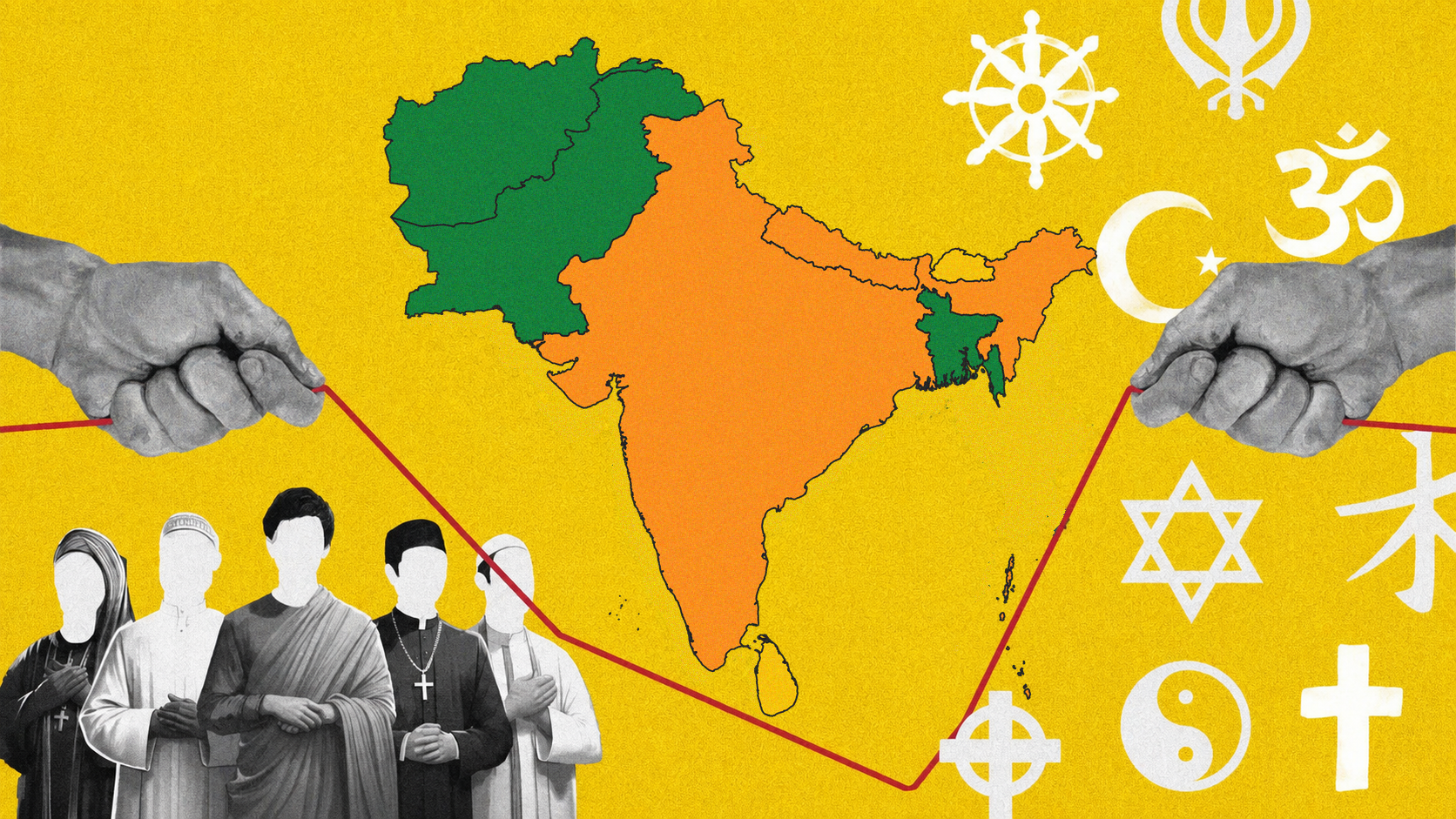
The tragedy is that these stories rarely become part of our national narrative. The people safeguarding pluralism often remain invisible because they lack the language of elite discourse. Yet they understand Bengal better than anyone else, recognising that coexistence is not an abstract principle but a habit cultivated through countless everyday interactions.
Today, however, this ordinary yet consequential secularism faces mounting challenges. In the age of social media, ideas, anxieties and prejudices travel across borders with unprecedented speed. Developments in neighbouring India—from the politicisation of food and commerce and campaigns of symbolic renaming, such as Allahabad to Prayagraj in Uttar Pradesh, Islampur to Iswarganj in West Bengal and Karimganj to Sribhumi in Assam, to calls for economic boycotts of minority-owned businesses, mob lynchings and public rhetoric that normalises religious discrimination—have become highly visible features of political and social discourse.
Increasingly, these developments are also being debated, amplified and contested within Bangladesh's digital sphere, a trend that deserves far greater attention from policymakers and civil society alike. The issue is not merely what happens across the border, but how such narratives can gradually reshape perceptions, normalise suspicion and erode long-standing traditions of social trust at home. The deeper concern is the spread of exclusionary ways of “imagining community”: carefully cultivated systems of separation, the policing of everyday cultural practices and attempts to erase layered histories in the name of religious and cultural authenticity.
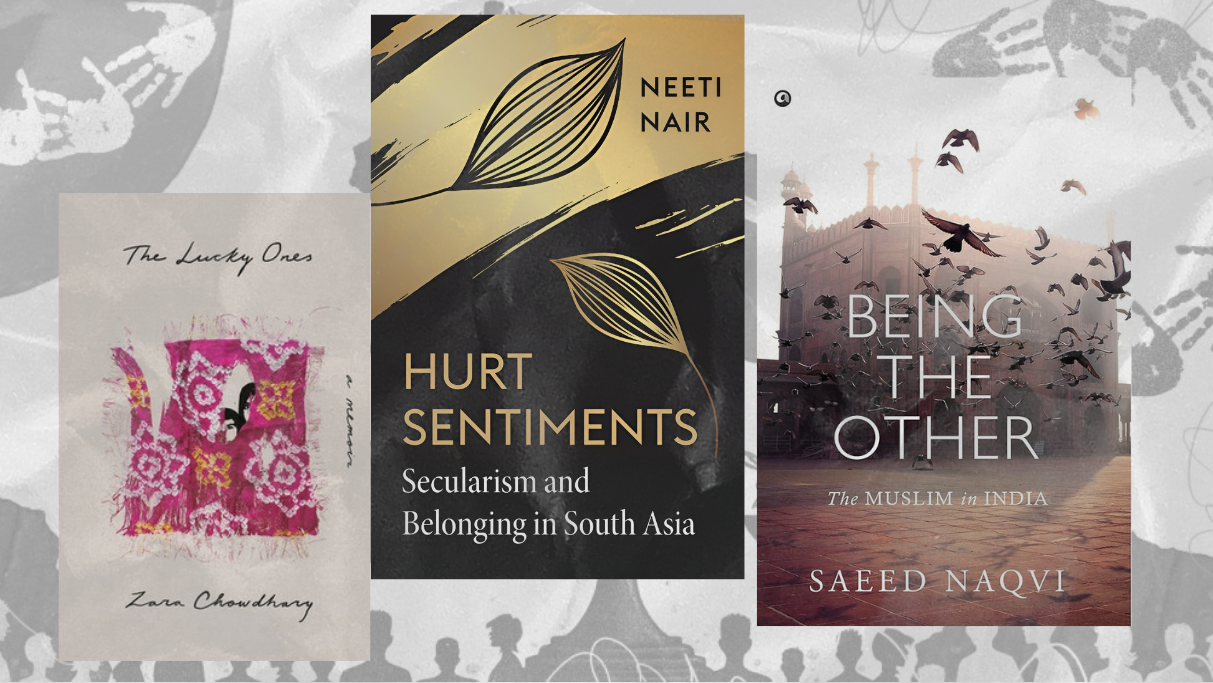
For this reason, celebrating Bangladesh's everyday practices of pluralism is not an exercise in nostalgia or self-congratulation. It is an affirmation of a living inheritance—one forged through centuries of coexistence, accommodation and mutual recognition. The seemingly ordinary acts that bind people across religious and cultural differences are, in fact, among the country's most valuable civic resources. This is not to romanticise Bangladesh or deny the existence of communal tensions, discrimination or political attempts to mobilise religious identities. Such challenges are real and deserve serious attention. But they should not obscure another reality: beneath the noise of political contestation lies a deeply embedded culture of everyday coexistence that has endured across generations. That habit may be ordinary. Yet its persistence is precisely what makes it extraordinary.
In these uncertain times, that quiet inheritance may be one of Bangladesh's greatest strengths—and one of its most important responsibilities to preserve.
Dr Anas Ansar is an assistant professor in the Department of Political Science and Sociology and a member of the Centre for Peace Studies at North South University.
Send your articles for Slow Reads to slowreads@thedailystar.net. Check out our submission guidelines for details.
Reading Sarat Chandra at 150, with empathy

Who really owned Britain’s royal jewels?
The 25,000-year history of betel nut chewing

The world map we know is distorted. Why does it matter?
Bengal and the coming of Islam: A story of soil and spirit
Xuanzang’s travels to Bengal and beyond : The man, the pilgrim and the Monkey King
Professor Anisur Rahman: The economist who put people at the centre

APO 433: Dhaka’s forgotten post office of World War II
Dadabhai Naoroji: The man who exposed the economics of British colonialism